
Readers searching for automated investing platforms often want a service that manages a portfolio, but these five options are books about automated investing, not brokerages or robo-advisors you can open an account with. I rank The Little Book of Robo Investing first for readers seeking a broad introduction, Robo-Advisors Explained for its stated focus on risk and investor behavior, and Automated Stock Trading Systems for traders who want systematic approaches across different market conditions. The main choice is between long-term, hands-off portfolio management and more active, technology-led trading. The AI-focused titles raise a further distinction: descriptions point toward automated agents and live data, but provide too little detail to confirm what tools, safeguards, or practical instructions are covered.

Get smart everyday buys delivered free with Prime
- Fast, free delivery on millions of items
- Prime Video, Amazon Music and more included
- Member-only deals all year
I’ve ranked these resources by how directly their stated subject matches a reader’s likely goal, how clearly the available information describes their scope, and how well their focus can be distinguished from the rest of the lineup. Because the supplied details are limited, I treat each title as a learning resource, not proof that it supplies a working platform, current investing advice, or reliable returns. Readers who need an account, portfolio management, or execution should compare actual financial services separately.
Key Takeaways
- These are five books or guides about automated investing, not live platforms that manage or trade a portfolio for you.
- The Little Book of Robo Investing is the broadest stated fit for readers starting with robo-investing concepts and long-term automation.
- Robo-Advisors Explained is the most directly focused on money management, investment risk, and investor behavior.
- Automated Stock Trading Systems is the clearest match for systematic traders because its description explicitly covers bull, bear, and sideways markets.
- The AI agent and live-market titles have intriguing scopes, but the supplied information does not verify software access, implementation steps, safeguards, or performance.
| The Little Book of Robo Investing: How to Make Money While You Sleep |  | Best Overall for a Robo-Investing Introduction | Format: Book | Primary subject: Robo investing | Stated angle: Building wealth through automated investing | VIEW LATEST PRICE | See Our Full Breakdown |
| Robo-Advisors Explained: How Automated Investing Systems Manage Money, Risk, and Behavior |  | Best for Understanding Risk and Investor Behavior | Format: Book | Primary subject: Automated investing systems | Stated coverage: Money management, risk, and behavior | VIEW LATEST PRICE | See Our Full Breakdown |
| Automated Stock Trading Systems: A Systematic Approach for Traders in Bull, Bear, and Sideways Markets | 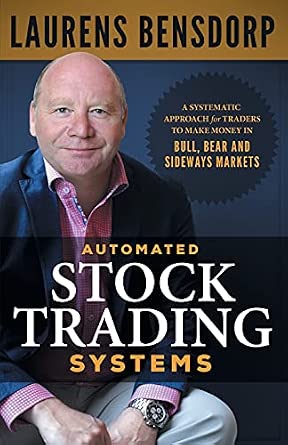 | Best for Systematic Traders | Format: Book | Primary subject: Automated stock trading systems | Approach: Systematic trading | VIEW LATEST PRICE | See Our Full Breakdown |
| AI Agent Investing with Claude: How AI Agents Automate Personal Finance |  | Best for Exploring AI-Agent Investing Concepts | Format: Not specified in supplied details | Named AI tool: Claude | Primary subject: AI agents and personal finance | VIEW LATEST PRICE | See Our Full Breakdown |
| AI for Day Trading: Advanced — Connect to the Live Market and Build an Automated Platform |  | Best for Readers Exploring Live-Market Automation | Format: Not specified in supplied details | Stated level: Advanced | Primary subject: AI-assisted day trading | VIEW LATEST PRICE | See Our Full Breakdown |
| automated investing platform | Format | Primary subject | ASIN | Audience fit |
|---|---|---|---|---|
| The Little Book of Robo Invest | Book | Robo investing | 1394225229 | Readers exploring hands-off investing |
| Robo-Advisors Explained: How A | Book | Automated investing systems | B0GD693NK8 | Readers evaluating robo-advising concepts |
| Automated Stock Trading System | Book | Automated stock trading systems | 1544506015 | Active traders |
| AI Agent Investing with Claude | Not specified in supplied details | AI agents and personal finance | B0HBT3JS1X | — |
| AI for Day Trading: Advanced | Not specified in supplied details | AI-assisted day trading | B0H98M2TPV | — |
More Details on Our Top Picks
The Little Book of Robo Investing: How to Make Money While You Sleep
The Little Book of Robo Investing is my first pick for readers who mean long-term, hands-off investing when they search for automated investing platforms. Its described subject is robo investing and the idea of building wealth through automation, giving it a broader beginner-facing angle than the other entries. It appears better suited to understanding the general appeal of automated investing than to building an active trading bot or configuring AI agents.
That broad fit is also its limitation. The supplied description does not explain how much the book covers portfolio construction, fees, rebalancing, taxes, or the differences among real robo-advisors. I would use it as a starting point for questions, not as evidence that a specific platform is suitable or that automated investing can reliably produce a particular result. Compared with Robo-Advisors Explained, this title has a more approachable, general framing, while the latter explicitly names risk and investor behavior. Compared with the systematic trading book, this one is aimed at a different problem: investing with less day-to-day involvement, rather than developing a trading system for changing market conditions.
The title’s promise of making money while sleeping should be read as a description of the hands-off idea, not as a guarantee of returns. I can recommend it as the lineup’s clearest introductory match, but the available information is too sparse to confirm the depth or practical detail inside. Readers who need current platform comparisons, financial advice, or step-by-step account setup should look beyond this book and verify those details independently.
Pros:- Directly focused on robo investing and automated wealth-building.
- Its broad framing suits readers beginning to learn about hands-off investing.
- Offers a clearer long-term investing fit than the titles centered on AI agents or trading systems.
- The book format gives readers a learning resource rather than implying access to a live platform.
Cons:- The supplied description does not confirm its depth on portfolio design, fees, taxes, or rebalancing.
- The title’s wealth-building claim should not be treated as a promise of investment results.
- It is not itself a robo-advisor, brokerage account, or trading platform.
Best for: New investors who want a plain-language starting point for understanding robo-investing and long-term automation.
Not ideal for: Readers seeking a working investment account, verified platform comparisons, detailed implementation instructions, or a guide to active automated trading.
- Format:Book
- Primary subject:Robo investing
- Stated angle:Building wealth through automated investing
- Audience fit:Readers exploring hands-off investing
- Live investment platform:Not identified in supplied details
- Specific platform integrations:Not provided
- Author or edition details:Not provided
- ASIN:1394225229
Our verdict“I rank this first for readers seeking a general introduction to robo-investing, while recommending that they verify platform details elsewhere.”
Robo-Advisors Explained: How Automated Investing Systems Manage Money, Risk, and Behavior
Robo-Advisors Explained earns the second spot because its stated focus reaches beyond automation itself. It addresses how automated systems manage money, risk, and behavior, three subjects that can help readers judge what a hands-off service is meant to do. That focus makes it a more targeted choice than The Little Book of Robo Investing for someone who already understands the basic concept and wants to think about risk and investor decisions.
The distinction matters: a robo-advisor can automate parts of portfolio management, but automation does not remove investment risk or make every investor’s behavior predictable. A book that treats behavior as part of the subject may help readers ask better questions about how a service handles changing goals or market stress. Still, the supplied description does not identify a particular advisor, explain the book’s methods, or confirm how deeply it covers portfolio allocation, tax features, or fees. I cannot infer those details from the title alone.
Compared with The Little Book of Robo Investing, this entry sounds more focused on the mechanics and human side of automated money management, while the earlier pick is the broader introductory option. It is also a closer fit for portfolio investors than Automated Stock Trading Systems, which is described around systematic trading across market conditions. The tradeoff is uncertainty: its stated coverage is promising, but the listing gives little information about the book’s contents. I’d choose it for the risk-and-behavior lens, not as a substitute for due diligence on a real platform.
Pros:- Explicitly covers automated investing systems and money management.
- Names risk as a core part of its scope rather than presenting automation as risk-free.
- Includes investor behavior, a useful lens for evaluating hands-off investing.
- Provides a more focused complement to the broader introduction in The Little Book of Robo Investing.
Cons:- No additional description confirms the book’s depth or practical examples.
- The listing does not identify platform comparisons, investment methods, or technical tools.
- It is educational material, not a service that manages a reader’s money.
Best for: Readers who want to understand how automated investment services relate to money management, risk, and investor behavior.
Not ideal for: Buyers who need a named platform comparison, a live managed account, or confirmed technical instructions for building an automated system.
- Format:Book
- Primary subject:Automated investing systems
- Stated coverage:Money management, risk, and behavior
- Audience fit:Readers evaluating robo-advising concepts
- Series:AI & Personal Finance Book 3
- Platform or service:Not identified in supplied details
- Author or edition details:Not provided
- ASIN:B0GD693NK8
Our verdict“I recommend it to readers focused on the risk and behavior side of robo-advising, with the caveat that its detailed contents are not specified.”
Automated Stock Trading Systems: A Systematic Approach for Traders in Bull, Bear, and Sideways Markets
Automated Stock Trading Systems is the strongest fit here for readers interested in active trading rather than a diversified, hands-off robo-advisor. Its description explicitly presents a systematic approach and names bull, bear, and sideways markets. That gives it a more defined trading-oriented scope than the two broad robo-investing books, and a more clearly stated market-condition focus than either AI-themed title.
For a trader, a system that is meant to address different market environments may prompt more useful questions than a strategy framed around only one kind of market. The available information, however, does not say what systems are covered, whether the book includes code, how signals are tested, or how it discusses risk controls. I would not assume that it provides a ready-to-run trading program or that its approaches are suitable for a particular account. Automated execution can magnify the consequences of a flawed strategy, so readers should treat system ideas as material to scrutinize rather than instructions to follow blindly.
Compared with AI for Day Trading: Advanced, this book has a clearer stated scope: systematic stock trading across three market conditions, while the AI guide is described around connecting tools to live market data and building an automated day-trading platform. Compared with the robo-advisor titles, this one targets more active decisions and trading processes, not primarily long-term portfolio management. Its role is distinct and useful, but it is not the right starting point for someone who simply wants a service to invest contributions automatically.
Pros:- The description explicitly covers bull, bear, and sideways market conditions.
- Focuses on systematic approaches to automated trading.
- Offers a clearer active-trading scope than the broad robo-investing books.
- Can help traders frame questions about how a system may respond to differing market conditions.
Cons:- The supplied details do not specify strategies, code, testing methods, or risk controls.
- It is a book, not a ready-to-run automated trading system.
- Its active-trading focus may not match buyers seeking long-term, hands-off investing.
Best for: Active traders seeking a systematic framework for thinking about stock trading across bull, bear, and sideways markets.
Not ideal for: Beginners looking for a hands-off robo-advisor, long-term portfolio management, or an account that automatically invests contributions.
- Format:Book
- Primary subject:Automated stock trading systems
- Approach:Systematic trading
- Market conditions named:Bull, bear, and sideways markets
- Audience fit:Active traders
- Code or software:Not specified
- Risk-control details:Not specified
- ASIN:1544506015
Our verdict“This is my pick for systematic traders, but the description does not establish that it includes executable strategies or software.”
AI Agent Investing with Claude: How AI Agents Automate Personal Finance
AI Agent Investing with Claude is aimed at readers curious about using AI agents for investment research, trading, and portfolio rebalancing. That makes it more technology-specific than the general robo-investing books and broader in personal-finance scope than a guide framed only around day trading. Its stated subject may appeal to readers trying to understand where AI agents could fit into an investing workflow.
But the description offers no further details about which tasks are automated, what setup is required, how trades are reviewed, or what safeguards the book recommends. The mention of Claude does not establish that the title includes working software, an integration, or reliable financial output. I would approach it as a topic guide rather than a trusted autonomous investment system. Readers should be especially careful about sharing financial credentials or letting generated instructions place trades without independent review.
Compared with AI for Day Trading: Advanced, this entry sounds broader: it names personal finance, research, trading, and rebalancing, whereas the other AI title is specifically described around live market data and day trading. Compared with Robo-Advisors Explained, it foregrounds an AI-agent workflow rather than the management of money, risk, and behavior. That distinction may make it interesting for technically curious readers, but the thin product information leaves more unanswered questions than the better-defined trading-system book.
Pros:- Its stated scope connects AI agents with personal finance and investing tasks.
- Names research, trading, and portfolio rebalancing as possible automation areas.
- Offers a distinct AI-workflow angle compared with the robo-advisor books.
- May help readers formulate questions about where agent automation belongs in an investing process.
Cons:- The supplied details do not explain setup, integrations, oversight, or security practices.
- The title does not verify that Claude can reliably make investment decisions or execute trades.
- No further contents or features are provided for evaluating practical depth.
Best for: Technically curious investors who want to explore the idea of Claude-based agents supporting research, trading, or portfolio rebalancing.
Not ideal for: Readers seeking a verified automated investing service, proven trading performance, or clear implementation and security details.
- Format:Not specified in supplied details
- Named AI tool:Claude
- Primary subject:AI agents and personal finance
- Stated tasks:Research, trading, and portfolio rebalancing
- Live market connection:Not specified
- Automation safeguards:Not specified
- Author or edition details:Not provided
- ASIN:B0HBT3JS1X
Our verdict“I’d choose it to explore AI-agent investing ideas, not as evidence that a safe or complete investing platform is included.”
AI for Day Trading: Advanced — Connect to the Live Market and Build an Automated Platform
AI for Day Trading: Advanced has the most explicitly technical promise in the lineup: connecting AI tools to live market data and building an automated day-trading platform. That focus separates it from long-term robo-advising and from the systematic trading book, whose description does not mention AI or a live-data connection. It is the most direct thematic match for someone asking how AI might participate in an active trading setup.
The word “build” should not be mistaken for proof of a complete product or tested workflow. The supplied information contains no further details about contents or features, so I cannot confirm whether it includes code, broker integrations, data sources, setup instructions, testing, or safeguards. A live-market system also raises practical concerns about data quality, execution, and how a human checks decisions. Without more information, I would treat this as a potentially relevant guide title, not a dependable blueprint or a platform that can trade on a reader’s behalf.
Compared with AI Agent Investing with Claude, this title is narrower and more trading-specific, with live market data and day trading at its center. The Claude title describes a wider set of personal-finance tasks, including research and rebalancing, though its implementation details are also unknown. Compared with Automated Stock Trading Systems, this one promises an AI-led build angle, while the latter has the clearer stated coverage of market conditions. It ranks fifth because the topic is specialized and the supplied description leaves the most practical questions unanswered.
Pros:- Directly addresses AI tools and live market data.
- The stated build focus distinguishes it from general robo-advisor education.
- Targets day trading rather than implying a long-term portfolio service.
- May suit readers already investigating technical trading workflows.
Cons:- No further contents or features are supplied to establish implementation depth.
- Code, broker integrations, data sources, testing, and safeguards are not confirmed.
- The title does not establish that a live platform or working trading system is included.
Best for: Advanced, technically curious traders researching the idea of connecting AI tools to live data for automated day trading.
Not ideal for: New investors, long-term robo-advisor shoppers, or anyone expecting a verified platform, broker connection, code package, or turnkey trading bot.
- Format:Not specified in supplied details
- Stated level:Advanced
- Primary subject:AI-assisted day trading
- Stated technical focus:Connecting AI tools to live market data
- Stated goal:Building an automated trading platform
- Code or broker integrations:Not specified
- Testing or safety details:Not specified
- ASIN:B0H98M2TPV
Our verdict“This is the most specialized AI day-trading title, but I rank it last because its practical contents and safeguards are not described.”

How We Picked
I assessed the five entries as educational products about automated investing, since the information supplied identifies books or guides rather than investable services. A title that promises automation is not the same as an automated investing platform: it may explain a concept without offering an account, software, portfolio management, or trade execution. I make that difference visible throughout the ranking so readers do not mistake a reading recommendation for a financial product recommendation.
My order reflects the match between each item’s stated subject and the main decisions buyers face. The broad robo-investing title leads because it most naturally fits readers seeking an entry point to hands-off investing. I place Robo-Advisors Explained close behind because its stated attention to risk and behavior addresses two important parts of automated money management. The systematic trading book earns a distinct place for active traders, with its stated coverage of bull, bear, and sideways markets. The two AI titles rank lower not because AI is irrelevant, but because their supplied descriptions do not give enough detail to judge coverage, practical steps, or safeguards.
I also compared scope, buyer fit, and information certainty. I do not infer chapter lists, author credentials, platform integrations, updates, code, financial results, or specific strategies where none are supplied. That means the pros and cons distinguish what the descriptions support from what remains unknown. These books can help readers frame questions and build vocabulary; they cannot substitute for checking a service’s fees, investment approach, security, tax features, or regulatory status before sharing money or account access.
| automated investing platform | Format | Primary subject | Audience fit |
|---|---|---|---|
| The Little Book of Robo Invest | Book | Robo investing | Readers exploring hands-off investing |
| Robo-Advisors Explained: How A | Book | Automated investing systems | Readers evaluating robo-advising concepts |
| Automated Stock Trading System | Book | Automated stock trading systems | Active traders |
| AI Agent Investing with Claude | Not specified in supplied details | AI agents and personal finance | — |
| AI for Day Trading: Advanced | Not specified in supplied details | AI-assisted day trading | — |
Factors to Consider When Choosing Automated Investing Platforms
Before choosing among these five entries, I’d separate two different needs: learning about automated investing and hiring a service to manage or execute investments. Every product here is presented as a book or guide; none is identified as an account or live platform. Choose by the problem you want to understand, then verify any real financial service independently.
Start with your definition of automation
Robo-advising and automated trading are different jobs. A robo-advisor generally refers to a service that manages a portfolio according to a selected approach, while automated trading refers to rules or software that may place trades. The supplied titles span both ideas. The Little Book of Robo Investing and Robo-Advisors Explained are the closer matches for long-term, hands-off portfolio management. Automated Stock Trading Systems and the two AI titles are more relevant to active trading or technical workflows.
If you want your contributions invested automatically, a book about day trading may answer the wrong question. If you want to study systematic entry and exit rules, a general introduction to robo-advisors may be too broad. I would name the job first, then pick the book whose stated topic is closest.
Decide how much technical detail you need
The titles suggest different levels and kinds of technical interest, but the descriptions do not confirm chapter-level detail. AI for Day Trading: Advanced names live market data and platform building, making it the most specialized technical prospect. AI Agent Investing with Claude points to agents applied to research, trading, and rebalancing. Neither listing confirms code, integrations, setup steps, or tested examples.
By contrast, Automated Stock Trading Systems has a stated systematic-trading frame and identifies three market conditions, even though its specific methods are not supplied. Readers who prefer investing concepts over technical construction may find the robo-investing titles better aligned. Before buying any guide for a specific skill, check the full listing for format, contents, and any sample material available.
Treat risk and human oversight as part of automation
Automation changes how decisions are made; it does not remove the possibility of loss or bad decisions. A system can follow its rules consistently and still use rules that do not fit a buyer’s goals. That is why Robo-Advisors Explained is distinct in this set: its stated scope includes risk and investor behavior. The systematic trading title also invites questions about how a method is meant to operate across market conditions, though the listing does not describe its risk controls.
For AI tools, I would ask who checks recommendations, how account information is protected, what happens when data is incomplete, and whether a person must approve trades. The descriptions of the AI titles do not answer those questions. Do not give a tool financial-account access or execute generated trades solely because a book title suggests automation.
Check what the product actually includes
A title is a topic signal, not a feature list. The supplied information identifies two entries as books and gives limited descriptions for the remaining titles, but it does not establish the complete contents of any item. It also does not confirm live software, investment accounts, market-data subscriptions, broker connections, code, current platform comparisons, or ongoing updates.
Before choosing, confirm the format and edition, read the full product description, and look for a table of contents or sample if available. If your goal is to put money into a managed service, separately review that service’s fees, investment choices, account protections, tax handling, withdrawal rules, and disclosures. Educational material can help you understand those questions, but it cannot answer for a specific provider without reliable product details.
Match the pick to your investing stage
For an early overview of hands-off investing, I’d begin with The Little Book of Robo Investing. If you already know the broad concept and want the stated emphasis on risk and behavior, consider Robo-Advisors Explained. For active traders, the systematic approach described by Automated Stock Trading Systems is the clearest market-method fit. The AI titles are more specialized prospects for readers researching agent workflows or live-market automation, but their sparse descriptions mean buyers should confirm details before relying on them.
No single title is best for every reader because the lineup mixes long-term investing, portfolio management concepts, systematic trading, and AI tooling. My ranking favors the clearest match and description, not a claim about investment performance. Choose the learning resource that addresses your actual task, and use a separate due-diligence process before selecting a financial platform.
Frequently Asked Questions
Are any of these products automated investing platforms?
No. The supplied information presents these entries as books or guides about robo-investing, AI agents, or automated trading. It does not identify a brokerage account, managed portfolio service, live trading software, or platform subscription. If you need a service that invests or trades money, compare actual providers separately and confirm what each one does before opening an account.
Which pick is best for someone new to robo-investing?
I would start with The Little Book of Robo Investing because its stated subject is robo investing and the broader idea of building wealth through automation. Its description does not confirm how much detail it provides on fees, allocations, taxes, or platform selection, so treat it as an introductory learning choice rather than a complete guide to choosing a provider.
Which title is more relevant to active trading?
Automated Stock Trading Systems is the clearest fit for a systematic trading approach because its description explicitly names bull, bear, and sideways markets. For readers specifically interested in AI and live market data, AI for Day Trading: Advanced is a closer thematic match, but its supplied information does not confirm code, integrations, testing, or trading safeguards.
Do the AI-focused titles include working software or broker integrations?
The supplied descriptions do not confirm software, code, broker connections, live data access, or a ready-to-run trading system for either AI title. Their titles and brief descriptions indicate topics, not included features. I would check the complete listing and any available sample before buying, and I would not assume an AI guide makes a system safe or suitable for real-money trading.
How should I choose between a robo-advisor and an automated trading system?
Start with whether you want ongoing portfolio management or a tool for active trading decisions. A robo-advisor is the closer category for hands-off, goal-based investing, while an automated trading system is aimed at rule-based trade execution or analysis. The books here discuss those subjects but do not provide the services themselves, so assess any provider’s investment approach, fees, risks, account protections, and oversight separately.
Conclusion
My recommendation depends on what you want to learn. For a first introduction to hands-off robo-investing, choose The Little Book of Robo Investing. If your main questions concern risk and investor behavior, Robo-Advisors Explained has the more targeted stated scope. Active traders should start with Automated Stock Trading Systems for its explicit coverage of different market conditions, while AI-curious readers can compare the Claude agent title with the live-market day-trading guide based on whether they care more about broader investing tasks or technical trading workflows.
None of these entries is a live automated investing platform, and the available descriptions do not establish working software or investment performance. I would use them to learn and form better questions, then examine real providers and their disclosures before committing money or account access. The best fit is the title whose stated subject matches your task—and whose full contents, once checked, meet the level of detail you actually need.
Black Friday Picks

Vari ComfortEdge Electric Standing Desk, 60 x 30 in, Black/Slate
As an affiliate, we earn on qualifying purchases.