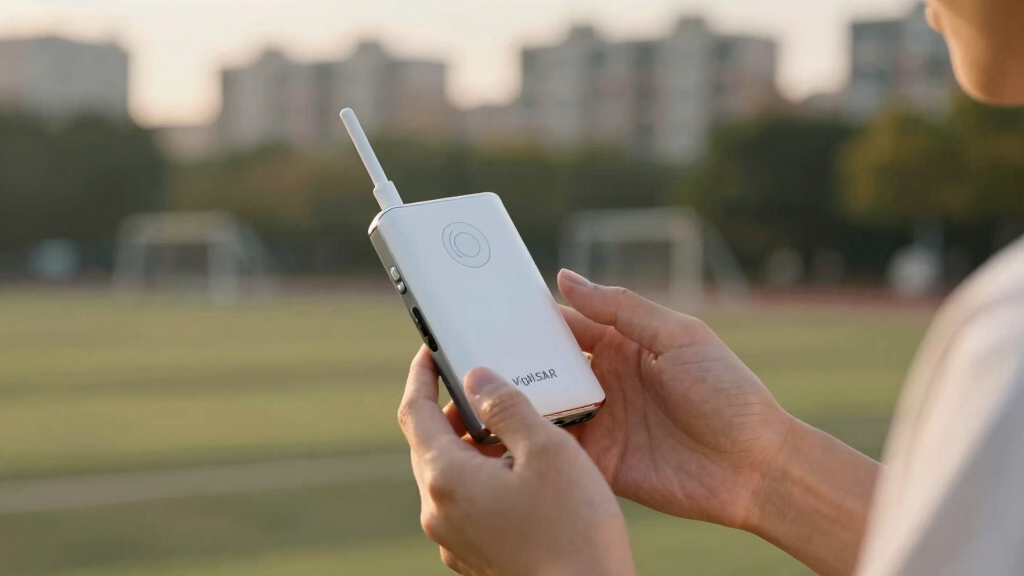

📊 Full opportunity report: VigilSAR: The Object That Isn’t Transmitting on ThorstenMeyerAI.com — validation score, market gap, and execution plan.

Get smart everyday buys delivered free with Prime
- Fast, free delivery on millions of items
- Prime Video, Amazon Music and more included
- Member-only deals all year
TL;DR
VigilSAR is a radar-based platform that identifies objects, like ships, that appear on radar but lack transponder signals. It improves maritime domain awareness by highlighting ‘dark’ vessels, with capabilities demonstrated using ESA’s Sentinel-1 data.
VigilSAR has announced a new radar-based intelligence platform capable of detecting objects that appear on synthetic-aperture radar (SAR) imagery but do not broadcast transponder signals. This development enhances maritime domain awareness by identifying vessels that are intentionally or unintentionally ‘dark,’ which is critical for security, safety, and law enforcement. The company states that its core capability leverages publicly available European Space Agency SAR data, with broader commercial and defense applications in development.
The platform, VigilSAR, pairs SAR detection algorithms with AI classification systems to identify and categorize radar returns. Its key feature is the ability to fuse radar detections with signals from AIS and ADS-B transponders, and to flag objects with no corresponding transponder activity. This ‘residue’ — detections without explanations — is where VigilSAR aims to provide value, especially in monitoring illegal fishing, sanctions evasion, smuggling, or vessels in distress.
While VigilSAR’s detection and classification methods are based on established remote sensing techniques, its novelty lies in the fusion and interpretation of signals. The system’s reach across commercial satellite constellations and its deployment in secure, air-gapped environments are part of its ongoing development and positioning, not yet fully demonstrated or publicly priced. The platform is positioned within the defense and intelligence sectors but has clear applications for civilian maritime safety and law enforcement.
VigilSAR — the object that isn’t transmitting
Radar sees through cloud and darkness, when cameras can’t. Fuse it with transponder data and the signal is the one detection no transponder explains.
Independent commentary on public positioning, produced with AI assistance under human editorial oversight. The views are the author’s own and may change. This does not verify or endorse VigilSAR’s capabilities, contracts, or performance. Capabilities on Sentinel-1 / Copernicus reflect a free, public data foundation; commercial-constellation and air-gapped-deployment references reflect stated positioning, not independently demonstrated fact. ISR and related technologies may be subject to export controls and dual-use regulations — lawful, ethical use is solely the operator’s responsibility. Nothing here is an offer, pricing, or operational/safety/legal advice. AI detection and classification can err and require human verification. Product and company names are trademarks of their respective owners; mention does not imply endorsement.
Implications for Maritime Security and Safety
VigilSAR’s ability to identify vessels that go ‘dark’ — i.e., those not broadcasting transponder signals — addresses a critical gap in maritime surveillance. This capability can help coast guards, fisheries regulators, and law enforcement agencies combat illegal activities such as unreported fishing, smuggling, and sanctions evasion. It also enhances search-and-rescue efforts by detecting vessels in distress that have disabled or failed transponders. The platform’s reliance on publicly accessible SAR data and AI-driven fusion makes it a versatile tool with broad operational relevance, potentially transforming maritime domain awareness.
As an affiliate, we earn on qualifying purchases.
Background on SAR and Maritime Surveillance
Traditional optical satellites are limited by weather and daylight, making SAR a vital alternative for all-weather, day-and-night imaging. SAR sensors actively illuminate surfaces with microwave signals, allowing detection of objects regardless of weather conditions. However, interpreting SAR data requires sophisticated AI to convert radar signals into actionable intelligence. VigilSAR builds on this foundation, utilizing publicly available Sentinel-1 data and established detection-classification pipelines. Its focus on fusing radar data with transponder signals addresses longstanding challenges in maritime security, especially in detecting vessels that intentionally ‘go dark.’
“VigilSAR’s core innovation is in fusing radar detections with transponder signals to highlight anomalous objects, which is a game-changer for maritime surveillance.”
— Thorsten Meyer, remote sensing expert
satellite SAR imagery analysis tools
As an affiliate, we earn on qualifying purchases.
As an affiliate, we earn on qualifying purchases.
Unconfirmed Aspects of VigilSAR’s Capabilities
While VigilSAR’s detection and fusion approach is well-founded, specific details about its commercial deployment, pricing, and full operational testing remain undisclosed. The platform’s broader capabilities, such as real-time processing and integration with existing maritime security systems, are still under development and have not been independently verified outside of the company’s claims.
As an affiliate, we earn on qualifying purchases.
Next Steps for VigilSAR Deployment and Validation
VigilSAR plans to expand its demonstrations across different satellite constellations and operational environments. Further validation in real-world maritime scenarios is expected, alongside potential partnerships with coast guards and defense agencies. Public availability of detailed performance metrics and pricing information will likely follow after initial deployments and testing phases.
As an affiliate, we earn on qualifying purchases.
Key Questions
How does VigilSAR detect vessels without transponders?
It uses SAR imagery to detect radar-visible objects and fuses this data with signals from AIS and ADS-B transponders. Vessels that appear on radar but lack transponder signals are flagged as anomalies.
Is VigilSAR’s technology proven in operational environments?
The core detection capabilities are demonstrated using publicly available Sentinel-1 SAR data, but broader deployment and real-world validation are still in progress.
Who can use VigilSAR’s platform?
The platform is positioned for defense, maritime security, coast guards, and law enforcement agencies. Commercial and civilian applications are also being explored.
What are the limitations of VigilSAR’s system?
Details about its scalability, real-time operation, and integration with existing systems remain undisclosed. Its effectiveness outside controlled demonstrations is still being evaluated.
Will VigilSAR be publicly available or only through government contracts?
Currently, VigilSAR is engaging in briefing requests and is not offering a self-serve product. Public commercial availability has not been announced.
Source: ThorstenMeyerAI.com
Halloween Picks
halloween
As an affiliate, we earn on qualifying purchases.