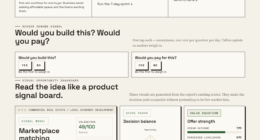
📊 Full opportunity report: How A Wholesale Marketplace Can Help Independent Retailers Source Stock on IdeaNavigator AI — validation score, market gap, and execution plan.

Get smart everyday buys delivered free — and shop member deals
- Fast, free delivery on millions of items
- Access to Prime Big Deal Days deals on October 6–7
- Prime Video, Amazon Music and more included
TL;DR

A proposal for a wholesale marketplace would help independent retailers test products in very small quantities when distributor minimums make trial orders difficult. The concept remains at the validation stage: its suggested test is to broker orders between 20 brands and 50 shops and track reorders within a quarter.
IdeaNavigator AI’s proposal describes a wholesale marketplace that would let independent retailers order trial-size product assortments, including five-unit tests, rather than meet larger distributor minimums. The proposal does not report an operating business or completed pilot: it suggests first brokering orders between 20 brands and 50 shops and measuring whether trial purchases lead to standard reorders within a quarter.
According to the IdeaNavigator AI proposal, the marketplace would create a dedicated lane for small trial orders. Brands could set micro-minimums, while consolidated fulfillment would make small quantities more practical to ship. Retailers would test assortments in their stores and track sell-through, the rate at which stock is sold to customers.
The proposal says that if a trial performs well, the shop and brand could move into a standard wholesale relationship. It suggests combining a commission on orders with subscription analytics for brands that want to monitor trial-product performance. The proposal does not specify a commission rate, subscription price, shipping arrangement or software plan.
For initial validation, IdeaNavigator AI suggests manually arranging trial orders between 20 brands and 50 shops. The proposed measure is conversion from trial orders to standard reorders within a quarter. The proposal reports no results and does not say whether the test has begun.
Testing Demand Beyond Case Minimums
The IdeaNavigator AI proposal argues that a distributor’s minimum order can make experimenting with an unfamiliar product costly for an independent shop: the retailer must commit to more stock before knowing whether local customers will buy it. A small-order channel could lower the amount of inventory tied up in a test and give stores a way to broaden their selection without first making a large commitment.
The proposal also identifies a practical constraint: shipping economics. A five-unit order may be small enough for a retailer to risk, but freight and handling could make it uneconomic for a brand or marketplace to fulfill. Consolidating orders is proposed as a way to address that tension, but the proposal provides no operating costs or evidence that consolidation can make the model work.
Brands could gain a structured way to see whether trial products sell before pursuing wider distribution, according to the proposal. That benefit would depend on reliable sell-through data and enough repeat orders to justify the service. The suggested commission and analytics subscription are possible revenue streams, not demonstrated sources of income.
As an affiliate, we earn on qualifying purchases.
From Marketplace Model to Small Trials
The IdeaNavigator AI proposal identifies a problem in independent retail: shops may want to try new products, while distributor case minimums and opening-order sizes can make small experiments difficult. It says product discovery may then be concentrated at trade shows, which it characterizes as an annual opportunity. The proposal supplies no survey data or retailer interviews establishing how widespread that pattern is.
IdeaNavigator AI points to the wholesale-marketplace model associated with Faire as evidence that marketplace-based wholesale is established. The proposal’s stated distinction is a focus on genuinely small trial orders and consolidated shipping, rather than wholesale ordering generally. It provides no comparison of existing platforms, market-size estimate or evidence of unmet demand.
The proposal recommends a narrow starting point: focus on independent shop owners who cannot meet distributor minimums and test a manual workflow before building a full marketplace. Such a test could examine whether shops place trial orders and reorder, but would not by itself establish that fulfillment can scale or that the business can earn a profit.
As an affiliate, we earn on qualifying purchases.
Pilot Results and Costs Remain Unknown
IdeaNavigator AI’s proposal reports no launch or pilot results. It does not say whether brands and retailers have agreed to participate, who would operate the manual test, or when it might take place. Its figures of 20 brands and 50 shops describe a suggested validation design, not confirmed participants.
The proposal leaves key commercial details unresolved, including how shipping would be consolidated, who would cover fulfillment costs, what minimum quantities brands would accept, and how the marketplace would handle returns or unsold stock. It provides no evidence on retailer demand, product sell-through, reorder rates, customer acquisition costs or the level of fees buyers and brands would accept.
The proposal also does not explain how sell-through information would be collected and shared, or whether a quarter would provide enough time to judge products with different sales cycles. Until a pilot reports outcomes, the marketplace’s ability to turn small tests into repeat wholesale business remains unproven.
As an affiliate, we earn on qualifying purchases.
Measure Reorders Before Building
IdeaNavigator AI proposes manually brokering trial orders between 20 brands and 50 shops, then measuring how many trials convert to standard reorders within a quarter. The suggested test could provide an early indication of retailer interest and product performance without first building a full ordering platform.
Any assessment would also need to account for the cost and reliability of consolidated fulfillment, the time required to gather sell-through data, and whether repeat orders generate enough value to support marketplace fees or analytics subscriptions. The proposal announces no timeline, pilot launch or later development milestone, so the concept remains at the proposal stage.
Source: IdeaNavigator AI proposal. The proposal is the source for the marketplace concept, its suggested operating model and its proposed 20-brand, 50-shop validation test. It does not report a launch, confirmed participants or pilot results.
independent retail product testing
As an affiliate, we earn on qualifying purchases.
As an affiliate, we earn on qualifying purchases.
Key Questions
What is the proposed marketplace?
In IdeaNavigator AI’s proposal, it is a wholesale marketplace lane where independent retailers could order small trial assortments from brands, with consolidated fulfillment intended to make those orders practical.
Has the marketplace launched?
No launch is reported in the proposal. It describes a possible model and a suggested manual validation test, but does not confirm that the test has started.
How would the proposed pilot work?
IdeaNavigator AI suggests brokering trial orders between 20 brands and 50 shops, then tracking whether retailers move from trial purchases to standard reorders within a quarter. The proposal presents these as suggested participant numbers, not confirmed commitments.
How might the marketplace make money?
The proposal suggests combining a take rate on orders with subscriptions for brand analytics. It provides no prices, commission rates or evidence of revenue.
What is the main unresolved issue?
The proposal leaves unclear whether consolidated shipping can make very small orders economical. Retailer demand, reorder rates and the costs of operating the service are also unproven.
Source: IdeaNavigator AI
Halloween Picks
halloween
As an affiliate, we earn on qualifying purchases.