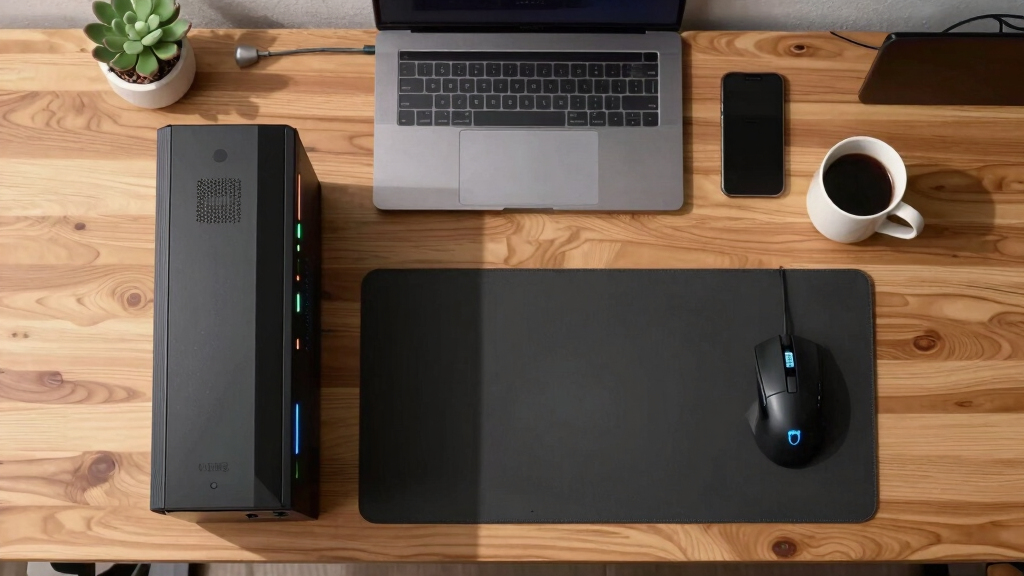

📊 Full opportunity report: Build vs Buy a Prebuilt AI Workstation on ThorstenMeyerAI.com — validation score, market gap, and execution plan.

Get smart everyday buys delivered free with Prime
- Fast, free delivery on millions of items
- Prime Video, Amazon Music and more included
- Member-only deals all year
TL;DR
In 2026, prebuilt AI workstations frequently offer better value and faster deployment than DIY builds due to component shortages and price spikes. The decision depends on priorities like speed, control, and long-term costs, with hybrid options gaining popularity.
In 2026, prebuilt AI workstations are often more cost-effective and faster to deploy than custom-built systems, challenging the traditional assumption that building is always cheaper. This shift is driven by global component shortages and price spikes, making prebuilt solutions increasingly attractive for organizations needing reliable, ready-to-run AI hardware.
Prebuilt AI workstations arrive fully assembled with high-end GPUs, optimized cooling, and pre-installed software such as CUDA and TensorFlow, reducing setup time significantly. For more insights, see the original analysis. Vendors like Lambda and Puget offer validated systems that undergo extensive testing for thermals and noise, ensuring reliability and longevity. These prebuilt systems typically include warranties and support, further reducing operational risks.
In contrast, building an AI workstation from scratch involves sourcing individual components, which has become more expensive and time-consuming due to supply chain disruptions. DIY builds require technical expertise, time for assembly, BIOS tuning, troubleshooting, and ongoing maintenance, often resulting in hidden costs that can offset initial savings. Deployment times for DIY systems can extend to several weeks or months, whereas prebuilt options can be delivered and operational within 1–2 weeks.
Build vs buy
an AI workstation.
The real question behind this whole series: do you pull the five heat-and-noise levers yourself, or buy a prebuilt where the vendor pulled them for you? And in 2026, the old “building is cheaper” rule has broken. Match your situation in Part 3.
Why the 2026 Shift Changes AI Hardware Choices
This shift impacts organizations' operational efficiency, costs, and strategic flexibility. Faster deployment of prebuilt systems allows companies to meet tight project deadlines and reduces technical overhead. Meanwhile, the increased costs and complexities of DIY builds mean that organizations must carefully evaluate long-term ownership expenses, including maintenance and upgrades. The trend toward hybrid solutions reflects a need for balanced control and convenience, influencing procurement strategies across industries relying on AI infrastructure.prebuilt AI workstation with high-end GPU
As an affiliate, we earn on qualifying purchases.
As an affiliate, we earn on qualifying purchases.
Component Shortages and Price Spikes Reshape Hardware Decisions
Global chip shortages and increased component prices have affected the entire tech industry since 2023, with GPU prices rising sharply. This market evolution makes prebuilt solutions more appealing for organizations seeking quick deployment and reliable performance. Previously, building a custom AI workstation was often cheaper, but in 2026, bulk purchasing and validated manufacturing processes have allowed prebuilt vendors to offer competitive or even lower prices than DIY options. This market evolution makes prebuilt solutions more appealing for organizations seeking quick deployment and reliable performance.
Additionally, the complexity of sourcing compatible parts and tuning hardware has increased, making the DIY route more resource-intensive. Leading vendors now include extensive testing, thermal validation, and support as standard features, further tilting the decision in favor of prebuilt systems for many users.
"Our prebuilt AI workstations undergo rigorous testing for thermals and noise, ensuring reliability that DIY systems often can't match without significant effort."
— A representative from Lambda
As an affiliate, we earn on qualifying purchases.
Remaining Questions About Long-Term Costs and Flexibility
It is not yet clear how the long-term costs of prebuilt systems compare to DIY builds, especially considering potential hardware upgrades, custom security configurations, and evolving software needs. The durability and upgradeability of prebuilt systems may vary by vendor, and some organizations may still prefer the granular control offered by custom builds for specific security or compliance requirements.
professional AI workstation warranty
As an affiliate, we earn on qualifying purchases.
As an affiliate, we earn on qualifying purchases.
Future Trends in AI Workstation Procurement
As component supply chains stabilize and prices fluctuate, the relative advantages of build versus buy will continue evolving. Vendors are likely to introduce more modular, upgradeable prebuilt systems, and organizations may adopt hybrid approaches combining prebuilt hardware with custom software and security layers. Monitoring these developments will be crucial for organizations making procurement decisions in 2026 and beyond.
CUDA TensorFlow preinstalled workstation
As an affiliate, we earn on qualifying purchases.
As an affiliate, we earn on qualifying purchases.
Key Questions
Are prebuilt AI workstations more expensive than building my own?
Not necessarily. Due to bulk purchasing and component shortages, prebuilt systems often match or beat DIY prices in 2026, especially when factoring in the cost of time and troubleshooting for custom builds.
How long does it typically take to deploy a prebuilt AI workstation?
Most prebuilt systems can be delivered and ready to use within 1–2 weeks, whereas DIY builds may take several weeks or months due to sourcing, assembly, and testing.
Can I upgrade prebuilt AI workstations easily later on?
This depends on the vendor and model. Many prebuilt systems now offer modular components for upgrades, but some may have limitations compared to custom-built setups.
What are the main risks of building my own AI workstation?
The main risks include higher initial costs, longer deployment times, potential hardware incompatibilities, and the need for technical expertise to troubleshoot and maintain the system.
Source: ThorstenMeyerAI.com
Columbus Day / Indigenous Peoples' Day Picks
long weekend sales
As an affiliate, we earn on qualifying purchases.