

🔍 Read the full analysis: 13 AI Automation Tools That Will Define 2026 on ThorstenMeyerAI.com

Get smart everyday buys delivered free with Prime
- Fast, free delivery on millions of items
- Prime Video, Amazon Music and more included
- Member-only deals all year
TL;DR
In 2026, 13 AI automation tools are emerging as industry leaders, shaping workflows across development, testing, and network operations. This report details their features, significance, and what to expect next.
Thirteen AI automation tools are emerging as key players in 2026, with many designed to enhance development workflows, testing, and operational efficiency. For an overview of the top tools, see the original analysis. These tools are gaining attention for their ability to combine AI agents with minimal coding, supporting rapid automation across platforms. Their rise reflects a broader trend toward integrated, scalable AI solutions that cater to both technical and non-technical users, making automation more accessible and powerful than ever before. Learn more in this comprehensive guide.
The landscape of AI automation software in 2026 is crowded with options that vary in complexity, specialization, and scalability. Notably, tools like Google AI Studio are leading for building scalable workflows, while specialized solutions such as Spec-Driven AI Testing stand out for testing automation. Many of these platforms prioritize seamless integration with existing development environments via APIs and CI/CD pipelines, emphasizing ease of use alongside advanced customization capabilities.
Evaluation criteria for these tools include their ability to automate complex workflows, support for popular programming languages like Python and JavaScript, and their scalability for enterprise deployment. For detailed insights, see the detailed checklist. Pricing models range from affordable tiered subscriptions suitable for small teams to premium offerings with extensive features for large organizations. The emphasis on combining AI agents with low-code interfaces signifies a shift toward democratizing automation, enabling users with varying technical skills to develop and deploy AI-driven workflows quickly.
The 13 picks
- 1
 Software Testing with Generative AIView on Amazon →
- 2
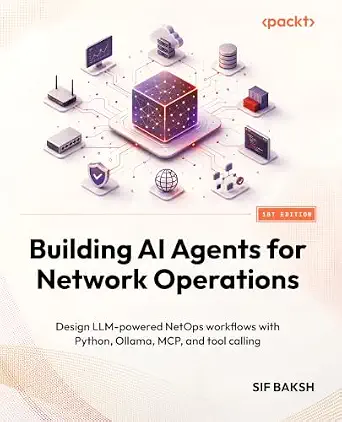 Building AI Agents for Network Operations: Design LLM-powered NetOps workflow…View on Amazon →
- 3
 40 Python Programming Projects for AI Agents and AutomationsView on Amazon →
- 4
 The Claude Code Operating Model: Build Scalable AI Coding Systems with Skills…View on Amazon →
- 5
 Spec-Driven AI Engineering: Build Reliable Software from Requirements to Code…View on Amazon →
- 6
 Building Agentic AI Systems: A Step-by-Step Guide to Creating LLM-Powered AI…View on Amazon →
- 7
 AI for Quality Assurance and Software Testing: The Practitioner’s Complete Gu…View on Amazon →
- 8
 Building Intelligent Applications with Claude AI: A Practical Guide to Creati…View on Amazon →
- 9
 Spec-Driven Software Testing with AI: Build Reliable Test Suites from Specifi…View on Amazon →
- 10
 Mastering Claude AI: The Complete Practical Guide to Prompt Engineering, Proj…View on Amazon →
- 11
 Claude AI Automation & Monetization: Build AI-Powered Systems, Automate Workf…View on Amazon →
- 12
 Google AI Studio Guide 2026: Master Google AI Studio to Build Intelligent AI…View on Amazon →
- 13
 Agentic Coding with Claude Code (5-in-1): A Practical Developer’s Handbook fo…View on Amazon →
Impact of Leading AI Automation Tools on Industry in 2026
The rise of these 13 AI automation tools in 2026 signifies a major shift in how organizations approach automation. Their ability to streamline workflows, reduce manual effort, and support rapid deployment directly affects productivity and operational agility. For developers and IT teams, these tools promise to lower barriers to automation, fostering innovation and faster time-to-market for new solutions. Moreover, their emphasis on integration and scalability suggests a future where AI-driven automation becomes a core component of enterprise infrastructure, influencing industry standards and best practices.
2026 Trends in AI Automation Development
Over the past few years, AI automation has transitioned from niche applications to mainstream enterprise tools. Early solutions focused on simple task automation, but recent developments have prioritized AI agents capable of handling complex workflows with minimal human input. The adoption of APIs, CI/CD support, and low-code interfaces has accelerated this shift, making automation accessible to a broader range of users. Industry reports and expert analyses indicate that 2026 is poised to be a pivotal year, with these 13 tools at the forefront of redefining automation standards.
Previous milestones include the rise of cloud-based automation platforms and the integration of AI into testing and network management. These developments laid the groundwork for the current wave of comprehensive, scalable tools that emphasize ease of use, customization, and integration. As organizations increasingly rely on AI for operational efficiency, the significance of these tools continues to grow, with ongoing innovations expected to further expand their capabilities.
Unresolved Questions About 2026 AI Automation Tools
While these 13 tools are gaining recognition, it remains unclear how widespread their adoption will be across different industries and organizational sizes. The long-term reliability of their scalability and integration capabilities, especially in complex legacy environments, is still under evaluation. Additionally, questions about the security, data privacy, and compliance measures of these AI platforms are ongoing, with industry experts calling for more transparency from vendors. The pace of innovation suggests that new tools may emerge, potentially reshaping the landscape further before the year concludes.
Next Steps for Industry Adoption and Development
Organizations should monitor the ongoing development and deployment of these AI automation tools, focusing on their integration with existing systems and scalability. Industry analysts recommend pilot programs and phased implementations to evaluate performance and compatibility. Vendors are expected to release updates that enhance security, expand features, and improve user experience throughout 2026. Researchers and developers will likely continue refining AI agents and low-code interfaces, further lowering barriers to automation adoption. Stakeholders should also stay informed about evolving standards and best practices to maximize the benefits of these emerging technologies.
Key Questions
Which of these tools is most suitable for small teams?
Many tools emphasize ease of use and minimal coding, making them suitable for small teams. Platforms with drag-and-drop interfaces and ready-to-use templates, such as Google AI Studio, are often recommended for smaller organizations with limited technical resources.
Will these tools work with existing development pipelines?
Most leading AI automation tools support integration with popular development environments, APIs, and CI/CD pipelines like Jenkins and GitHub. Compatibility varies, so organizations should verify specific integrations before adoption.
Are there security concerns with these AI automation platforms?
Security and data privacy are ongoing concerns. While many vendors implement standard security measures, transparency about compliance and data handling practices is still evolving. Organizations should evaluate these aspects during vendor selection.
What is the cost range for these tools?
Pricing varies from affordable tiered subscriptions suitable for small teams to premium enterprise licenses with extensive features. Cost-effectiveness depends on the scale of deployment and required features.
Source: ThorstenMeyerAI.com
Halloween Picks
halloween
As an affiliate, we earn on qualifying purchases.