📊 Full opportunity report: Using Digital Tools To Track TRT Symptoms And Lab Results on IdeaNavigator AI — validation score, market gap, and execution plan.

Get smart everyday buys delivered free — and shop member deals
- Fast, free delivery on millions of items
- Access to Prime Big Deal Days deals on October 6–7
- Prime Video, Amazon Music and more included
TL;DR
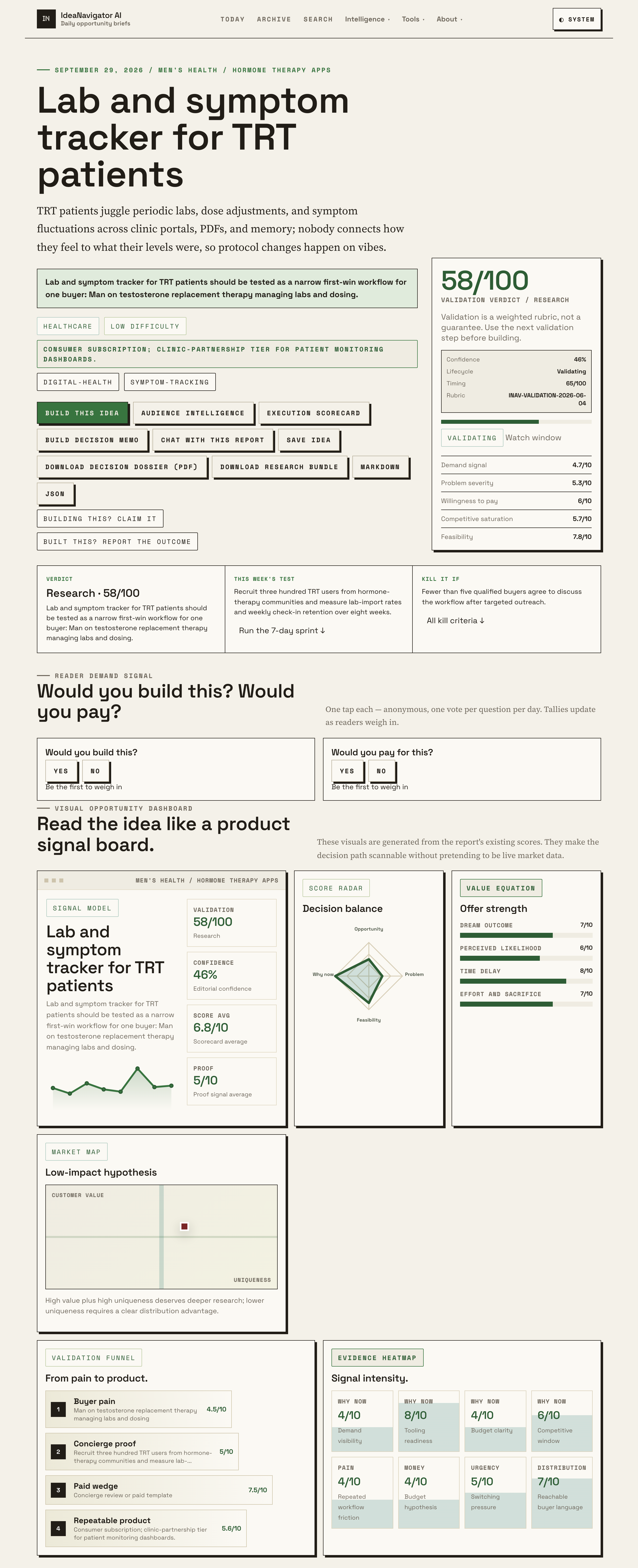
IdeaNavigator AI has outlined a product concept for men on testosterone replacement therapy: an app that brings lab results, dose changes and symptom check-ins into one timeline. The proposal includes an eight-week test with 300 users, but no app launch, study results or clinical validation are reported.
IdeaNavigator AI has outlined a proposed digital tracker for men using testosterone replacement therapy (TRT), designed to place lab results, dose changes and symptom check-ins on a shared timeline. The proposal identifies a potential product opportunity, but it does not report that an app has launched, been clinically tested or shown to improve care.
The suggested minimum product would let users import lab-test PDFs, record daily symptoms and note dose changes. It would chart hormone-panel results over time alongside those entries, then prepare trend summaries for clinic visits. The proposal also calls for flags when test values move outside target ranges, though it does not define those ranges or say who would set them.
For an initial market test, IdeaNavigator AI proposes recruiting 300 TRT users from hormone-therapy communities and tracking two measures over eight weeks: how often participants import lab results and whether they continue weekly symptom check-ins. These are proposed validation measures; no recruitment, retention figures or test outcomes are provided.
The business concept names a consumer subscription and a clinic-partnership tier with patient-monitoring dashboards as possible revenue sources. The material does not specify prices, participating clinics, data-handling practices or whether clinicians would review the summaries and flags.
Connecting Lab Results With Daily Symptoms
The proposal addresses a practical record-keeping gap for patients who may encounter test results, treatment instructions and symptom notes across separate portals, documents and appointments. A shared timeline could make it easier for a patient and clinician to review what changed, and when, during a visit. That is the intended benefit described by the concept, not an outcome established by user or clinical research.
For clinicians, summaries might provide a more organized account of a patient’s experience between appointments. For patients, recording symptoms alongside test dates and dose changes could support a clearer discussion of concerns. Whether either group would find the tool useful depends on details still unspecified, including ease of importing records, the quality of summaries and how the app handles missing or inconsistent information.
The proposed flags deserve particular care. A value outside a selected range does not by itself establish a diagnosis or indicate what treatment change is appropriate. The concept does not say whether flags would be informational, reviewed by a clinician or used to prompt contact with a provider. Those choices could affect how users interpret results and how clinics incorporate the tool into care.
A Proposed Response to Fragmented Records
The IdeaNavigator AI material describes TRT patients as managing periodic tests, dose adjustments and changing symptoms across clinic portals, PDFs and personal memory. It argues that those records are not routinely connected in one place. This is the proposal’s account of the problem; it supplies no survey, market-size estimate or independent evidence quantifying how many patients experience it.
The concept is positioned in the men’s health and hormone-therapy app market. It also points to growth in TRT prescriptions and telehealth clinics as reasons to examine the opportunity. No dates, prescription totals or comparisons are given, so the size and pace of that growth cannot be assessed from the material provided.
The proposed product is framed as a narrow first test for one user group: a man on TRT who is managing lab results and dosing. That focus could make early feedback easier to interpret. The plan does not describe a broader patient population, a clinical protocol or integration with existing clinic systems.
Product and Clinical Details Still Open
No product launch or clinical study is reported. It is not clear whether development has started, whether any clinics have agreed to participate or whether the suggested 300-person test has been approved or scheduled. There are also no reported findings on import success, weekly engagement or user demand.
The proposal leaves important operating details open. It does not explain how the app would extract data from PDFs, handle errors, protect sensitive health information or keep records current when users receive results from different providers. It also gives no rules for target ranges, no account of how alerts would be worded and no explanation of what the app should do when a result appears concerning.
Clinical responsibility is unresolved: the material does not establish that the app would offer medical advice, nor does it say how clinicians would oversee dashboards or respond to information entered by patients. Pricing, subscription terms and the scope of clinic partnerships are also unspecified. No independent evidence in the material supports claims that this approach changes treatment decisions or health outcomes.
Testing User Imports and Retention
The next step described in the proposal is an eight-week test with 300 TRT users. Its stated measures are lab-import rates and continued weekly check-ins. If carried out, those measures could show whether participants use the core record-keeping features during the test period; by themselves, they would not establish clinical benefit or long-term demand.
Further details would be needed to interpret any results: how participants are recruited, how many complete the test, what counts as a successful import, and how retention is calculated. A public account of privacy safeguards, clinical oversight and the rules behind range flags would also help patients and clinics assess the product. The material does not give a test date or say when such details might be released.
For now, the development is a product opportunity under consideration, rather than a confirmed service or research finding. The proposal’s suggested test and possible subscription models remain plans, with their status and outcomes unreported.
Source: IdeaNavigator AI
Key Questions
Has a TRT lab and symptom tracker launched?
The material describes a proposed app. It does not report a launch or identify an available product.
What features does the proposal include?
It proposes importing lab PDFs, charting results beside dose changes, recording daily symptoms, preparing clinic-visit summaries and flagging values outside selected ranges.
Has the proposed 300-person test happened?
No test results or recruitment status are reported. The proposal suggests an eight-week validation test measuring lab imports and weekly check-in retention.
Would the app recommend TRT dose changes?
The material does not say that it would recommend treatment changes. It describes tracking and flags, while leaving clinical oversight and the meaning of alerts unspecified.
Source: IdeaNavigator AI
Fall Picks
fall essentials
As an affiliate, we earn on qualifying purchases.