
This guide helps beginners choose financial planning books that match their current questions, reading style, and financial goals. You will compare a small set of books, check that their advice fits your circumstances, and decide how to apply what you read. It takes about 1-2 hours to make your selection and reading plan; finishing the books takes longer.

Get smart everyday buys delivered free with Prime
- Fast, free delivery on millions of items
- Prime Video, Amazon Music and more included
- Member-only deals all year

Financial Literacy Essentials For Dummies
- ✔ Format approach: Beginner-friendly explanatory guide
- ✔ Budgeting: Covered
- ✔ Saving: Covered

Personal Finance QuickStart Guide: The Simplified Beginner’s Guide to Eliminating Financial Stress, Building Wealth, and Achievin…
- ✔ Format approach: Simplified beginner roadmap
- ✔ Budgeting: Actionable steps described
- ✔ Saving: Actionable steps described
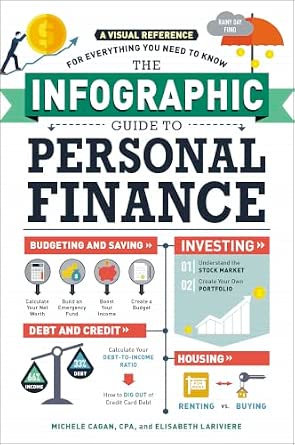
Infographic Guide to Personal Finance: A Visual Reference for Everything You Need to Know
- ✔ Format approach: Infographic-based visual reference
- ✔ Budgeting: Covered
- ✔ Investing: Covered
Difficulty: Beginner | Time: 1-2 hours to choose books and plan; reading time varies
What You’ll Need
Tools & Materials:
- A way to search a library catalog, bookstore, or bookseller
- A notes app or paper for recording questions and takeaways
- A rough monthly budget or list of current money questions
Knowledge:
- No prior financial planning experience is required
- Basic familiarity with your income, regular expenses, debts, or savings is useful
Set aside 1-2 hours for choosing books. You do not need to share account numbers, balances, or other sensitive details with a bookseller or online service. Financial rules vary by country, so check whether a book is written for readers where you live.
Financial Literacy Essentials For Dummies
For a reader who wants one starting point across everyday money topics, Financial Literacy Essentials For Dummies makes the strongest all-around case in this group. Its described coverage brings budgeting, saving, investing, and debt management into one beginner-friendly guide. That breadth matters because new planners often need to understand how choices in one area affect another, rather than learning a single tactic in isolation. The book’s plain-language explanations and real-world examples are intended to make foundational ideas easier to follow and apply.Compared with Personal Finance QuickStart Guide, this pick sounds more like a broad survey of essential subjects than a roadmap centered on reducing stress and building wealth. Compared with the Infographic Guide, it favors explanatory text and examples over a picture-first reference format. That makes it the most balanced choice for readers who want to build a foundation before choosing which area to study in more depth. The tradeoff is that a comprehensive beginner introduction can still feel basic to readers who already understand the fundamentals, and it may not satisfy someone seeking specialized or advanced planning advice.
Pros:
- Explains core personal finance topics in language designed for novices.
- Covers budgeting, saving, investing, and debt management together.
- Uses practical tips and real-world examples to connect concepts with decisions.
- Offers a broader subject survey than the QuickStart Guide’s stress-and-wealth roadmap.
Cons:
- May repeat familiar fundamentals for readers who already know personal finance basics.
- Its broad introduction may not provide the depth needed for advanced financial decisions.
Best for: New readers who want accessible coverage of budgeting, saving, investing, and debt in one introductory guide.
Not ideal for: Readers with established financial knowledge or those seeking detailed guidance on advanced strategies.
Bottom line: We recommend this as the most balanced first read for beginners who want broad, approachable coverage of everyday financial fundamentals.
“We recommend this as the most balanced first read for beginners who want broad, approachable coverage of everyday financial fundamentals.”
Personal Finance QuickStart Guide: The Simplified Beginner’s Guide to Eliminating Financial Stress, Building Wealth, and Achievin…
Some beginners do not need an overview of every money topic as much as a clear sense of what to work on first. The Personal Finance QuickStart Guide is aimed at that reader: its description emphasizes steps for budgeting, saving, and investing, with a broader goal of easing financial stress and building long-term wealth. Its plain-language, action-oriented approach gives it a different role from Financial Literacy Essentials, which is described as covering a wider set of core subjects, including debt management.That focus may make QuickStart a more natural fit for readers who feel overwhelmed and want a manageable path into better money habits. The Infographic Guide, by contrast, is positioned as a quick visual reference across topics such as credit, taxes, and retirement. QuickStart’s strength is its roadmap framing, but the supplied description does not establish the same breadth of named subject coverage as the Dummies guide or the infographic volume. And, like the other introductory picks, it may feel too basic once a reader has mastered the fundamentals. We would choose it for its approachable sequence and goals, not as a substitute for specialized advice.
Pros:
- Uses plain language suited to newcomers.
- Offers actionable steps for budgeting, saving, and investing.
- Frames money management around reducing stress and building long-term wealth.
- Provides a roadmap-oriented alternative to the broader Dummies introduction.
Cons:
- The described topic list is less extensive than the Dummies guide’s stated coverage.
- May not offer enough depth for readers already comfortable with personal finance basics.
Best for: Beginners who feel stressed about money and want accessible steps for budgeting, saving, and starting to invest.
Not ideal for: Readers looking for a visual reference, a wide catalog of financial topics, or advanced strategy.
Bottom line: We would choose QuickStart when an approachable sequence of money-management steps matters more than the broadest topic survey.
“We would choose QuickStart when an approachable sequence of money-management steps matters more than the broadest topic survey.”
Infographic Guide to Personal Finance: A Visual Reference for Everything You Need to Know
Readers who find long blocks of explanation hard to absorb may get more from a visual guide than from either of the text-led beginner books. Infographic Guide to Personal Finance organizes concepts through pictures and concise explanations, with described coverage of budgeting, investing, credit, taxes, and retirement. That range makes it useful as a quick-reference companion when a reader wants to orient themselves to a topic without working through a longer explanation first.Against Financial Literacy Essentials For Dummies, the distinction is learning format: the Dummies guide is described as using clear explanations and real-world examples, while this book prioritizes visual summaries. Against QuickStart, the infographic book offers more explicitly named areas such as credit, taxes, and retirement, while QuickStart puts more emphasis on a practical path and lowering financial stress. The compromise is depth. Its concise, picture-first approach is described as less suited to advanced strategies, and a visual summary may not provide enough detail when a beginner needs to understand the reasoning behind a decision. Choose it for accessible overviews and scanning, not as the most detailed standalone guide.
Pros:
- Presents concepts through easy-to-understand infographics.
- Covers budgeting, investing, credit, taxes, and retirement.
- Works as a concise reference for looking up a topic.
- Offers a visual alternative to the text-led Dummies and QuickStart books.
Cons:
- Provides less depth on advanced financial strategies than a traditional textbook.
- Picture-first summaries may not give readers enough detail to act on complex decisions.
Best for: Visual learners who want a concise introduction and a quick way to revisit basic personal finance concepts.
Not ideal for: Readers who prefer detailed written instruction or need in-depth treatment of advanced financial strategies.
Bottom line: This is the clearest fit for visual learners who value a scan-friendly overview more than detailed instruction.
“This is the clearest fit for visual learners who value a scan-friendly overview more than detailed instruction.”
As an Amazon Associate we earn from qualifying purchases.
Before You Start
Write down what you want help with before browsing. Examples include making a budget, paying down debt, building emergency savings, understanding investing, or planning for retirement. A book that covers your immediate question is usually more useful than a broad title promising to fix every part of your finances. Treat a book as education, not as individual financial, tax, or legal advice.
Step-by-Step Instructions
Step 1: Choose your first money question
Write one sentence describing what you want to do, such as “I want to make a monthly spending plan” or “I want to understand how retirement accounts work in my country.” If you have several concerns, rank them and start with the one that affects your next decision. Keep the list nearby while you compare books.
Tip:Use a specific task rather than a broad aim like “get rich.” A specific question makes it easier to tell whether a book is relevant.
Check: You have one clear question that a book could help answer.
Step 2: Set a beginner-friendly reading format
Decide how you prefer to read: print, ebook, or audiobook. Check a sample chapter, table of contents, or library preview before committing. Look for plain explanations, defined terms, worked examples, and chapter summaries. Choose a format you can access comfortably and revisit when you need to check a concept.
Tip:If you are new to the subject, a book that explains terms as it uses them is easier to apply than one that assumes you already know investing or tax vocabulary.
Check: You know which format you will use and have confirmed that at least one sample section is understandable.
Step 3: Find a short list of candidate books
Search a public library catalog, bookseller, or recommendations from a trusted financial education organization using your question as a keyword. Collect three to five titles. Read each description and contents page to see whether it covers your task, and note the author, publication date, and intended reader.
Tip:A library copy or preview lets you inspect a book before spending money. Recommendations can help you discover titles, but check each title against your own question.
Check: You have a manageable list of books that address the same question or closely related questions.
Step 4: Check the book’s audience, date, and scope
For each candidate, check whether it is written for beginners and for readers in your country. Review the publication date and identify sections that rely on current tax thresholds, account rules, interest rates, or product details. Prefer books that explain durable concepts and point readers to reliable places to check changing rules.
Tip:Older books may still explain budgeting or compound growth clearly, while their account limits, tax guidance, and product examples may no longer apply. Verify those details with current official sources.
Check: You can identify who the book is for, what it covers, and which details may need an up-to-date check.
Read the introduction, sample pages, and author information. Look for explanations of how recommendations work, clear examples, and disclosure of relevant financial interests. Be cautious if the book makes guaranteed-return claims, pushes one product throughout, or creates pressure to act quickly. Check whether its assumptions match your situation, such as income stability, debt, family responsibilities, and comfort with risk.
Tip:Strong claims deserve a second source. Compare important guidance with a government, regulator, nonprofit, or qualified professional in your location.
Check: You can explain why the author’s approach seems relevant and have flagged claims that need independent checking.
Step 6: Select one primary book and an optional second
Choose the book that best answers your first question and seems easiest for you to use. Add a second title only if it covers a clearly different need, such as practical budgeting alongside investing basics. Record the title, format, cost or borrowing method, and the reason you selected it.
Tip:Starting with one book helps you finish a useful set of actions before collecting more advice.
Check: You have selected one primary title and can state the task it will help you complete.
Step 7: Make a reading and action plan
Choose a realistic reading schedule, such as one chapter each week. After each chapter, write down one concept, one question, and one low-risk action to consider. Mark any advice that depends on current rules or personal circumstances. Before acting on decisions involving taxes, debt contracts, insurance, or investments, check authoritative local information or seek qualified advice when needed.
Tip:Do not copy a strategy just because it worked in the author’s example. Check fees, risks, eligibility, and whether the approach fits your goals.
Check: Your plan names when you will read, how you will capture takeaways, and how you will check consequential advice.
Common Mistakes to Avoid
- Choosing a book because it is popular rather than relevant to your immediate question. — Compare the contents page with the specific task you wrote down before selecting a title.
- Applying old tax, account, or product details as if they are current. — Check time-sensitive information with current official sources in your country.
- Buying several books and getting overwhelmed by conflicting advice. — Start with one primary title; add another only when it covers a separate need.
- Treating an author’s example as a recommendation for your personal finances. — Check the assumptions, risks, costs, and fit before taking action.
Troubleshooting
Problem: The book uses unfamiliar terms and you cannot follow a chapter.
Solution: Pause and look up the terms in a reputable financial education glossary. Try a more introductory title if the author does not explain basic concepts.
Problem: The book’s advice refers to accounts or laws that do not exist where you live.
Solution: Use it only for general concepts, then find a country-specific guide from a government, regulator, or recognized nonprofit.
Problem: Two books give different recommendations.
Solution: Compare their assumptions, goals, risk levels, and dates. Verify rules and product details independently, and get qualified advice for a consequential choice.
Problem: You have read several chapters but do not know what to do next.
Solution: Return to your original question, choose one small action the book supports, and identify any facts you need to check before acting.
What Success Looks Like
You have selected one beginner-appropriate book that addresses a specific money question, confirmed its intended audience and local relevance, and made a reading plan with a way to record takeaways. You can distinguish general education from details that need current verification or professional advice. The result is a clear next action, not a promise that reading alone will solve every financial issue.
Next Steps
Start with the first chapter and keep your notes with your budget or planning materials. After completing the book, review your notes and choose one practical action that fits your circumstances. Check any time-sensitive rules before making a financial decision. If your situation involves complex tax, legal, debt, or investment choices, consult an appropriately qualified professional in your location.
Frequently Asked Questions
Should a beginner start with budgeting or investing?
Start with the question that most affects your next decision. If you do not know where your money goes, a budgeting book may help. If you already have a spending plan and want to understand long-term investing, choose an introductory investing title.
How can I tell whether a financial planning book is up to date?
Check the publication or revision date and look for references to current rules. Treat tax thresholds, contribution limits, interest rates, and product terms as time-sensitive, and verify them using current official sources.
Is an audiobook a good choice for learning personal finance?
It can work well for broad concepts. For calculations, checklists, or account comparisons, pair listening with a workbook, transcript, or written notes so you can review the details.
How many books should I read before making a financial change?
There is no fixed number. For a small, low-risk habit such as tracking spending, one clear source may be enough. For choices with significant costs or long-term effects, compare reliable sources and seek qualified advice when appropriate.
Can a financial planning book replace a financial adviser?
A book can teach general concepts, but it cannot assess your full circumstances or provide personalized advice. For complex or high-impact decisions, look for a qualified professional whose fees, credentials, and potential conflicts are clear.