

Beginners comparing The Simple Path to Wealth by JL Collins with Get Good with Money by Tiffany Aliche are usually deciding where to start: with investing or with the everyday money habits that make investing possible. Both books aim to make personal finance more approachable, but they solve different first problems. Collins offers a compact argument for spending less, investing regularly in broad-market funds, and staying the course. Aliche lays out a wider framework that includes budgeting, debt, savings, credit, and protection alongside investing.

Get smart everyday buys delivered free with Prime
- Fast, free delivery on millions of items
- Prime Video, Amazon Music and more included
- Member-only deals all year

Financial Literacy Essentials For Dummies
- ✔ Format: Beginner-friendly personal finance guide
- ✔ Primary audience: Readers building financial literacy
- ✔ Budgeting coverage: Included

Personal Finance QuickStart Guide: The Simplified Beginner’s Guide to Eliminating Financial Stress, Building Wealth, and Achievin…
- ✔ Format: Simplified beginner’s guide
- ✔ Primary audience: Newcomers seeking a practical money-management path
- ✔ Budgeting coverage: Actionable steps described
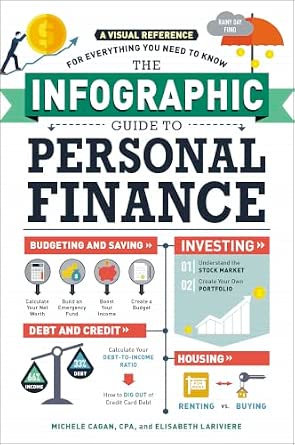
Infographic Guide to Personal Finance: A Visual Reference for Everything You Need to Know
- ✔ Format: Visual reference using infographics
- ✔ Primary audience: Readers who prefer visual learning
- ✔ Budgeting coverage: Included
That difference matters more than a simple question of which book is “better.” Readers who already manage bills and want a clear investing philosophy may get more from Collins. Readers who need an organized plan for several parts of their finances are more likely to benefit from Aliche’s broader workbook-like approach. The comparison below focuses on how much guidance each gives beginners, what practical problems it addresses, and whether paying for a broader system is worthwhile.
At a Glance
| Criteria | The Simple Path to Wealth by JL Collins | Get Good with Money by Tiffany Aliche | Winner |
|---|---|---|---|
| Scope | Narrow wealth-building focus | Broad personal finance system | B |
| Investing guidance | Strong emphasis on simple, long-term index investing | One component of a multi-area plan | A |
| Budgeting and debt | Limited compared with a full financial plan | Substantial attention to both | B |
| Structure and actionability | Readable narrative with a clear central strategy | Structured framework with exercises and action steps | B |
| Beginner accessibility | Accessible if basic money habits are already in place | Useful for readers who need to organize finances from the ground up | Depends |
| Best use of reader time | Efficient for readers focused on investing | More time required, with wider coverage | A |
| Value | Better value for a focused investing introduction | Worth more for readers who will use the full framework | Depends |
Financial Literacy Essentials For Dummies
For readers who want to learn the main personal finance topics in one accessible introduction, Financial Literacy Essentials For Dummies is the most balanced fit in this group. Its stated coverage includes budgeting, saving, investing, and debt management, giving beginners a wider starting map than a book centered primarily on a simplified wealth-building roadmap. The jargon-free approach matters because new readers can focus on the decisions behind the terms instead of getting stalled by financial vocabulary.Compared with Personal Finance QuickStart Guide, this title is the stronger choice when breadth matters more than a single action-oriented path. The QuickStart description puts particular emphasis on reducing financial stress and progressing toward wealth; this book instead presents several foundational areas together. The infographic title may be easier to browse for a quick visual explanation, but the Dummies format is a better match for readers who want explanations in ordinary language and practical examples.The tradeoff is that a wide introduction can remain introductory. Readers who already understand the basics may find its material too elementary, and anyone looking for detailed advanced strategies should choose a more specialized resource. For a first book that aims to make everyday money subjects understandable, however, its coverage makes it our leading pick.
Pros:
- Jargon-free presentation designed for novices
- Covers budgeting, saving, investing, and debt management
- Practical tips and real-world examples support application
- Broad foundation compared with the more focused roadmap and visual reference
Cons:
- May feel too basic to readers with existing financial knowledge
- Broad introductory coverage may not satisfy readers seeking advanced strategy
Best for: New readers who want plain-language introductions to several core money topics in one book.
Not ideal for: Readers who already know the basics or need advanced, specialized financial strategies.
Bottom line: We recommend it as the most balanced first purchase for readers who want a clear introduction across several everyday personal finance topics.
“We recommend it as the most balanced first purchase for readers who want a clear introduction across several everyday personal finance topics.”
Personal Finance QuickStart Guide: The Simplified Beginner’s Guide to Eliminating Financial Stress, Building Wealth, and Achievin…
Personal Finance QuickStart Guide is aimed at the reader who wants a straightforward route into money management, with an emphasis on reducing financial stress, building wealth, and working toward financial independence. Its stated steps for budgeting, saving, and investing give the book a practical direction. That focus can feel more motivating than a broad survey when a beginner wants to turn general interest into a sequence of manageable money habits.Against Financial Literacy Essentials For Dummies, the QuickStart Guide has a clearer personal roadmap identity, while the Dummies title is the stronger pick for breadth across several foundational subjects, including debt management. The QuickStart description does not establish the same breadth, so readers who want a general primer on multiple topics may prefer our top-ranked option. Compared with Infographic Guide to Personal Finance, this book favors an easy-to-follow path over picture-first summaries.That direction is also its main limitation: readers who want to look up a range of topics or inspect concepts visually may find another format more convenient. And, like the other books here, it is described as a beginner guide, so experienced readers may quickly outgrow it. Choose it when an approachable plan feels more useful than a broad reference.
Pros:
- Plain-language introduction suited to newcomers
- Actionable steps for budgeting, saving, and investing
- Connects money management to reducing financial stress
- More roadmap-focused than the broad Dummies introduction
Cons:
- May be too basic for readers with advanced financial knowledge
- The supplied description does not establish coverage as broad as the Dummies title
- Less suited to readers who prefer visual summaries
Best for: Beginners who want accessible steps for budgeting, saving, and investing, framed around lowering money stress and building wealth.
Not ideal for: Readers seeking a visual quick-reference format, broad confirmed coverage of many topics, or advanced financial guidance.
Bottom line: Pick this guide when a beginner-friendly sequence of money-management actions matters more than having the broadest introductory survey.
“Pick this guide when a beginner-friendly sequence of money-management actions matters more than having the broadest introductory survey.”
Infographic Guide to Personal Finance: A Visual Reference for Everything You Need to Know
Infographic Guide to Personal Finance takes the most distinct approach in this lineup: it presents money concepts through visual explanations designed to make them easier to grasp. Its stated subject areas include budgeting, investing, credit, taxes, and retirement. For a beginner who finds dense text tiring, that picture-first format can make an unfamiliar topic feel less intimidating and help with quick reviews when a question comes up.Its breadth across those subjects makes it a useful companion to the more roadmap-focused Personal Finance QuickStart Guide, but the two serve different reading habits. The QuickStart description emphasizes steps toward better money management; this title is described as a concise reference. Compared with Financial Literacy Essentials For Dummies, it is the more visual and scannable option, while the Dummies title offers jargon-free explanations and practical examples. That difference is why the infographic book ranks third for an all-purpose first guide: visual clarity is valuable, but the supplied description also identifies limited depth relative to traditional textbooks.We would choose it for accessible overviews and revisiting basic concepts, rather than as the sole resource for detailed planning or advanced strategy. Beginners who want to work through longer explanations may get more from the Dummies title, while those seeking a concrete action path may prefer the QuickStart Guide.
Pros:
- Infographic-based explanations make concepts approachable
- Covers budgeting, investing, credit, taxes, and retirement
- Concise format is suited to quick consultation
- Distinct visual alternative to the two text-led beginner guides
Cons:
- Limited depth on advanced strategies compared with traditional textbooks
- Picture-first summaries may not provide enough explanation for some learners
- Less clearly action-sequenced than the QuickStart Guide
Best for: Visual learners who want concise explanations and a portable reference spanning common personal finance subjects.
Not ideal for: Readers who need detailed instruction, advanced financial strategies, or a step-by-step plan as their main learning format.
Bottom line: Choose this visual reference when scan-friendly explanations matter more than in-depth instruction or a guided action plan.
“Choose this visual reference when scan-friendly explanations matter more than in-depth instruction or a guided action plan.”
As an Amazon Associate we earn from qualifying purchases.
Key Differences
The central tradeoff is focus versus coverage. Collins makes a narrower case: build a gap between income and spending, invest consistently in broad-market funds, and avoid making a long-term plan more complicated than necessary. That clarity can help a beginner who feels overwhelmed by investment choices. It also means the book is less useful as a complete guide to tackling debt, setting up a budget, or reviewing financial protections.
Aliche takes the broader route. Her framework treats financial stability as a set of connected tasks, including money management, debt, savings, credit, and investing. For someone who needs to see those pieces together, that breadth is a real advantage. It can also mean more reading and more work before reaching the investing question that prompted the purchase. Neither approach is universally best: the right starting point depends on whether the reader’s biggest obstacle is investment confusion or an unfinished financial foundation.
For value, the better choice is the book the reader will actually use. Collins is a strong fit when a concise investing philosophy is the main need. Aliche can justify its broader scope when the reader wants prompts and a sequence for working through several areas at once. These books are educational guides, not personalized financial advice; readers facing complex tax, debt, or investment decisions may need qualified professional help in addition to either book.
Detailed Comparison
Scope (Get Good with Money by Tiffany Aliche wins — moderate)
Get Good with Money wins by a moderate margin for breadth: it addresses more of the decisions a beginner faces, from budgeting and debt through savings and investing. The Simple Path to Wealth stays trained on wealth-building and the investing choices behind it. In practice, choose Aliche when you want one book to map several parts of your finances; choose Collins when those parts are already reasonably organized and investing is the next question.
Investing guidance (The Simple Path to Wealth by JL Collins wins — moderate)
The Simple Path to Wealth wins by a moderate margin for a direct, memorable investing philosophy. Its focus on low-cost broad-market investing and long-term consistency gives readers a simple framework to evaluate complexity. Aliche includes investing in a wider plan, but it is not the book’s sole emphasis. For someone whose immediate goal is understanding a basic long-term investing approach, Collins is the more targeted read.
Budgeting and debt (Get Good with Money by Tiffany Aliche wins — major)
Get Good with Money wins by a major margin here because budgeting and debt are central parts of its wider system. Collins’s approach depends on keeping spending below income, but readers looking for detailed help organizing cash flow or addressing debt will find less coverage. That difference has practical consequences: if high-interest debt or irregular spending is the barrier to investing, Aliche is the more relevant starting point.
Structure and actionability (Get Good with Money by Tiffany Aliche wins — moderate)
Get Good with Money wins by a moderate margin for readers who want to work through defined areas and take concrete steps. Its framework makes the book feel more like a guided personal finance plan. Collins’s narrative is easier to read straight through and gives a clear principle, but readers who need prompts to turn reading into tasks may prefer Aliche’s organization.
Beginner accessibility (minor difference)
This is a tie in overall accessibility, with different entry points. Collins is approachable when the reader wants a plain-language introduction to investing and can already manage basic financial routines. Aliche is more accommodating when the reader is starting with several unresolved money questions. The gap is minor as a matter of readability; the decisive factor is how much groundwork the reader needs.
Best use of reader time (The Simple Path to Wealth by JL Collins wins — minor)
The Simple Path to Wealth wins by a minor margin for a reader who wants to get to an investing framework quickly. Its narrow scope limits detours. Get Good with Money takes longer to work through because it covers a wider set of financial tasks, but that time can be productive if the reader needs the broader plan. A fast answer favors Collins; a wider reset favors Aliche.
Value (moderate difference)
There is no universal winner because the value depends on the gap the reader needs to close. Collins is better value for someone who wants a focused investing introduction without paying for wider material they will not use. Aliche earns its broader value when budgeting, debt, savings, and credit are active concerns, and the reader will follow its steps. Paying more for coverage that does not match your needs adds little.
The Simple Path to Wealth by JL Collins: Pros and Cons
Pros:
- Clear, focused long-term investing philosophy
- Readable for beginners who want to avoid unnecessary investment complexity
- Efficient choice when budgeting and debt are already under control
Cons:
- Less coverage of budgeting, debt reduction, and other financial planning tasks
- Not a complete step-by-step plan for someone starting from financial disorganization
- Readers seeking a broad survey of personal finance may need another resource
Get Good with Money by Tiffany Aliche: Pros and Cons
Pros:
- Covers multiple foundations of personal finance in one framework
- Gives readers structure for budgeting, debt, savings, credit, and investing
- Useful when several financial tasks need attention at once
Cons:
- Broader coverage takes more time to work through
- May feel like more process than needed for a reader focused on investing
- The investing component is less central than in Collins’s book
Who Should Choose What
Choose The Simple Path to Wealth by JL Collins if:
- You have a workable budget and want a simple long-term investing approach.
- Your main uncertainty is how to invest consistently without chasing complicated strategies.
- You want a focused book and do not need extensive help with debt or credit.
Choose Get Good with Money by Tiffany Aliche if:
- You need to build or repair basic money routines before investing.
- Debt, savings, budgeting, and credit are all part of the problem you want to address.
- You prefer a structured framework that turns reading into a sequence of tasks.
Skip both if: You need advice tailored to complex taxes, a specific debt settlement, legal issues, or an individual investment portfolio; use these books for general education and seek a qualified professional for the specific decision.
Value for Money
Paying more for broader guidance is worthwhile only when that breadth solves a real problem. If budgeting, debt, savings, and credit all need attention, Get Good with Money can deliver better value by bringing those subjects into one organized plan. If the reader’s finances are stable and the unresolved question is long-term investing, The Simple Path to Wealth is likely the better value because its narrower focus matches the need. Price alone cannot settle the comparison: time and follow-through matter too. A broad framework left unused is poor value, while a focused book that answers the reader’s main question can be enough.
Final Verdict
For most beginners who are unsure where their finances stand, start with Get Good with Money: it covers more of the groundwork that can make an investing plan sustainable. Choose The Simple Path to Wealth when you already have spending and debt reasonably managed and want a clear, focused introduction to long-term investing. The biggest deciding factor is your current bottleneck. If it is organizing everyday money, pick Aliche; if it is choosing a simple investing approach, pick Collins. Paying for wider coverage makes sense only when you will use it.
Frequently Asked Questions
Which book is better for a complete beginner?
Get Good with Money is generally the stronger starting point if you are new to managing several parts of your finances at once. If your basics are in place and you mainly want to learn about long-term investing, The Simple Path to Wealth is more direct.
Which book explains investing more clearly?
The Simple Path to Wealth gives investing more attention and presents a focused long-term philosophy. Get Good with Money includes investing within a broader personal finance framework, so it is a better match when investing is only one of several questions.
Should I pay more for the broader book?
Pay more for Get Good with Money if you expect to use its guidance on budgeting, debt, savings, and credit. If you need a focused investing introduction, the broader scope may not justify the added cost for you.
Can either book replace a financial adviser?
No. Both are general educational books. They can help you understand common principles and organize questions, but complex tax situations, legal concerns, debt problems, or personalized investment choices may call for a qualified professional.