
📊 Full opportunity report: GLP-1 Access Data: Compare Pharmacies And Manufacturer Channels on IdeaNavigator AI — validation score, market gap, and execution plan.

Get smart everyday buys delivered free — and shop member deals
- Fast, free delivery on millions of items
- Access to Prime Big Deal Days deals on October 6–7
- Prime Video, Amazon Music and more included
TL;DR
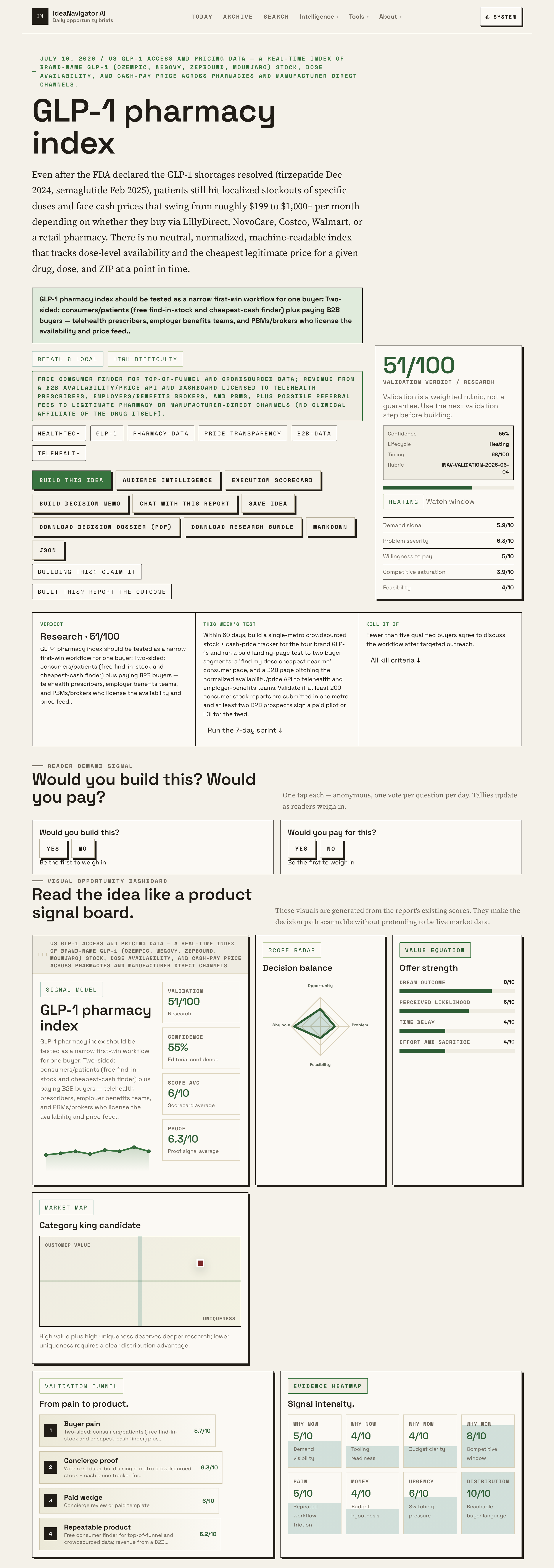
IdeaNavigator AI has outlined a proposed index to compare dose-level availability and cash prices for four brand-name GLP-1 drugs across pharmacies and manufacturer channels. The material describes a concept and a 60-day validation plan; it does not report a launched product, completed test, or signed buyer.
IdeaNavigator AI has proposed a tool that would compare stock and cash prices for four brand-name GLP-1 drugs by dose and ZIP code, alongside a paid data feed for healthcare and benefits businesses. The proposal responds to fragmented prices and localized availability, but no launched index, completed validation, or paying customer is reported.
The proposed consumer service would let patients search for Ozempic, Wegovy, Zepbound and Mounjaro by dose and location, with a focus on finding reported stock and comparing cash prices. IdeaNavigator AI says prices can range from about $199 to more than $1,000 per month, depending on the product and channel. The proposal does not specify a date, dose, or standardized basket for that range, so it should not be read as a like-for-like price comparison.
For its initial version, the proposal recommends collecting crowdsourced stock reports and normalizing publicly available prices from manufacturer direct channels, Costco, Walmart and a discount-price comparison layer. It also suggests dose-level availability alerts. The service would need to distinguish patient reports from independently verified inventory; the proposal does not describe a verification method or reporting frequency.
The business model would keep the patient-facing finder free and sell a normalized availability and price feed to telehealth prescribers, employer benefits teams, pharmacy benefit managers and brokers. IdeaNavigator AI also identifies possible referral fees from legitimate pharmacy or manufacturer-direct channels. These are proposed revenue sources, not existing agreements or evidence of demand.
The Shift From Shortages to Search
The concept targets a practical access problem: a national shortage designation does not tell a patient whether a particular dose is available nearby today, or what a legitimate cash purchase will cost. A reliable comparison could help patients locate options and give prescribers or benefits teams a clearer view of local supply. That value depends on current, comparable data; stale listings or inconsistent price terms could mislead users.
For employers and benefits buyers, the proposed feed is meant to support purchasing and coverage decisions. IdeaNavigator AI says GLP-1 drugs account for roughly 20% of pharmacy spending for employers, but gives no underlying survey, population, or period for that figure. It is therefore a claim in the proposal, not a verified measure applicable to every employer. The size of any savings from a comparison service is also unknown.
The proposal sits between patients and commercial buyers, which raises operational questions alongside the opportunity. A consumer tool would need to label cash prices accurately, distinguish manufacturer programs from retail offers, and show when availability was last checked. Business customers would need confidence that data coverage is broad and consistent enough for their decisions.
Direct Channels Add More Price Points
IdeaNavigator AI describes a market that has moved from broad shortage concerns toward uneven local supply and fragmented pricing. It says the FDA declared tirzepatide shortages resolved in December 2024 and semaglutide shortages resolved in February 2025. The proposal links those changes, compounding-related deadlines, and the growth of manufacturer and retail cash-pay channels to a need for better comparisons. It does not provide FDA records or detail the applicable deadlines.
The channels named in the proposal include LillyDirect and NovoCare, as well as Costco and Walmart. It also refers to a TrumpRx portal in February 2026. The material does not document that portal’s launch or current terms, and its mention should not be taken as confirmation that a particular drug or dose is available through it. Prices and eligibility can differ among programs; no single price in the proposal establishes what an individual patient will pay.
The proposed index would cover four branded products and collect information by dose and ZIP code. No geographic coverage beyond a suggested single-metro pilot is established. The proposal is a product and market test plan, rather than reporting that a public comparison service already operates.
Coverage and Accuracy Still Untested
No pilot results are provided. The material does not identify a metro, a launch date, a product team, participating pharmacies, or any confirmed data-sharing arrangement. It also does not report that telehealth firms, employers, brokers or pharmacy benefit managers have agreed to pay for a feed.
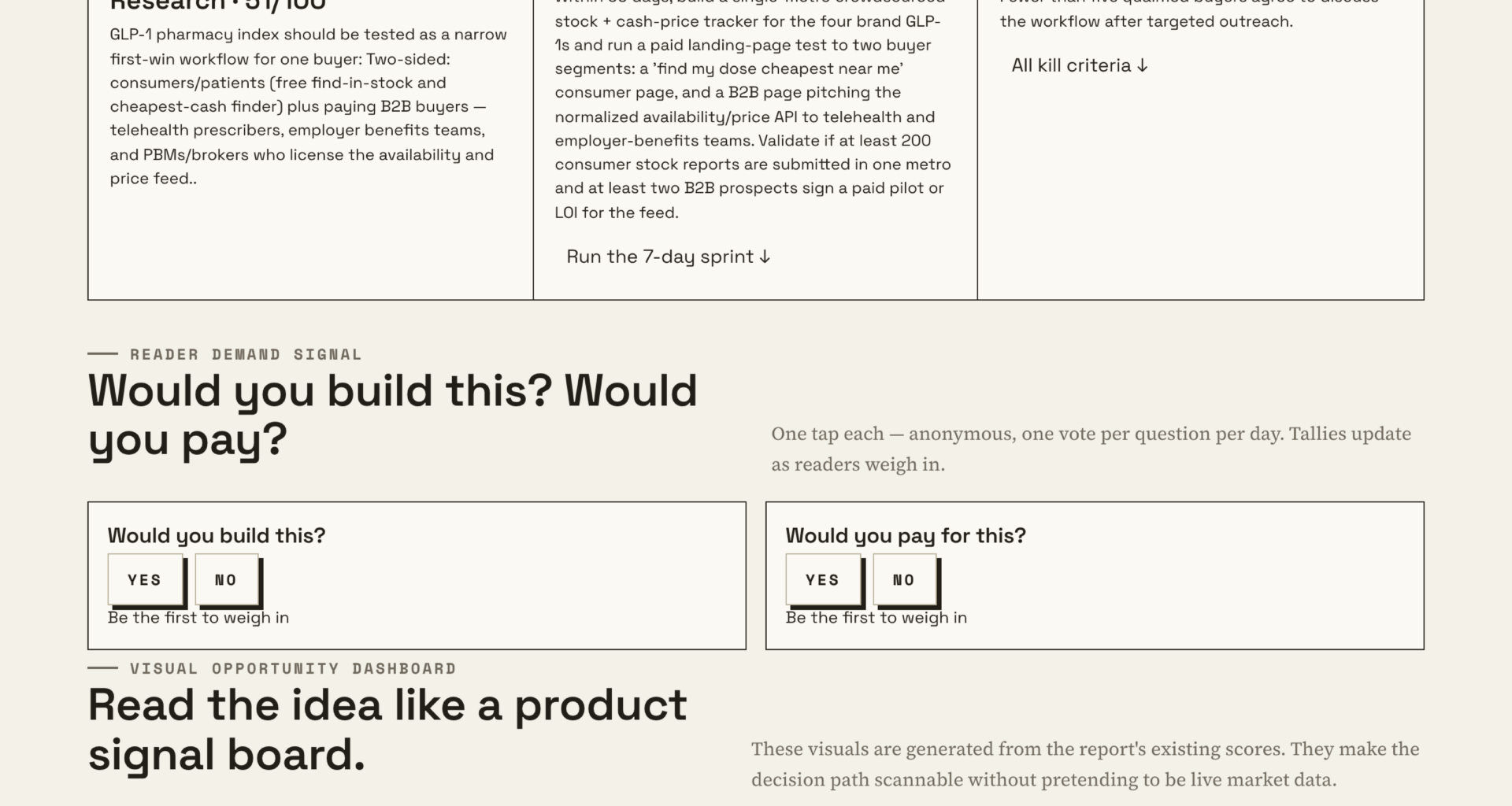
The proposed 60-day test sets targets of 200 patient stock reports in one metro and at least two business prospects signing a paid pilot or letter of intent. Those figures are validation thresholds, not achieved results. The proposal does not define how a report would be checked, how duplicate or outdated reports would be handled, or what counts as a completed paid pilot.
Several details that would affect a comparison remain unspecified: how cash prices would account for eligibility rules, coupons, membership requirements, shipping, and quantity; how frequently listings would be refreshed; and how the service would handle a pharmacy that cannot confirm inventory. The material also does not explain what data protections would apply to location searches or patient submissions.
A Metro Pilot Would Test Demand
The next step outlined by IdeaNavigator AI is a single-metro, 60-day test with separate consumer and business landing pages. One page would invite patients to find a dose and compare nearby cash prices. The other would present the proposed availability and price feed to telehealth and employer-benefits buyers.
The test would track whether patients submit at least 200 stock reports and whether at least two business prospects sign a paid pilot or letter of intent. Those milestones could indicate early interest, but would not by themselves establish that inventory data are accurate, that prices are comparable, or that the business can operate at wider scale. No dates or results for the test are reported.
Source: IdeaNavigator AI
Key Questions
Has the GLP-1 pharmacy index launched?
No launch is reported. IdeaNavigator AI describes a proposed tool and a plan to test it in one metro.
Which medicines would the proposed finder cover?
The proposal names Ozempic, Wegovy, Zepbound and Mounjaro, with searches organized by dose and ZIP code.
How would the service make money?
The suggested model pairs a free patient finder with a paid availability and price feed for telehealth, employer-benefits, pharmacy benefit manager and broker customers. No customer contracts are reported.
What would count as an initial validation?
The proposal sets goals of 200 patient stock reports in one metro and at least two business prospects signing a paid pilot or letter of intent within 60 days. It does not report that either goal has been met.
Source: IdeaNavigator AI
Fall Picks
fall essentials
As an affiliate, we earn on qualifying purchases.