To avoid accidental inconsistencies across offering materials, you should establish clear branding and content standards, including detailed guidelines and templates. Keep all assets centralized and regularly updated to prevent outdated information. Educate your team on branding principles and the importance of consistency, and implement review processes before materials go live. Using tools like checklists and digital content management can catch errors early. Continue exploring to discover more ways to guarantee your materials stay aligned and professional.
Key Takeaways
- Develop and enforce comprehensive brand guidelines to ensure uniform messaging and visual identity across all materials.
- Use centralized digital asset repositories to provide up-to-date branding assets for consistent usage.
- Implement standardized templates and checklists to promote consistency during content creation.
- Conduct regular training and communication sessions to reinforce understanding of branding standards.
- Establish thorough review and quality control processes before publication to catch and correct inconsistencies.
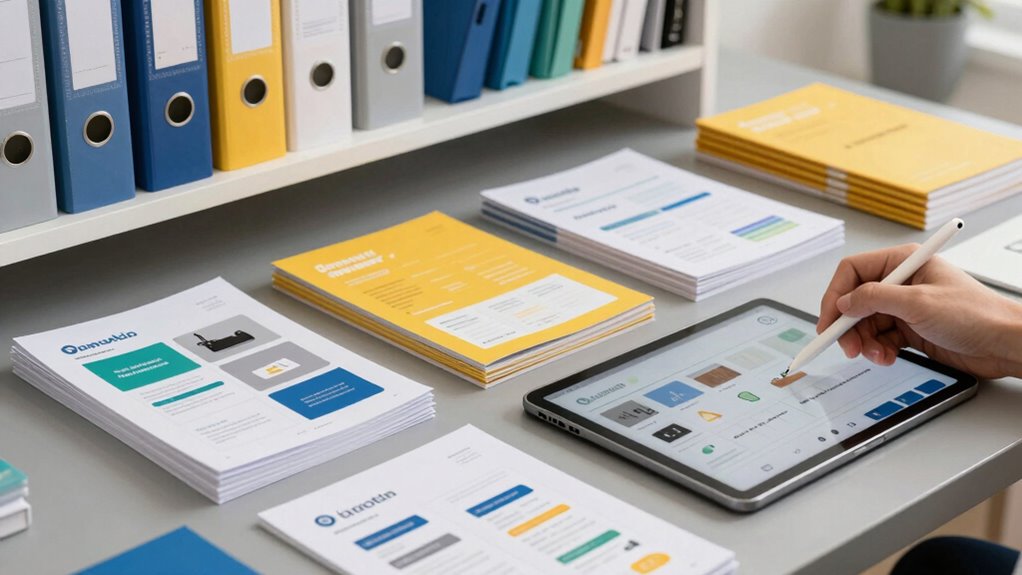
Have you ever faced issues with materials that don’t match or meet quality standards? If so, you know how frustrating it can be to manage inconsistent branding and messaging across different channels. To avoid this, you need to establish clear processes that promote branding alignment and content standardization. When your team understands and follows the same guidelines, you minimize the risk of accidental inconsistencies sneaking into your offering materials. It’s vital to create a central repository for all branding assets, including logos, color palettes, fonts, and imagery. This guarantees everyone has access to the most up-to-date versions, reducing the chances of outdated or incorrect materials being used. Regularly updating and distributing these assets keeps your brand cohesive and prevents deviations that can confuse your audience.
Consistency starts with clear documentation. Develop detailed brand guidelines that outline voice, tone, style, and visual identity. These guidelines should be straightforward, easy to follow, and accessible to everyone involved in content creation. When your team adheres to these standards, it’s easier to maintain a uniform look and feel, no matter who produces the content. Implementing content standardization tools, like templates and checklists, further helps enforce consistency. For example, using standardized templates for presentations, brochures, or digital content ensures that key elements remain uniform, from logos to messaging. This not only boosts professionalism but also reinforces your brand identity. Additionally, understanding the different offering materials involved in your marketing mix helps tailor your guidelines more effectively. Incorporating knowledge from areas like textile line styles or crochet kits can inspire consistent product descriptions and visual representations, ensuring all materials align with your branding standards. Recognizing the importance of digital content management can also streamline your workflow and reduce errors. Furthermore, paying attention to visual branding elements, such as imagery and design motifs, guarantees your materials remain visually consistent and memorable.
Develop clear, accessible brand guidelines and use standardized templates to ensure consistent, professional content across all channels.
Training plays a vital role in avoiding inconsistencies. Regularly educate your team on branding principles and the importance of adhering to established standards. When everyone understands the “why” behind branding alignment, they’re more likely to follow procedures diligently. Encouraging familiarity with home theatre terminology and visual elements can further reinforce consistent messaging across your materials. Encourage open communication and feedback, so team members can flag potential issues before they reach your audience. Using project management and collaboration software also helps keep everyone on the same page, reducing the likelihood of divergent materials slipping through.
Finally, establish a review process. Before any material goes live, it should be checked against your brand guidelines and content standards. Assign responsible reviewers to catch discrepancies early. This step acts as a quality control measure, ensuring your materials consistently reflect your brand identity. By combining clear documentation, training, standardized templates, and review procedures, you create a resilient system that minimizes accidental inconsistencies. This proactive approach not only saves time and resources but also enhances your brand’s credibility, making your offering materials dependable and professional across all touchpoints.
As an affiliate, we earn on qualifying purchases.
Frequently Asked Questions
How Often Should Offering Materials Be Reviewed for Consistency?
You should review your offering materials at least quarterly to guarantee branding alignment and messaging coherence. Regular checks help catch any discrepancies early, keeping your materials consistent and professional. Whenever you update your branding or introduce new products, revisit your content immediately. By establishing a routine review schedule, you maintain a unified brand voice and prevent accidental inconsistencies that could confuse your audience or weaken your message.
Who Should Be Responsible for Maintaining Consistency Across Materials?
You’re the one responsible for maintaining consistency across your offering materials. Ironically, it’s easy to assume others will handle branding alignment and content standardization, but you hold the key. By setting clear guidelines and regularly reviewing materials, you guarantee everything aligns perfectly, preventing confusion. Embrace your role—your attention to detail keeps branding consistent and your content standardized, making your offerings look professional and trustworthy.
What Tools Can Help Track Changes in Multiple Documents?
You can use tools like version control systems and collaborative editing platforms to track changes in multiple documents effectively. Version control helps you manage and compare different document versions, ensuring consistency and easy rollback if needed. Collaborative editing tools, like Google Docs or Microsoft 365, allow real-time updates and comments, making it simple to spot and resolve discrepancies immediately. These tools streamline managing multiple documents and maintain consistency across your materials.
How Do You Handle Updates Across Multiple Platforms Simultaneously?
Think of content synchronization like conducting an orchestra—every platform must stay in harmony. You should use a centralized content management system to update all platforms simultaneously, guaranteeing branding alignment. When I once coordinated updates across a website, social media, and brochures, automation tools saved hours and prevented discrepancies. This approach keeps your messaging consistent, minimizes errors, and guarantees your brand’s voice remains unified across all platforms.
What Training Is Recommended for Staff to Ensure Consistency?
You should conduct regular training workshops focused on maintaining consistency and understanding brand standards. Incorporate quality assurance practices into these sessions to reinforce correct messaging and presentation across all platforms. Encourage staff to ask questions and share best practices, creating an environment of continuous improvement. This approach guarantees everyone stays aligned, reduces errors, and maintains a unified, professional image in all your offering materials.
digital asset management software
As an affiliate, we earn on qualifying purchases.
As an affiliate, we earn on qualifying purchases.
Conclusion
By paying close attention to detail and maintaining clear communication, you can prevent inconsistencies in your offering materials. Regular reviews and updates guarantee everyone’s on the same page, saving you headaches down the line. Remember, a stitch in time saves nine—address issues early before they snowball. When you keep your materials aligned and accurate, you build trust with your audience and avoid unnecessary confusion. Stay diligent, and you’ll keep everything running smoothly.
professional presentation templates
As an affiliate, we earn on qualifying purchases.
As an affiliate, we earn on qualifying purchases.
As an affiliate, we earn on qualifying purchases.