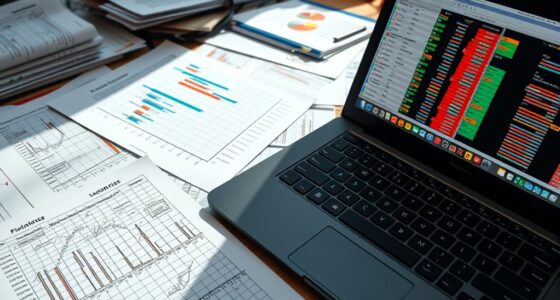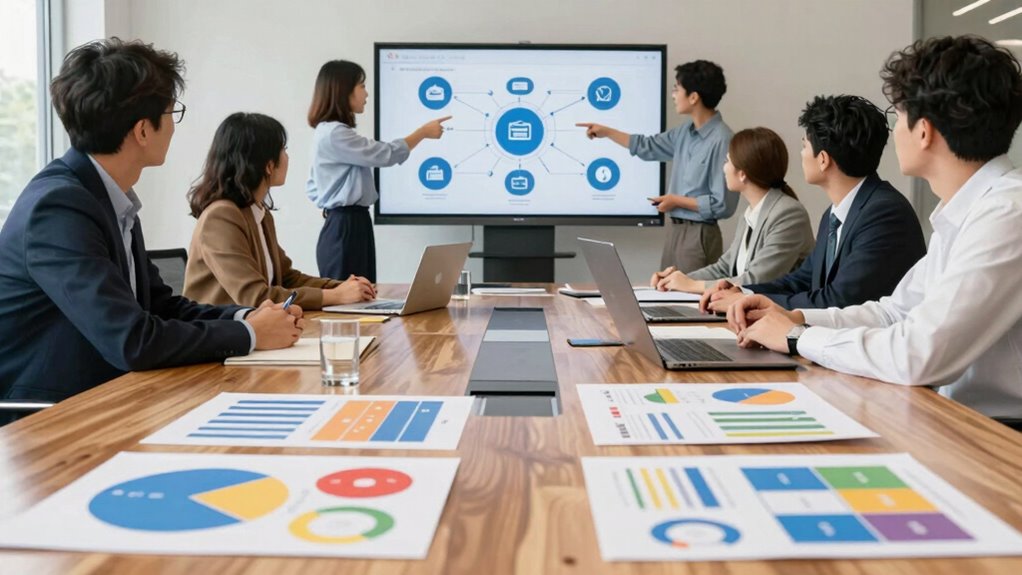

Scenario planning in PPM helps you explore multiple possible futures to make better decisions today. You develop different stories based on external factors like market shifts, tech disruptions, or regulations, and see how your projects perform under each scenario. This process helps you spot risks, build flexibility, and adapt quickly to change. If you keep exploring, you’ll discover how to use scenario planning as a key tool for resilient and strategic project management.

Get smart everyday buys delivered free with Prime
- Fast, free delivery on millions of items
- Prime Video, Amazon Music and more included
- Member-only deals all year
Key Takeaways
- Scenario planning explores multiple future possibilities to inform project portfolio decisions and manage risks effectively.
- It involves creating distinct narratives like best-case, worst-case, and moderate scenarios.
- The process includes analyzing external factors and key uncertainties impacting project outcomes.
- It enhances strategic flexibility by preparing organizations to adapt plans based on different scenarios.
- The approach transforms uncertainty into an opportunity for proactive, resilient project portfolio management.

Have you ever wondered how organizations anticipate and prepare for uncertain futures in project portfolio management (PPM)? The answer lies in scenario planning, a powerful method that helps you explore multiple potential futures and make informed decisions today. At its core, scenario planning involves developing several plausible stories about how the future might unfold, allowing you to assess risks and opportunities across your project portfolio. This process isn’t about predicting one definitive outcome but rather preparing for a range of possibilities. When you incorporate risk assessment into scenario planning, you identify vulnerabilities in your current strategy and understand how different external factors—like market shifts or technological disruptions—could impact your projects. By doing so, you can prioritize initiatives that offer resilience and adapt quickly when surprises occur.
Scenario planning helps organizations anticipate risks, build resilience, and adapt swiftly to uncertain futures in project portfolio management.
Strategic flexibility is an essential aspect of scenario planning. It allows you to remain agile and adjust your plans as new information emerges. Instead of locking into a rigid roadmap, you build flexibility into your portfolio, recognizing that some projects might need to be accelerated, delayed, or even canceled based on evolving circumstances. Scenario planning helps you visualize these variations, so you’re not caught off guard. For example, if one scenario involves a sudden economic downturn, you might decide to strengthen your risk management approach or diversify your investments. Conversely, in a more optimistic scenario, you could focus on scaling innovative projects that could generate substantial value.
The process begins with gathering data and identifying key uncertainties—things like regulatory changes, technological breakthroughs, or shifts in customer preferences. You then craft different scenarios by combining these uncertainties into distinct narratives: a best-case, worst-case, and several middle-ground options. As you develop each story, you evaluate how your current projects would fare under these conditions, paying close attention to risk assessment outcomes. This exercise reveals not only which projects are most vulnerable but also where you should build strategic flexibility into your plans. Additionally, embracing scenario analysis as part of your strategic toolkit enhances your ability to adapt proactively to changing conditions. It encourages you to think proactively rather than reactively, empowering your organization to navigate complexity with confidence.
Ultimately, scenario planning turns uncertainty from a threat into an opportunity. It equips you with a clearer understanding of potential risks and prepares you to adapt swiftly, ensuring your project portfolio remains aligned with your strategic goals regardless of what the future holds.
scenario planning software for project management
As an affiliate, we earn on qualifying purchases.
As an affiliate, we earn on qualifying purchases.
Frequently Asked Questions
How Does Scenario Planning Impact Project Prioritization?
Scenario planning helps you prioritize projects by allowing you to assess various future risks and opportunities through risk assessment. It enables you to evaluate how different scenarios might impact project outcomes, fostering strategic flexibility. By understanding potential challenges and shifts in the environment, you can focus on projects that align best with your long-term goals, ensuring resources are allocated effectively and risks are managed proactively.
What Tools Are Best for Scenario Planning in PPM?
You should use tools like Monte Carlo simulations, what-if analysis, and scenario modeling for effective scenario planning in PPM. These tools leverage data visualization to help you see potential outcomes clearly, enabling strategic flexibility. They allow you to test different project scenarios, identify risks, and adapt your plans swiftly. This way, you make more informed decisions, ensuring your project portfolio remains resilient amidst uncertainties.
How Often Should Scenario Planning Be Revisited?
You should revisit scenario planning regularly, ideally every few months or when significant changes occur. This keeps your future flexibility sharp and guarantees your strategic adaptation remains relevant amid shifting conditions. By consistently updating your scenarios, you stay ahead of surprises, turning uncertainty into opportunity. Don’t wait until a crisis hits—staying proactive allows you to navigate complexities with confidence and agility, shaping your future with purpose.
Can Scenario Planning Predict Project Risks Accurately?
Scenario planning can help you identify potential project risks, but it doesn’t guarantee precise predictions. It enhances your risk assessment by exploring various plausible futures, allowing you to develop effective contingency strategies. While it can’t foresee every risk, this proactive approach prepares you for uncertainties, enabling you to adapt quickly and minimize impacts. Use scenario planning as a strategic tool to strengthen your project management and improve overall resilience.
How Does Scenario Planning Align With Agile Methodologies?
Think of scenario planning as a compass guiding your agile journey—both foster strategic flexibility and future forecasting. It aligns seamlessly with agile methodologies by encouraging adaptive planning and quick responses to change. By envisioning multiple futures, you can pivot swiftly, ensuring your project remains relevant and resilient. This synergy empowers you to navigate uncertainties confidently, turning potential risks into opportunities for innovation and growth.
risk assessment tools for project portfolio
As an affiliate, we earn on qualifying purchases.
As an affiliate, we earn on qualifying purchases.
Conclusion
As you explore scenario planning in PPM, you realize it’s more than just preparing for the future—it’s about uncovering hidden opportunities and risks you might not have seen otherwise. Sometimes, the most unexpected insights come from imagining different paths, revealing that the present moment holds the seeds of what’s to come. Embrace these coincidences; they remind you that the future is shaped not just by plans, but by the surprises you discover along the way.
strategic flexibility tools for projects
As an affiliate, we earn on qualifying purchases.
As an affiliate, we earn on qualifying purchases.
As an affiliate, we earn on qualifying purchases.
Halloween Picks
halloween
As an affiliate, we earn on qualifying purchases.