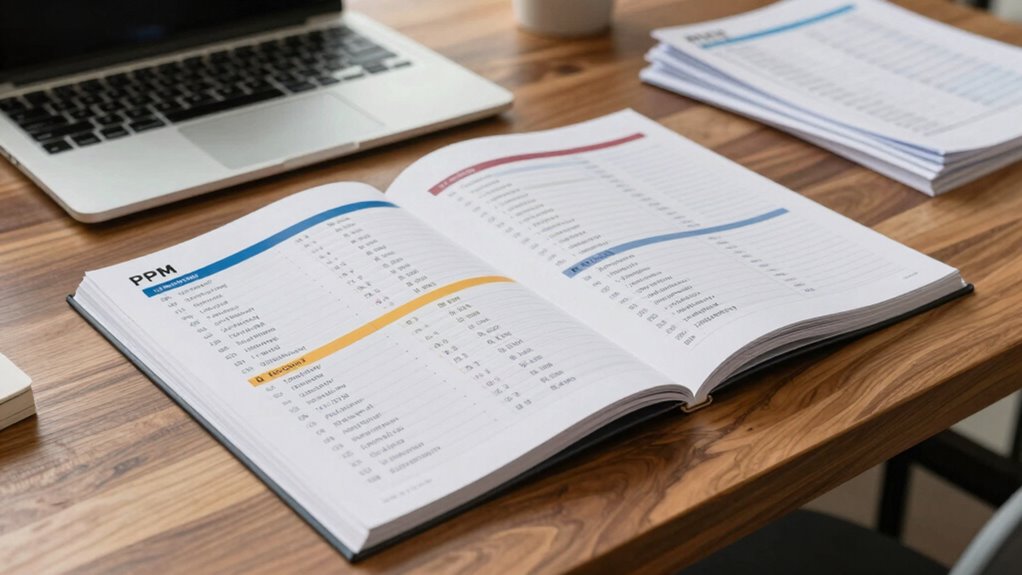
A better PPM table of contents helps your entire process by providing a clear roadmap, making it easier to find critical information quickly. It streamlines resource allocation, reduces confusion, and keeps everyone aligned on project goals. With organized sections for risk management and collaboration, you can respond swiftly to challenges and prevent overlooked details. If you keep exploring, you’ll discover how these improvements lead to more efficient and successful project outcomes.
Key Takeaways
- A clear table of contents provides a structured roadmap, streamlining navigation through project phases.
- It enhances resource planning by clearly indicating resource needs and dependencies.
- Facilitates quick risk identification and management, reducing project vulnerabilities.
- Promotes team collaboration and consistency by standardizing where key information is located.
- Improves overall project oversight, enabling timely responses to challenges and increasing efficiency.
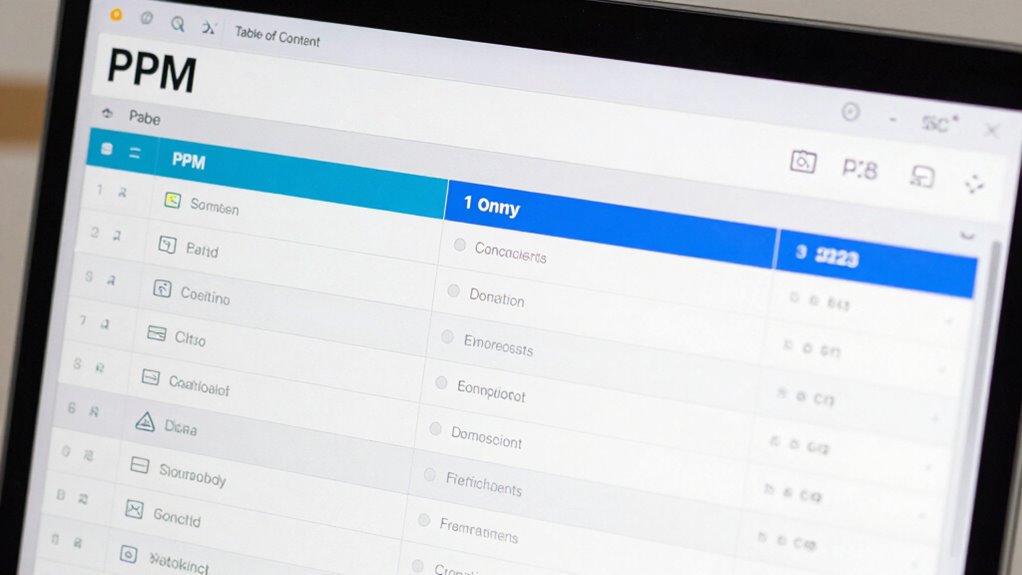
Have you ever wondered how to navigate a thorough project portfolio plan with ease? The key lies in having a well-structured PPM table of contents. When your table of contents is clear and comprehensive, it acts as a roadmap, guiding you through every phase of your project management process. It helps you quickly locate critical sections, ensuring that nothing important falls through the cracks. A better PPM table of contents isn’t just about organization; it enhances efficiency, accuracy, and overall project success.
One reason a well-designed table of contents makes a difference is because it streamlines resource allocation. When you can easily access sections related to resource planning, you can make more informed decisions on how to distribute personnel, budget, and tools across projects. This clarity prevents overcommitment and underutilization, allowing you to maximize your resources’ potential. You won’t waste time searching for different parts of the plan or trying to piece together scattered information. Instead, you get a clear view of resource dependencies and availability, empowering you to optimize resource use proactively. Additionally, having a detailed project scope outlined in your contents helps ensure that all resource needs are accurately identified from the outset.
Moreover, a well-structured table of contents significantly improves risk mitigation. When you have designated sections for risk management, you can quickly identify potential issues beforehand. It streamlines the process of assessing risks, planning mitigation strategies, and monitoring ongoing concerns. Knowing where to find risk assessments and contingency plans allows you to respond swiftly to challenges, reducing the chances of delays or failures. By centralizing risk-related information, the table of contents helps you maintain control and stay ahead of potential pitfalls.
Additionally, a better table of contents encourages consistency and standardization across your project portfolios. When everyone on your team understands where to find key information—be it project objectives, timelines, budgets, or stakeholder communications—it fosters collaboration and reduces misunderstandings. This consistency ensures that all stakeholders are on the same page, which is crucial for making strategic decisions and maintaining alignment throughout the project lifecycle.
In essence, a well-thought-out PPM table of contents isn’t just a navigation tool; it’s an integral part of effective project management. It improves resource allocation, strengthens risk mitigation efforts, and promotes clarity for everyone involved. With a clear structure, you’ll find it easier to oversee complex portfolios, respond to challenges, and steer projects toward successful completion—all while saving time and reducing frustration. A better table of contents truly streamlines the entire process, making your project portfolio plan a powerful asset rather than a chaotic maze.
project portfolio management software
As an affiliate, we earn on qualifying purchases.
As an affiliate, we earn on qualifying purchases.
Frequently Asked Questions
How Often Should I Update My PPM Table of Contents?
You should update your PPM table of contents regularly, ideally with every major change or new project addition. Frequent updates guarantee your prioritization strategies stay aligned with current goals. Use document versioning to track revisions, making it easier to manage changes over time. This keeps your team on the same page, streamlines decision-making, and improves overall project management. Regular updates ultimately enhance your portfolio’s clarity and effectiveness.
What Tools Are Best for Creating a PPM Table of Contents?
Creating a PPM table of contents is like building a sturdy map; it guides your project journey smoothly. You’ll find automation tools like Microsoft Project, Smartsheet, or Smartsheet indispensable for this task. They offer visual organization features that make structuring your content easy and clear. These tools save time, reduce errors, and guarantee your table of contents stays aligned with your project, making the entire process more efficient and manageable.
How Do I Customize a PPM Table of Contents for Different Projects?
You customize a PPM table of contents by adjusting the project scope and refining the document hierarchy for each project. Start by identifying key sections relevant to each project’s goals, then organize them logically. Use clear headings and subheadings to reflect different phases or teams involved. This approach guarantees your table of contents aligns with specific project needs, making navigation easier and keeping the entire process streamlined.
Can a PPM Table of Contents Improve Stakeholder Communication?
Yes, a well-crafted PPM table of contents can considerably improve stakeholder communication. It enhances stakeholder engagement by clearly outlining project priorities, milestones, and responsibilities. With improved communication clarity, stakeholders easily understand project status and decisions, reducing misunderstandings. This organized structure fosters transparency, builds trust, and encourages active participation, ultimately ensuring everyone stays aligned and informed throughout the project lifecycle.
What Common Mistakes Should I Avoid When Designing a PPM Table of Contents?
When designing a PPM table of contents, avoid neglecting project alignment and content hierarchy. Don’t clutter the sections or make the structure too complex—keep it clear and logical. Guarantee each item directly supports project goals, and organize content from high-level overviews to detailed data. Steer clear of inconsistent formatting or vague headings, which can confuse stakeholders and hinder navigation. Focus on clarity and purposeful structure for maximum effectiveness.
project risk assessment templates
As an affiliate, we earn on qualifying purchases.
As an affiliate, we earn on qualifying purchases.
Conclusion
Imagine stepping into a well-organized room where everything is in its place, guiding you effortlessly through your project. A better PPM table of contents acts like that room, lighting your way with clear pathways and familiar landmarks. It turns chaos into clarity, making your journey smoother and more confident. With a thoughtfully crafted table of contents, you’re not just managing tasks—you’re steering a landscape of success, one step at a time, with confidence and ease.
resource planning tools for projects
As an affiliate, we earn on qualifying purchases.
As an affiliate, we earn on qualifying purchases.
project documentation organization
As an affiliate, we earn on qualifying purchases.
As an affiliate, we earn on qualifying purchases.