This checklist is for people gathering tax paperwork and deciding how to keep important records organized through filing season. It covers paper storage, scanning, and digital backup, with options for different ways of handling documents at home.

Get smart everyday buys delivered free with Prime
- Fast, free delivery on millions of items
- Prime Video, Amazon Music and more included
- Member-only deals all year
The sections follow the path from collecting and protecting paper records to creating digital copies and storing them. Each product slot focuses on one practical role; the shredder section offers general guidance because no specific product was provided.
Use the checklist to identify the storage gaps you actually have, then check dimensions, capacity, and connection compatibility against your space and devices before buying. Keep original documents where you can find them, and make sure any digital copies are organized and accessible when you need them.
Fireproof Document Box
A dedicated box gives tax records and other important papers a consistent home instead of leaving them scattered across drawers or mixed with everyday mail. The TIGERKING Fireproof Safe Box with Drawer, 3.47 Cu Ft, is the listed pick for this slot. Before choosing a box, consider which documents you plan to keep together and whether you want room for folders or other records alongside tax paperwork.
A common mistake is focusing on the fireproof description and overlooking usable interior space. Check the outside and inside dimensions, drawer arrangement, and opening clearance against your intended location. Capacity figures alone do not show whether your folders will sit comfortably or whether the box will fit where you plan to keep it. Also consider how often you need access: a container that is awkward to open can make regular filing less likely.
Keep a simple folder system inside and label it by tax year or document type. Store the box somewhere that is convenient for household access, and confirm that its weight and footprint suit the floor or shelf. The right choice is one that fits your records and your storage space.
What to look for:
- Interior dimensions that fit your folders and papers
- Drawer access and clearance in the intended location
- Capacity suited to the records you plan to store
- A place in the home that is practical to reach
- Room to label and separate records by year
TIGERKING Fireproof Safe Box with Drawer, 3.47 Cu Ft

A 3.47 cubic foot fireproof and waterproof safe for home or office use, laboratory certified to UL 72 Standard to withstand 1200°F/650°C for 30 minutes. Constructed of thickened steel with four 1-inch live-lock bolts, external double hinges, and a fireproof plaster insulating layer for anti-theft and flame protection.
Pros:
- Certified fire resistance up to 1200°F for 30 minutes
- Large 3.47 cu ft capacity fits legal-size documents
- Digital keypad plus emergency keys prevent lockouts
- Sturdy anti-theft design with four 1-inch locking bolts and double hinges
Cons:
- Heavy at 86.5 lbs, making it difficult to move or install
- Water resistance details not fully specified
Best for: Households wanting one place for important paper records
Not ideal for: Anyone who needs a compact container for a very small set of papers
Bottom line: Check the interior layout and placement dimensions before choosing this document box.
Portable Document Scanner
Scanning can make tax paperwork easier to sort, search, and back up, while leaving originals available in paper form. The Epson DS-530X Duplex Desktop Document Scanner is the listed pick for this role. Think about the kinds of documents you handle and how often you scan them; a desktop scanner is most useful when it fits into a repeatable filing routine.
One buying mistake is assuming every scanner setup will work smoothly with an existing computer. Check the scanner’s supported operating systems, connection options, and included software against your devices before purchasing. Also consider the available desk space and where scanned files will be saved. Duplex scanning can matter when documents have information on both sides, but confirm that the scanner’s workflow suits the paperwork you expect to process.
Plan a folder structure before scanning a season’s worth of documents. Use clear names that include the tax year and document type, and check that each file is readable before putting the paper away. A scanner helps create copies; it does not automatically organize or protect them. Pair it with a consistent naming and backup plan so digital records remain useful later.
What to look for:
- Compatibility with your computer and operating system
- Connection options that fit your workspace
- Software and file formats suited to your workflow
- Duplex capability for two-sided documents
- A clear destination and naming system for scanned files
Epson DS-530X Duplex Desktop Document Scanner

The Epson DS-530X scans up to 45 pages per minute with single-pass duplex scanning and holds up to 100 sheets in its automatic document feeder. It connects via USB, includes TWAIN and ISIS drivers, and supports varied media with features such as ultrasonic double-feed detection and blank-page removal.
Pros:
- Fast scanning with single-pass duplex capability
- Large 100-sheet automatic document feeder
- Includes TWAIN and ISIS drivers for broad software compatibility
- Handles varied documents and helps prevent double feeds
Cons:
- USB connectivity only is listed
- No wireless connectivity is mentioned
Best for: People who regularly turn paper records into organized digital files
Not ideal for: Anyone without a compatible computer or space for a desktop scanner
Bottom line: Confirm device compatibility and plan file organization before adding a scanner.
Accordion File Organizer
An accordion organizer can keep incoming tax documents separated before they are filed, scanned, or stored for the long term. The Oterri Lockable Plastic File Box with Lid, Large, Green, is the listed pick. Its role in a checklist is straightforward: provide separate sections for paperwork while keeping the collection together and portable.
A frequent mistake is buying based on the word “large” without checking the dimensions or divider layout. Measure the documents and folders you expect to use, then compare them with the organizer’s interior dimensions. Check whether the compartments can be labeled clearly and whether the lid and locking feature suit how you plan to handle the box. If you expect to carry it, consider its loaded size and whether it will be comfortable to move.
For tax season, assign sections to years, document types, or stages such as “to review” and “filed.” Keep the system simple enough that other household members can follow it. An organizer is useful for sorting and access, but it works best when you periodically transfer completed records to their longer-term home rather than letting every year accumulate in one place.
What to look for:
- Interior dimensions that accommodate your papers
- Compartments that can be labeled for your filing system
- A lid and lock suited to your storage habits
- A loaded size you can comfortably carry if needed
- A straightforward way to separate years or document types
Oterri Lockable Plastic File Box with Lid, Large, Green
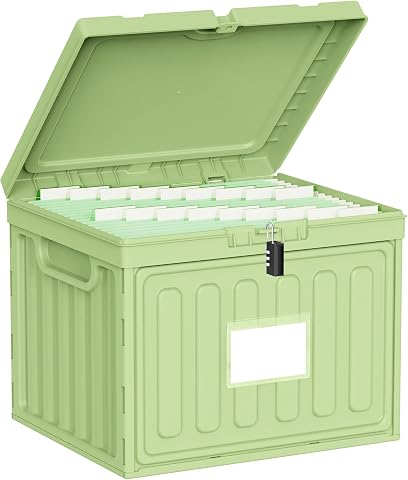
This sturdy, BPA-free plastic file box features a lockable lid to keep sensitive documents private. Designed for letter-size files, it is stackable, portable, and suitable for home, office, or on-the-go organization.
Pros:
- Secure lockable lid for privacy
- Stackable and portable design
- Made from durable, water-resistant plastic
- Easy to assemble without tools
Cons:
- Folders are not included
- Designed specifically for letter-size files, limiting versatility
- Lock mechanism may be basic for high-security needs
Best for: People who want to group and move tax paperwork by category
Not ideal for: Anyone seeking a permanent cabinet for a large archive
Bottom line: Check the compartment layout and interior measurements before assigning it a role.
Locking File Cabinet
A file cabinet gives paper records a stable place when they need to stay accessible beyond tax season. The FireKing Turtle Vertical 2 Drawer Fire Rated File Cabinet, Arctic Whit, is the listed pick. Before deciding, consider whether a vertical cabinet fits your room and whether two drawers match your filing volume.
A common mistake is overlooking the space needed to open drawers fully. Measure the cabinet footprint and the clearance in front of it, including nearby doors or furniture. Check which file sizes and hanging folders the drawers accommodate, and confirm that the cabinet can be placed on a suitable, level surface. The product name includes “Fire Rated,” but review the product specifications for details that matter to your storage needs rather than relying on the name alone.
Think through your filing scheme before loading the cabinet. Labels by tax year or document category can make retrieval easier, and a separate current-year area can help keep active paperwork close at hand. For household use, consider who needs access and how the locking mechanism fits your routine. A cabinet earns its space when it supports reliable filing and retrieval, not just extra storage.
What to look for:
- Drawer clearance in the intended location
- Compatibility with your folders and file sizes
- Capacity that fits the records you plan to retain
- Product specifications for the fire-rated feature
- A locking and labeling setup that suits household access
FireKing Turtle Vertical 2 Drawer Fire Rated File Cabinet, Arctic White
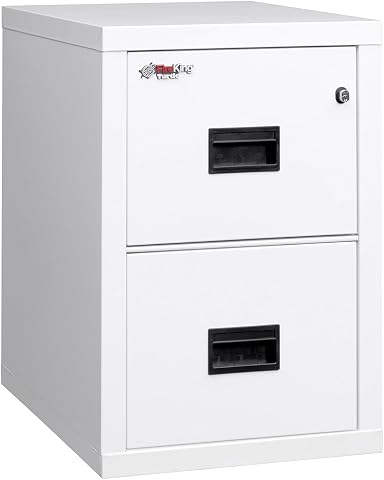
This fire-rated filing cabinet provides one-hour fire protection, keeping documents safe in extreme conditions. Made of high-quality steel, it features two easy-slide drawers for legal and letter-sized files, a secure lock system, and a sleek, scratch-resistant finish, ideal for small offices or home use.
Pros:
- Provides fire protection for up to 1 hour
- Secure lock system for anti-theft protection
- Sleek, scratch-resistant finish
Cons:
- Heavy to move (251 pounds)
- Limited to two drawers
- Made in the USA, which may affect availability
Best for: Households keeping an ongoing paper archive
Not ideal for: People with little floor space or only a few documents
Bottom line: Measure drawer clearance and confirm file compatibility before selecting a cabinet.
External Solid State Drive
An external drive can hold digital copies of scanned tax records alongside a computer, giving your files a separate storage destination. The OWC Envoy Ultra 8TB Thunderbolt 5 Portable SSD is the listed pick. Its size and connection standard make compatibility checks essential before you build a workflow around it.
A common mistake is assuming the drive will connect to every device or deliver the same experience on every port. Check your computer’s available ports and Thunderbolt support, and review the manufacturer’s compatibility information. Consider whether the drive’s capacity matches your planned use, while remembering that a larger drive does not by itself create a backup strategy. Keep files organized in folders by year and document type so they are straightforward to locate.
Decide how the drive will fit into your routine: where it will be stored, who can access it, and how you will keep another copy of important files. A single drive can be lost, damaged, or unavailable, so plan for redundant copies if the records matter to you. Confirm that you can open the saved files before relying on them, and keep paper originals when they are required or useful.
What to look for:
- Thunderbolt 5 and port compatibility with your computer
- Capacity appropriate to your files and other planned use
- A folder structure that makes tax documents easy to retrieve
- A secure, consistent place to store the drive
- A second copy or backup plan for important records
OWC Envoy Ultra 8TB Thunderbolt 5 Portable SSD

This 8TB portable SSD supports Thunderbolt 5 transfer rates up to 80 Gbps, with read speeds listed at up to 6000 MB/s. It is bus-powered with a built-in Thunderbolt cable and a fanless, heat-dissipating aluminum design.
Pros:
- Large 8 TB storage capacity
- Supports Thunderbolt 5 with read speeds up to 6000 MB/s
- Backward compatible with Thunderbolt 3, Thunderbolt 4, and USB4
- Bus-powered, fanless design with a built-in cable
Cons:
- Requires a compatible connection to reach the highest transfer speeds
- No customer reviews or rating are included in the provided data
Best for: People saving scanned records outside their computer’s internal storage
Not ideal for: Anyone whose devices lack compatible connection support
Bottom line: Verify port compatibility and plan a second copy before relying on a single drive.
Cross Cut Paper Shredder
A shredder can help dispose of papers that you no longer need to keep, including pages that contain personal or financial information. Since no product was provided for this slot, choose based on your document volume and disposal routine, not a model name. First identify which records you must retain and which can be securely discarded; retention rules can vary by document and situation.
A common mistake is choosing a shredder without checking its cut type, capacity, and operating limits. Review the manufacturer’s specifications for the kind of material it accepts, how many sheets it handles at once, and any restrictions on staples, clips, or cards. Consider where it will sit and whether its opening and bin are practical for the paperwork you expect to process. If noise, size, or frequent emptying would discourage use, account for that before choosing.
Keep a “review before shredding” folder so important originals do not get mixed into a discard pile. Follow the product instructions and empty the bin as needed. Make disposal part of the filing process, after records have been reviewed and any needed copies have been saved. That small pause helps protect against accidental loss of useful documents.
What to look for:
- Cut type appropriate to your disposal needs
- Sheet capacity suited to your typical batches
- Accepted materials and any stated restrictions
- A size and bin capacity that fit your space
- Operating instructions that support regular use
If you are building a setup gradually, start with the gap that causes the most friction: a place to gather paper, a way to scan it, or a dependable filing home. Then add digital storage if you are creating scans, and a shredder once you have a clear retention and disposal routine. Buy for the amount of paperwork you actually handle and the space you have available.
Keep the system simple enough to use throughout the year: label records by tax year, put new documents in a known place, and review files before moving or discarding them. With a few consistent habits and storage that fits your workflow, tax season paperwork can be easier to find when you need it.