
Target date retirement funds combine investments in a portfolio designed around an expected retirement year, but choosing one still means weighing simplicity against glide-path risk, fees, and transparency. Among these ten books and reports, Target Date Funds: The Ultimate Investment Guide is my best overall starting point for a broad introduction, while Fixing Target Date Funds stands out for fiduciary scrutiny and The Retirement Black Box for examining fund structure. This roundup compares practical guides with technical and policy-focused reads, so the right choice depends on whether you want personal-investing basics or a closer look at plan oversight. Some titles appear more than once, and the repeated entries do not provide distinct perspectives. Continue reading for the full breakdown and a guide to matching a resource to your questions.

Get smart everyday buys delivered free with Prime
- Fast, free delivery on millions of items
- Prime Video, Amazon Music and more included
- Member-only deals all year
Key Takeaways
- The Ultimate Investment Guide appears twice in target=”_blank” rel=”nofollow sponsored noopener”>target=”_blank” rel=”nofollow sponsored noopener”>target=”_blank” rel=”nofollow sponsored noopener”>the list, making it the broadest recurring choice rather than two separate perspectives.
- Fixing target=”_blank” rel=”nofollow sponsored noopener”>target=”_blank” rel=”nofollow sponsored noopener”>Target Date Funds is the clearest fit for readers focused on fiduciary responsibilities and potential fund shortcomings.
- The Retirement Black Box points readers toward fund architecture and hidden structural choices, not just year-based selection.
- Two entries use the same report title on clarity around structures and fees, so the list offers less variety on that topic than ten distinct titles suggest.
- Beginner-focused guides and the fiduciary handbook serve different needs: learning the basics is not the same task as evaluating a plan’s default investment.
| Target Date Funds: The Ultimate Investment Guide |  | Best General Introduction | Product type: Investment guide | Topic: Target date funds | Focus: Role of target date funds in investing | VIEW LATEST PRICE | See Our Full Breakdown |
| Fixing Target Date Funds: A Fiduciary Guide to Ameliorating Alarming Deficiencies |  | Best for Fiduciary Critique | Product type: Fiduciary guide | Topic: Target date funds | Stated focus: Deficiencies in target date funds | VIEW LATEST PRICE | See Our Full Breakdown |
| Target Date Retirement Funds: Lack of Clarity Among Structures and Fees Raises Concerns |  | Best for Historical Fee and Structure Context | Product type: Report | Topic: Target date retirement funds | Publication date: October 1, 2009 | VIEW LATEST PRICE | See Our Full Breakdown |
| Target Date Retirement Funds: Lack of Clarity Among Structures and Fees Raises Concerns |  | Best for Structure-and-Fee Questions | Product type: Report | Topic: Target date retirement funds | Stated focus: Clarity of fund structures and fees | VIEW LATEST PRICE | See Our Full Breakdown |
| The Retirement Black Box: Decoding the Hidden Architecture of Target-Date Funds |  | Best for Readers Seeking a Structural Lens | Product type: Not provided | Topic: Target-date funds | Stated title focus: Hidden architecture of target-date funds | VIEW LATEST PRICE | See Our Full Breakdown |
| Target Date Funds: The Ultimate Investment Guide |  | Best General Introduction | Title: Target Date Funds: The Ultimate Investment Guide | ASIN: B0G28TPCZ4 | Subject: Target date funds | VIEW LATEST PRICE | See Our Full Breakdown |
| 401(k) Plans: A Sponsor’s Role in Default Investments and an Examination of Target Date Funds | 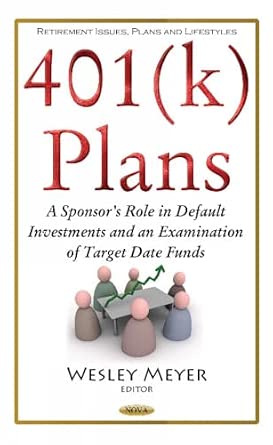 | Best for 401(k) Plan Sponsors | Title: 401(k) Plans: A Sponsor’s Role in Default Investments and an Examination of Target Date Funds | ASIN: 163484727X | Format: Book | VIEW LATEST PRICE | See Our Full Breakdown |
| Target Date Funds: A Simple Path to Financial Security |  | Best for Readers Seeking an Accessible Starting Point | Title: Target Date Funds: A Simple Path to Financial Security | ASIN: B0DKTH9JC5 | Subject: Target date funds | VIEW LATEST PRICE | See Our Full Breakdown |
| Target Date Funds: The Complete Beginner’s Guide (Money Guide Series, Book 62) |  | Best for First-Time Learners | Title: Target Date Funds: The Complete Beginner’s Guide | ASIN: B0HJN9HVNZ | Series: Money Guide Series | VIEW LATEST PRICE | See Our Full Breakdown |
| Fiduciary Handbook for Understanding and Selecting Target Date Funds: It’s All About the Beneficiaries |  | Best for Fiduciary Fund Selection | Title: Fiduciary Handbook for Understanding and Selecting Target Date Funds: It’s All About the Beneficiaries | ASIN: B00KH7ACJ0 | Product type: Handbook | VIEW LATEST PRICE | See Our Full Breakdown |
| target date retirement fund | Format | Product type | Topic | Publication date |
|---|---|---|---|---|
| Target Date Funds: The Ultimat | Not provided | Investment guide | Target date funds | Not provided |
| Fixing Target Date Funds: A Fi | Not provided | Fiduciary guide | Target date funds | Not provided |
| Target Date Retirement Funds: | Not provided | Report | Target date retirement funds | October 1, 2009 |
| Target Date Retirement Funds: | Not provided | Report | Target date retirement funds | Not provided |
| The Retirement Black Box: Deco | Not provided | Not provided | Target-date funds | Not provided |
| Target Date Funds: The Ultimat | Not specified | Not specified | — | — |
| 401(k) Plans: A Sponsor’s Role | Book | — | — | — |
| Target Date Funds: A Simple Pa | Not specified | Book | — | — |
| Target Date Funds: The Complet | Not specified | — | — | — |
| Fiduciary Handbook for Underst | — | Handbook | Target date funds | — |
More Details on Our Top Picks
Target Date Funds: The Ultimate Investment Guide
This is the broadest starting point among these five entries: its description presents a guide to target date funds and their role in investing, rather than a critique of specific fund structures. That makes it a better fit for readers seeking basic orientation than Fixing Target Date Funds, which is framed around deficiencies and fiduciary concerns. The tradeoff is that the supplied information does not confirm its chapters, intended audience, or coverage of glide paths, fees, and fund selection. I would treat it as an introductory resource, not as a substitute for comparing a particular fund’s holdings and costs. Readers who want a documented historical examination may find the dated GAO report, Target Date Retirement Funds: Lack of Clarity Among Structures and Fees Raises Concerns, more focused, though less current by design.
Pros:- Directly addresses target date funds and their investing role.
- Broad framing may suit readers who want orientation before studying specialized critiques.
- Could serve as a starting point alongside fund documents and plan disclosures.
Cons:- No contents, author credentials, or publication details are provided.
- The available description does not confirm coverage of fees, glide paths, or fund comparisons.
- A general guide may not answer fiduciary or plan-specific selection questions.
Best for: Readers new to target date funds who want a general investment-oriented introduction before comparing specific retirement-plan options.
Not ideal for: Plan fiduciaries or experienced investors seeking verified detail on fund fees, glide paths, or current selection criteria; the provided description does not establish that level of coverage.
- Product type:Investment guide
- Topic:Target date funds
- Focus:Role of target date funds in investing
- Format:Not provided
- Author:Not provided
- Publication date:Not provided
Our verdict“Choose this as a broad first read if you are new to target date funds, but verify its coverage before relying on it for a specific fund decision.”
Fixing Target Date Funds: A Fiduciary Guide to Ameliorating Alarming Deficiencies
This is the most explicitly critical title in the group, with a fiduciary framing that points toward examining shortcomings in target date funds rather than introducing the category. Compared with Target Date Funds: The Ultimate Investment Guide, it appears better suited to readers responsible for evaluating or overseeing retirement-plan options, not beginners seeking a neutral overview. That focus can help a fiduciary frame questions about fund design and oversight, but the supplied data does not identify which deficiencies the book covers or what remedies it proposes. I would not treat its title alone as proof of a complete selection framework. Readers wanting a clearly dated discussion of structural and fee concerns can compare it with the 2009 report, while recognizing that the report is narrower and historical.
Pros:- Fiduciary perspective is directly relevant to plan oversight.
- Its critical framing may prompt scrutiny beyond a fund’s target year or label.
- Distinct from general introductory material such as The Ultimate Investment Guide.
Cons:- The available data does not specify the deficiencies discussed.
- No methods, remedies, author credentials, or publication details are supplied.
- A problem-focused approach may not provide a balanced beginner-level explanation.
Best for: Retirement-plan committee members and fiduciaries who want a critical lens for asking questions about target date fund design and oversight.
Not ideal for: New investors looking for a plain-language primer, or buyers who need confirmed, current recommendations on selecting a specific fund.
- Product type:Fiduciary guide
- Topic:Target date funds
- Stated focus:Deficiencies in target date funds
- Audience indicated by title:Fiduciaries
- Format:Not provided
- Publication date:Not provided
Our verdict“Pick this if your role involves fiduciary oversight and you want a critical prompt for review, but confirm the book’s scope before using it as a decision framework.”
Target Date Retirement Funds: Lack of Clarity Among Structures and Fees Raises Concerns
This report offers the clearest documented scope in this set: it examines concerns about target date fund structures and fees, with a publication date of October 1, 2009. That specificity makes it more useful for understanding why disclosure and complexity became points of concern than The Retirement Black Box, whose supplied description provides no details to assess. Its age is also the central limitation. Fund offerings, disclosures, and rules may have changed since publication, so I would use it as historical context rather than current guidance for choosing a retirement option. Compared with Fixing Target Date Funds, this report has a defined topic and date, while the latter has a fiduciary critique signaled by its title but no confirmed contents in the provided data.
Pros:- Specifically addresses fund structures and fees.
- Publication date makes its historical context clear.
- Provides a defined subject for readers comparing broad guides and fiduciary critiques.
Cons:- Published in 2009, so it cannot establish current fund terms or practices.
- The supplied description does not identify its methods or recommendations.
- A focused report may not provide a general introduction to retirement investing.
Best for: Researchers, plan committee members, and investors seeking a historical account of concerns about target date fund structures and fees.
Not ideal for: Buyers making a current fund choice who need up-to-date fee data, regulatory guidance, or details on today’s available glide paths.
- Product type:Report
- Topic:Target date retirement funds
- Publication date:October 1, 2009
- Stated concern:Clarity among fund structures and fees
- Format:Not provided
- Author or issuing body:Not provided
Our verdict“Use this for historical perspective on fee and structure concerns, not as a current guide to selecting a target date fund.”
Target Date Retirement Funds: Lack of Clarity Among Structures and Fees Raises Concerns
This edition is defined by its subject, not by verified publication details: the description says it examines concerns about clarity in target date fund structures and fees, but gives no date or further contents. That makes it a potentially useful prompt for readers who want to ask how a fund is built and what costs may be hard to see. It overlaps with the other report in this roundup, ASIN 1287310095, which has the same title and a confirmed October 1, 2009 publication date. Since this listing provides no date or distinguishing content, I cannot establish that it is a separate or more current treatment. Compared with The Ultimate Investment Guide, its stated focus is narrower and more critical, but buyers should verify the edition before treating it as distinct.
Pros:- Directly focuses on structure and fee clarity.
- Its narrow subject can guide questions during fund comparison.
- Offers a different angle from the broad investing overview in The Ultimate Investment Guide.
Cons:- No publication date or distinguishing edition information is provided.
- The listing may overlap with the report under ASIN 1287310095.
- No detailed contents, methodology, or current recommendations are described.
Best for: Readers researching how target date fund structures and fees are presented, especially those able to confirm the report’s edition and publication details.
Not ideal for: Anyone who needs a clearly dated, current reference or cannot verify how this listing differs from the similarly titled 2009 report.
- Product type:Report
- Topic:Target date retirement funds
- Stated focus:Clarity of fund structures and fees
- Publication date:Not provided
- Format:Not provided
- Author or issuing body:Not provided
Our verdict“Consider this only after confirming its edition and date, particularly because another listing has the same title and a documented 2009 publication date.”
The Retirement Black Box: Decoding the Hidden Architecture of Target-Date Funds
The title promises an examination of fund architecture, giving this entry a distinct angle from the general investing orientation of Target Date Funds: The Ultimate Investment Guide and the explicit fee focus of the GAO report. That framing may appeal to readers who want to understand what sits beneath a target-date label, but the product data includes no description, contents, author, or publication details. I can’t confirm whether it explains glide paths, underlying holdings, or fund-of-funds structures, so the title should be treated as a clue rather than evidence of specific coverage. This uncertainty makes it a less dependable first purchase than entries with stated subjects. It may suit a reader already comparing fund construction, provided they can inspect fuller listing details before relying on it.
Pros:- Title signals a structural focus distinct from general investing guidance.
- Could complement the fee-centered discussion in the similarly titled retirement-fund report.
- May interest readers looking beyond a fund’s target year label.
Cons:- No product description or contents are provided.
- Coverage of glide paths, holdings, fees, and fund construction is unconfirmed.
- Author, format, and publication date are not supplied.
Best for: Experienced retirement savers who are specifically curious about how target-date fund structures may work and can verify the book’s contents before buying.
Not ideal for: Beginners seeking a confirmed introduction or fiduciaries needing documented coverage of fees, oversight, and selection criteria.
- Product type:Not provided
- Topic:Target-date funds
- Stated title focus:Hidden architecture of target-date funds
- Format:Not provided
- Author:Not provided
- Publication date:Not provided
Our verdict“Choose this only if its full listing confirms a structural analysis that matches your questions about target-date fund design.”
Target Date Funds: The Ultimate Investment Guide
This guide is the broad-entry pick for readers who want a book explicitly focused on target date funds. The title promises an investment guide, which gives it a wider apparent scope than Target Date Funds: The Complete Beginner’s Guide, whose positioning is specifically for newcomers. That makes this a plausible choice for readers who already know the basic idea and want a general guide, though the supplied information does not confirm its chapters, author credentials, or coverage of fund selection and fees. Compared with 401(k) Plans: A Sponsor’s Role in Default Investments and an Examination of Target Date Funds, it is not identified as a sponsor-focused work, so it may suit individual readers better. The tradeoff is uncertainty: without format or content details, I cannot judge its depth or how actionable its advice will be.
Pros:- The title identifies target date funds as the central subject.
- Investment-guide framing suggests broader scope than a title aimed only at beginners.
- Could serve as a single-topic starting point for individual readers.
- Its focus contrasts with the sponsor-oriented 401(k) Plans book.
Cons:- No description confirms the subjects or methods covered.
- Format, author, and publication details are not supplied.
- The listing provides no basis for judging how practical or current its guidance is.
Best for: Readers seeking a general book about target date funds who are comfortable checking the contents and format before buying.
Not ideal for: Buyers who need confirmed coverage of fees, glide paths, or workplace plan selection, since the provided listing gives no detail on those topics.
- Title:Target Date Funds: The Ultimate Investment Guide
- ASIN:B0G28TPCZ4
- Subject:Target date funds
- Stated positioning:Investment guide
- Product type:Not specified
- Format:Not specified
Our verdict“Choose this as a broad target-date-fund reading option only if the full listing confirms the format and subject coverage you need.”
401(k) Plans: A Sponsor’s Role in Default Investments and an Examination of Target Date Funds
This is the most workplace-specific choice in the group: its stated focus is the sponsor’s role in selecting default investments, alongside an examination of target date funds. That emphasis makes it more useful to plan decision-makers than Target Date Funds: The Ultimate Investment Guide, which is presented as a general guide rather than a sponsor-focused book. It may help readers frame target date funds within retirement-plan decisions instead of treating them only as personal account choices. The tradeoff is audience fit: employees choosing among options in an existing 401(k) may find the sponsor perspective less directly applicable. The supplied description also gives no detail about the book’s methods, date, or level of technical depth, so I would not assume it provides current selection criteria or implementation advice.
Pros:- Directly addresses sponsor roles in default investment selection.
- Examines target date funds within a 401(k) plan setting.
- Connects fund selection with retirement planning.
- Its institutional focus differentiates it from general guides such as Target Date Funds: A Simple Path to Financial Security.
Cons:- The sponsor-centered perspective may not answer individual investors’ practical questions.
- The supplied description does not specify the book’s depth, approach, or publication date.
- No details confirm coverage of particular fund structures, fees, or evaluation methods.
Best for: 401(k) plan sponsors, benefits professionals, and retirement-plan committee members examining default investment choices.
Not ideal for: Individual savers who want a straightforward guide to choosing a fund for their own account rather than learning about plan sponsor responsibilities.
- Title:401(k) Plans: A Sponsor’s Role in Default Investments and an Examination of Target Date Funds
- ASIN:163484727X
- Format:Book
- Primary setting:401(k) plans
- Audience focus:Plan sponsors
- Stated subject:Default investments and target date funds
- Related topic:Retirement planning
Our verdict“Pick this when your responsibility is evaluating 401(k) default investments, not simply choosing a target date fund for yourself.”
Target Date Funds: A Simple Path to Financial Security
The appeal here is its plain-language promise: the title connects target date funds with a simple route toward financial security. That framing may suit readers who want an approachable entry before reading more specialized material, while 401(k) Plans: A Sponsor’s Role in Default Investments and an Examination of Target Date Funds is clearly aimed at plan-level decisions. Still, the listing gives no supporting description, so I cannot verify whether this book explains glide paths, risk changes over time, or how funds differ. It also should not be treated as a promise that a target date fund guarantees financial security. Compared with The Complete Beginner’s Guide, its title sounds less explicitly instructional, which leaves its intended level and practical detail uncertain. The main tradeoff is that accessibility is suggested by the title, not confirmed by supplied content.
Pros:- Names target date funds as its subject.
- The title signals an accessible, security-oriented framing.
- May be a less technical entry point than the sponsor-focused 401(k) book.
- Its individual-reader framing differs from fiduciary and plan-sponsor handbooks.
Cons:- No description verifies the promised level of simplicity or the topics covered.
- The title’s financial-security framing could be read as stronger assurance than any fund can provide.
- Format, author, and publication details are not included in the supplied data.
Best for: Readers looking for an approachable-sounding introduction to target date funds who plan to review the full listing for content details.
Not ideal for: Investors who need confirmed guidance on fund fees, glide paths, or comparing specific options before making a retirement allocation.
- Title:Target Date Funds: A Simple Path to Financial Security
- ASIN:B0DKTH9JC5
- Subject:Target date funds
- Stated framing:A simple path to financial security
- Product type:Book
- Format:Not specified
Our verdict“Consider this for an approachable introduction, but confirm that its actual contents cover the decisions you need to make.”
Target Date Funds: The Complete Beginner’s Guide (Money Guide Series, Book 62)
This is the clearest beginner-specific option in the lineup: both the subtitle and series framing identify it as an entry-level guide. That makes it a more direct fit for someone learning what target date funds are than Target Date Funds: The Ultimate Investment Guide, whose title suggests a broader investment overview without specifying a beginner audience. The series label also makes its place in the Money Guide Series clear, though the supplied data does not establish the book’s length, format, or teaching approach. A beginner label is not a substitute for detailed fund comparisons, and no listing details confirm treatment of glide paths, fees, or risk. Compared with the fiduciary handbook, this is much more suited to an individual starting out, but likely less relevant to professional selection responsibilities.
Pros:- Explicitly identifies itself as a beginner’s guide.
- The title is focused on target date funds rather than retirement planning broadly.
- Series and book number are supplied, helping identify its place in the collection.
- Its novice-oriented positioning is clearer than the general Ultimate Investment Guide.
Cons:- The available information does not confirm which beginner topics it teaches.
- No format, author, or publication details are provided.
- The listing does not establish whether it offers practical fund-comparison tools.
Best for: New retirement savers who want a guide explicitly labeled for beginners before comparing target date fund options.
Not ideal for: Fiduciaries, plan sponsors, or experienced investors seeking documented technical detail on fund selection and oversight.
- Title:Target Date Funds: The Complete Beginner’s Guide
- ASIN:B0HJN9HVNZ
- Series:Money Guide Series
- Book number:62
- Stated audience:Beginners
- Subject:Target date funds
- Format:Not specified
Our verdict“Choose this as the most clearly beginner-positioned title, provided the full listing confirms the format and lessons you want.”
Fiduciary Handbook for Understanding and Selecting Target Date Funds: It’s All About the Beneficiaries
This handbook has the most specific professional audience in the lineup: fiduciaries responsible for understanding and selecting target date funds, with beneficiaries placed at the center of the title. That makes it a closer match for plan oversight than 401(k) Plans: A Sponsor’s Role in Default Investments and an Examination of Target Date Funds, which focuses on sponsor roles and default investments. The beneficiary-centered framing offers a useful decision lens for people selecting funds on others’ behalf, rather than for an individual choosing a personal retirement allocation. The key limitation is the thin description: the supplied data does not show what selection framework, examples, or technical topics the handbook includes. Compared with beginner-oriented titles, this is clearly less suited to first-time investors and more dependent on professional context.
Pros:- Explicitly focuses on understanding and selecting target date funds.
- Names fiduciaries as its intended audience.
- Centers beneficiaries in the fund-selection framing.
- Offers a more focused selection lens than the general Target Date Funds: A Simple Path to Financial Security.
Cons:- The supplied description does not identify its selection framework or technical coverage.
- Its professional audience may be a poor fit for individual retirement savers.
- No format, author, or publication details are provided.
Best for: Retirement-plan fiduciaries and committee members who need a beneficiary-focused perspective on selecting target date funds.
Not ideal for: Individual investors seeking a basic explanation of target date funds or step-by-step guidance for choosing within a personal account.
- Title:Fiduciary Handbook for Understanding and Selecting Target Date Funds: It’s All About the Beneficiaries
- ASIN:B00KH7ACJ0
- Product type:Handbook
- Topic:Target date funds
- Audience:Fiduciaries
- Stated focus:Understanding and selecting target date funds
- Selection perspective:Beneficiary-focused
Our verdict“Choose this for beneficiary-centered fiduciary selection work, not as a general introduction for personal investing.”

How We Picked
I compared these titles by the buyer question they appear best suited to answer: how target date funds work, how their portfolios are structured, what fiduciaries should examine, and how a beginner can get oriented. I gave more weight to resources with a clear audience and distinct angle than to repeated titles or broad claims. Because the list includes books and reports rather than investment products, I ranked them as learning resources—not as recommendations for a particular fund or retirement plan.
The ranking favors breadth and practical usefulness first, then specialist depth and audience fit. The Ultimate Investment Guide leads as the most general entry point; fiduciary and structure-focused works follow for readers who need closer scrutiny. Beginner books rank well for accessibility, while plan-sponsor and beneficiary-centered titles are more specialized. Duplicate listings do not count as separate viewpoints, and no fund performance, fee schedule, or publication detail was supplied for comparison.
| target date retirement fund | Topic | Format | Publication date |
|---|---|---|---|
| Target Date Funds: The Ultimat | Target date funds | Not provided | Not provided |
| Fixing Target Date Funds: A Fi | Target date funds | Not provided | Not provided |
| Target Date Retirement Funds: | Target date retirement funds | Not provided | October 1, 2009 |
| Target Date Retirement Funds: | Target date retirement funds | Not provided | Not provided |
| The Retirement Black Box: Deco | Target-date funds | Not provided | Not provided |
| Target Date Funds: The Ultimat | — | Not specified | — |
| 401(k) Plans: A Sponsor’s Role | — | Book | — |
| Target Date Funds: A Simple Pa | — | Not specified | — |
| Target Date Funds: The Complet | — | Not specified | — |
| Fiduciary Handbook for Underst | Target date funds | — | — |
Factors to Consider When Choosing Target Date Retirement Funds
These titles can help readers frame better questions, but a book about target date funds is not a substitute for examining the fund available in a specific retirement plan. I would choose a resource based on the decision in front of me, then verify fund details using current plan documents and official disclosures.
Start With the Decision You Need to Make
Before choosing a guide, name the question you need answered: how the fund works, whether its risk path fits your retirement plans, or how a plan sponsor selects a default. A beginner’s overview can explain core terms, while a fiduciary-focused work is more useful for governance and oversight questions. Choosing a specialist book for a basic orientation can add jargon without resolving your immediate concern. The reverse mistake is relying on an introductory guide to judge a complicated investment lineup. Match the depth of the resource to the decision, and treat the titles in this list as different lenses rather than interchangeable manuals.
Understand the Glide Path, Not Just the Target Year
A target year is a label, not a promise that two funds with the same date take the same risk. Funds differ in how quickly they reduce stocks, how they balance bonds and other holdings, and whether their glide path continues changing after retirement. Ask whether the fund’s design assumes you will hold it through retirement or move to another income strategy at the target date. A common mistake is choosing the year closest to an expected retirement date without checking the underlying allocation. Use educational material to learn the vocabulary, then compare the actual fund prospectus and allocation information.
Separate Fund Costs From Plan Costs
Investment expenses may include the fund’s operating costs, underlying fund expenses, and other charges connected to the retirement plan. A book or report about fee transparency can help identify questions, but it cannot tell you the current cost of a fund without plan-specific documents. Compare equivalent share classes and investment options, and check whether costs are shown as a percentage, a dollar amount, or both. The lowest stated fee is not automatically the best fit if the fund’s allocation or service differs, but higher costs need a clear explanation. I would use a guide to spot fee categories, then confirm the numbers in current disclosures.
Check Whether the Resource Fits Your Role
Individual savers, benefits staff, and fiduciaries do not make the same decision. A personal investor may want plain-language explanations of diversification and retirement timing, while a plan sponsor needs a documented process for selection, monitoring, and participant communication. Beneficiary-centered analysis adds another perspective: whether the investment arrangement serves the people enrolled in the plan. Buying a highly technical fiduciary handbook for personal basics can be inefficient, while a simple guide may not cover oversight duties. The titles here span those audiences, so audience fit matters as much as subject matter.
Treat Books as Context, Then Verify Current Details
Fund designs, disclosures, and plan menus can change, so a book should help you reason about a choice rather than stand in for current facts. Check the publication date and confirm whether examples reflect present-day fund offerings before applying them. For a specific fund, consult its prospectus, glide-path materials, and your plan’s fee and investment disclosures. A common error is carrying an old generalization about target date funds into a current plan without checking the actual holdings. The tradeoff is straightforward: books offer context and frameworks, while official documents provide the latest fund-specific information.
Frequently Asked Questions
Which title should I read first if I am new to target date retirement funds?
I would start with Target Date Funds: The Complete Beginner’s Guide if you want an explicitly beginner-oriented resource, or Target Date Funds: The Ultimate Investment Guide for a broader starting point. The list does not provide enough detail to verify how current or accessible each book is, so check its contents and publication information before buying. Focus first on understanding the target year, asset allocation, glide path, and fees. After that, a specialist title can help with a narrower question.
Can one of these books tell me which target date fund to choose in my 401(k)?
Not by itself. The right choice depends on the actual fund lineup, its glide path, costs, and how its assumptions fit your retirement plans and other savings. Use a guide to understand what to compare, then review your plan’s current disclosures and the fund’s prospectus. A book that discusses fiduciary selection may explain oversight principles, but it cannot assess your personal circumstances or replace plan-specific information. If your situation involves complex tax or retirement-income questions, seek advice from a qualified professional.
Why are two entries listed under the same report title?
The supplied list includes Target Date Retirement Funds: Lack of Clarity Among Structures and Fees Raises Concerns twice. Without edition, author, or publication details, I cannot confirm whether these are separate versions or duplicate records. I would check the listing details before purchasing both, since the titles alone do not show a distinct argument. The duplication also means this roundup contains fewer than ten clearly different perspectives.
Should I choose a beginner guide or a fiduciary handbook?
Choose a beginner guide if your main need is to understand how target date funds work and what their terms mean. A fiduciary handbook is better suited to someone reviewing how a plan selects and monitors investments for beneficiaries. These resources address different responsibilities, so one is not simply a more advanced replacement for the other. If you are an individual participant, start with the concepts you need to interpret your plan’s fund information. If you have plan oversight duties, a general primer may leave important governance questions unanswered.
How do I know whether information in a target date fund guide is still current?
Check the publication date, edition, and whether the text refers to specific funds, regulations, or market conditions that may have changed. General explanations of glide paths and diversification can remain useful, but fund holdings, fees, and plan options need current verification. Compare any examples with the fund’s latest prospectus and your plan’s disclosures before making a decision. If a guide makes a claim about a particular product, confirm it directly with official materials. This extra check is especially useful for older policy reports and technical analyses.
Conclusion
For a broad first read, I would choose Target Date Funds: The Ultimate Investment Guide as best overall; its duplicate listing does not add a separate viewpoint. For best value in learning breadth, the same title is my practical pick, while Fixing Target Date Funds is the best premium-style choice for readers seeking fiduciary critique and specialized analysis. Beginners should start with The Complete Beginner’s Guide or A Simple Path to Financial Security, depending on whether they prefer an explicitly instructional framing or a simpler personal-finance approach. For specific needs, turn to The Retirement Black Box for fund architecture, the plan-sponsor title for default-investment oversight, or the fiduciary handbook for beneficiary-focused selection. If you want to compare actual funds, use these books for context and make the final decision from current fund and plan documents.
Halloween Picks

Star Wars Yoda and R2-D2 Inflatable Halloween Decor, 6 ft with LEDs, Indoor/Outdoor

10.5 ft Lighted Pumpkin and Ghost Halloween Inflatable Archway

Haunted Hill Farm 4.6‑Ft Head‑Spinning Beatrix Halloween Animatronic Prop
As an affiliate, we earn on qualifying purchases.