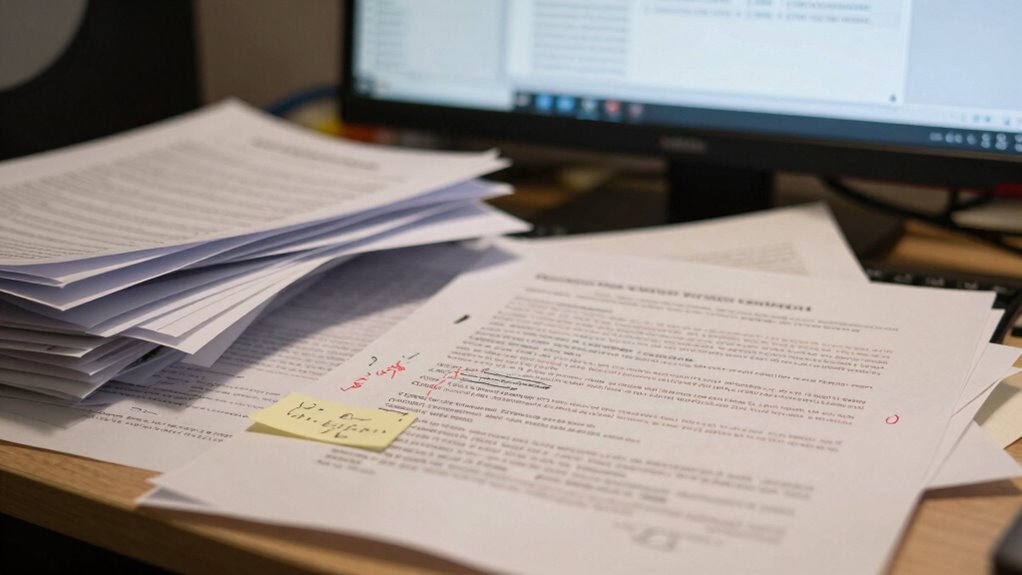

Weak document version control puts your organization at serious risk of data loss, errors, and security breaches. When multiple team members work on different versions without proper checks, chaos and confusion follow, delaying projects and increasing mistakes. It becomes difficult to trace changes or hold anyone accountable, which can compromise compliance and trust. Without a reliable system, sensitive info may leak, or critical errors may go unnoticed. Staying secure and organized is essential—learn how to protect your workflows further.

Get smart everyday buys delivered free with Prime
- Fast, free delivery on millions of items
- Prime Video, Amazon Music and more included
- Member-only deals all year
Key Takeaways
- It leads to confusion and errors by causing outdated or conflicting document versions.
- Lack of audit trails hampers accountability and complicates issue resolution.
- It increases project delays due to duplicated efforts and untracked changes.
- Poor control heightens security risks by exposing sensitive data to unauthorized access.
- Overall, it diminishes workflow efficiency, trust, and compliance within organizations.
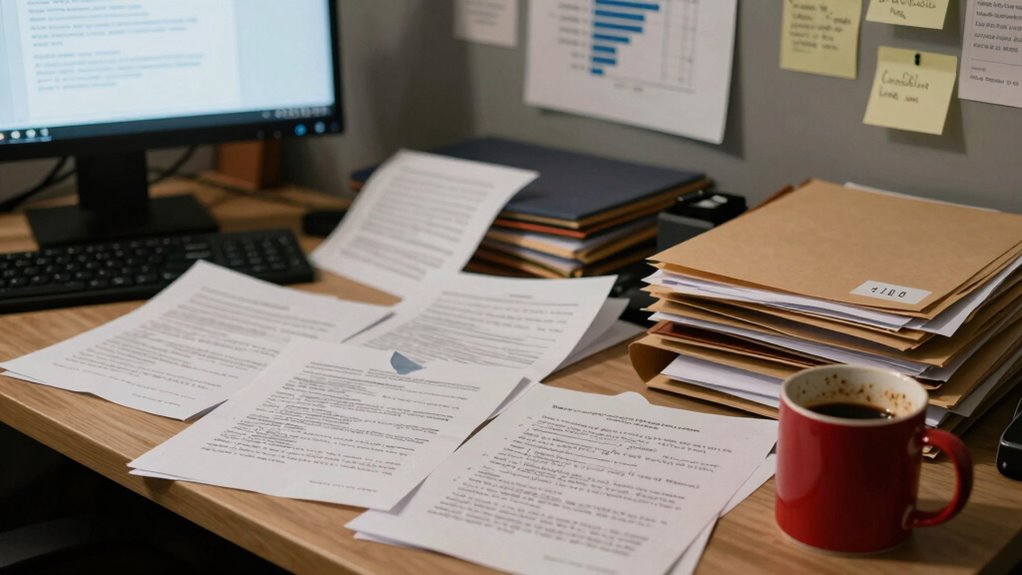
Have you ever experienced confusion or errors because multiple team members worked on different versions of the same document? It’s a common scenario in many workplaces, especially when there’s no solid system for document version control. Without a reliable method to track changes, team members may unknowingly overwrite each other’s updates or work on outdated files. This chaos hampers productivity and increases the risk of mistakes slipping through. Weak version control makes it hard to identify which version is the most current, leading to miscommunication and inconsistent information being circulated. When everyone’s editing different copies, collaboration suffers, and the final document may reflect conflicting data or overlooked details.
One of the biggest dangers of weak document version control is the loss of an audit trail. An audit trail provides a detailed history of who made what changes and when. Without it, you lose the ability to trace back errors to their source or understand how a document evolved over time. This makes accountability difficult and complicates compliance with industry regulations that demand transparency. In contrast, effective version control systems keep a clear record of each modification, enabling you to review the document’s history at any point. This transparency supports better decision-making and helps prevent disputes over who contributed what.
When collaborative editing occurs without proper controls, mistakes can multiply quickly. Multiple team members may edit the same sections simultaneously, leading to conflicting inputs or duplicated efforts. Without a centralized version, those edits can get lost or overwritten. As a result, teams spend extra time reconciling differences or redoing work, which delays projects and wastes resources. Such disorganization can also cause critical errors to go unnoticed until it’s too late, risking project failure or compliance issues. Incorporating version management practices can help mitigate these issues by organizing and streamlining the editing process. Additionally, implementing automation tools can further enhance the accuracy and consistency of version control by reducing manual errors. Moreover, document management systems can improve security and accessibility, ensuring that the right people have access to the correct versions.
Weak version control also exposes your organization to security threats. If multiple versions are stored in insecure locations or shared through untracked channels, sensitive information might leak or get accessed by unauthorized individuals. Proper controls ensure that only authorized personnel can modify or view specific versions, reducing the chance of accidental leaks or malicious tampering. Plus, with a robust system, you can restore previous versions if malicious changes are made or errors occur, minimizing damage and downtime. Additionally, microplastics in dust and other contaminants can be overlooked if documentation isn’t properly managed, illustrating the importance of careful control over information.
In short, neglecting solid document version control puts your entire workflow at risk. It hampers collaboration, obscures accountability, and opens the door to errors and security breaches. Implementing a system that maintains an audit trail and manages collaborative editing effectively isn’t just about organization—it’s about safeguarding your work, your team’s trust, and your organization’s reputation.
Products Worth Considering

Dell UltraSharp 32 U3226QER 4K Thunderbolt Hub Monitor

Apple Mac mini Desktop Computer with M5 Pro Chip (2026)

Logitech MX Keys S Wireless Keyboard, Graphite
As an affiliate, we earn on qualifying purchases.
Frequently Asked Questions
How Can Organizations Improve Their Document Version Control Processes?
You can improve your document version control processes by implementing strict version tracking and conducting regular document audits. Use reliable software that automatically saves version histories, making it easier to identify changes and prevent confusion. Establish clear protocols for updating and reviewing documents, guaranteeing everyone follows consistent practices. Regular audits help catch errors early, maintain accuracy, and ensure that only the latest, approved versions are in use, reducing risks.
What Tools Are Best for Managing Document Version History?
You should use tools like Microsoft SharePoint or Google Drive for managing document version history. These platforms excel in version tracking, automatically saving each change and allowing you to verify or compare versions easily. They also support collaborative editing, so multiple users can work simultaneously without losing track of edits. By choosing these tools, you guarantee your document history is well-maintained, reducing risks associated with poor version control.
How Does Weak Version Control Impact Regulatory Compliance?
Did you know that 60% of compliance violations stem from poor document control? Weak version control hampers your ability to meet regulatory oversight, risking non-compliance. When document versions aren’t properly managed, you might unknowingly use outdated information, leading to compliance challenges. This can result in penalties, legal issues, and damage to your reputation. Proper version control makes certain you stay aligned with regulations, minimizing risk and maintaining trust with regulators.
What Are Common Signs of Ineffective Document Control?
You notice document chaos and revision confusion when your team struggles to find the latest files, or outdated versions circulate frequently. Common signs include multiple versions floating around, inconsistent document updates, and difficulty tracking who made changes. These issues can cause errors and slow down workflows. If you see these signs, it’s a clear indicator that your document control system needs improvement to guarantee accuracy and efficiency.
Who Should Be Responsible for Maintaining Document Version Accuracy?
You should take responsibility for maintaining document version accuracy, establishing clear ownership from the start. Define who holds document ownership to guarantee accountability, and set accountability standards that everyone understands. When you assign responsibility, you create a system of accountability standards that promote accuracy, consistency, and reliability. This clarity helps prevent errors, reduces confusion, and keeps your documentation trustworthy and up-to-date, supporting smooth operations and compliance.
Conclusion
Without strong document version control, you leave yourself vulnerable to costly mistakes, missed deadlines, and confusion. It’s almost ironic—how something as simple as tracking changes can prevent chaos and protect your work. When you neglect this essential step, you risk more than just errors; you risk losing credibility and time. So, next time you overlook version control, remember, it’s often the small details that prevent the biggest problems—sometimes, they’re just a click away.