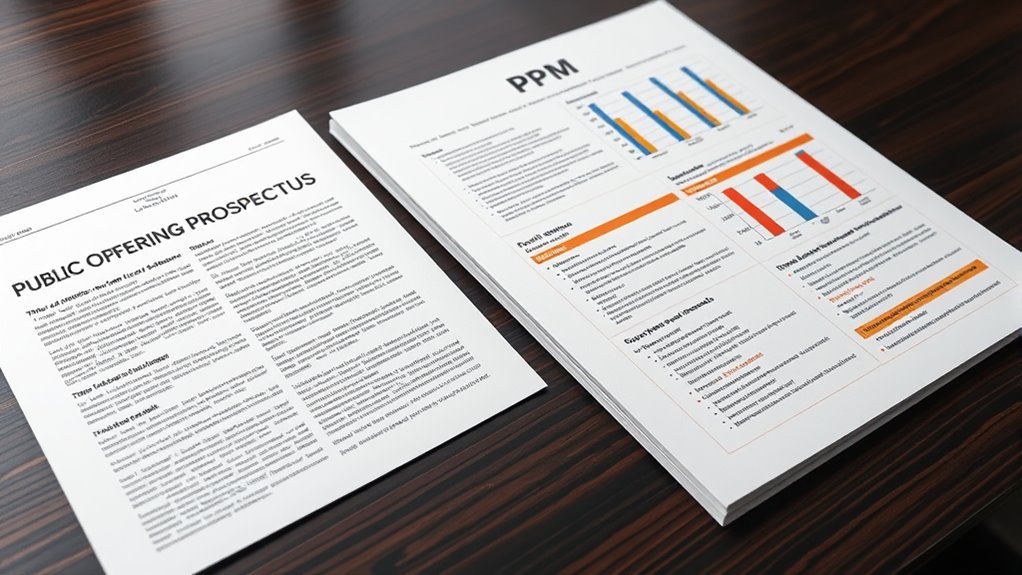

When comparing PPMs and public offering prospectuses, you’ll find that PPMs are tailored for private investors with detailed, customized disclosures and less regulation, focusing on highlighting risks and terms for sophisticated parties. Public prospectuses, however, are heavily regulated, follow strict formats, and aim to inform a broader, less experienced audience with extensive, standardized information. Understanding these differences helps you evaluate risks and protections effectively—something you’ll explore in more detail as you continue.

Get smart everyday buys delivered free with Prime
- Fast, free delivery on millions of items
- Prime Video, Amazon Music and more included
- Member-only deals all year
Key Takeaways
- PPMs offer tailored, detailed disclosures for private investors, while prospectuses follow strict, standardized formats for public offerings.
- Prospectuses are heavily regulated with formal filing and disclosure requirements; PPMs have more flexibility with regulatory oversight.
- PPMs focus on specific risks and terms relevant to sophisticated investors; prospectuses aim for comprehensive transparency for the general public.
- PPMs are customized to investor needs, whereas prospectuses adhere to uniform formats to ensure fairness and clarity for less experienced investors.
- Both documents must ensure truthful disclosures, but regulation enhances investor protection more significantly for public offerings.
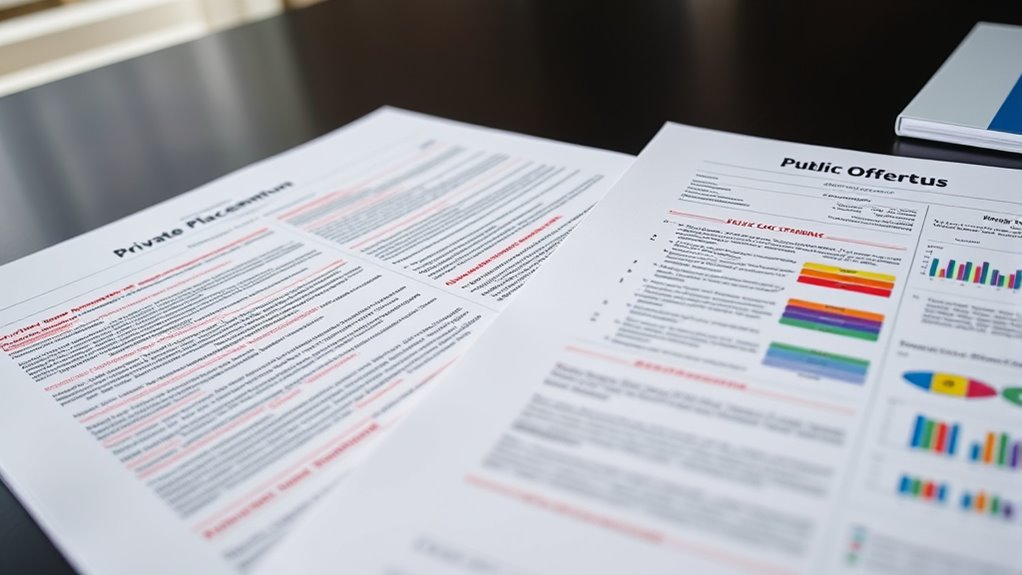
Have you ever wondered what sets apart a Private Placement Memorandum (PPM) from a public prospectus? The key differences lie in their purpose, audience, and the level of disclosure required. A PPM is designed for private investors and is tailored to provide detailed information about a specific investment opportunity. Its primary focus is on protecting investors by offering detailed disclosures that highlight risks, terms, and management details. Because PPMs are used in private placements, they’re not subject to the same level of regulatory oversight as public offerings, but they still need to guarantee regulatory compliance to avoid legal pitfalls. This means the issuer must adhere to securities laws, providing accurate and complete information to prevent misrepresentation or fraud, which is crucial for investor protection.
A PPM offers private investors detailed, tailored disclosures while maintaining regulatory compliance for legal protection.
In contrast, public prospectuses are used for offerings accessible to the general public, such as initial public offerings (IPOs). These documents are heavily regulated by securities authorities, which demand extensive disclosures to ensure transparency and fairness. The goal is to protect investors by providing a clear, standardized picture of the company’s financial health, risks, and operations. Because of this regulatory compliance, prospectuses must follow strict formats and filing procedures, making them more detailed and thorough. This heightened regulation helps prevent misinformation and promotes a level playing field among investors, but it also means the process of preparing a prospectus can be more complex and costly.
While both PPMs and prospectuses aim to inform investors and facilitate capital raising, their scope differs considerably. PPMs tend to be more adaptable, allowing issuers to customize disclosures to the specific audience—typically sophisticated or accredited investors—who can understand and evaluate risks without the same level of regulatory safeguards. However, despite this flexibility, issuers must still prioritize investor protection by ensuring their disclosures are truthful, complete, and compliant with securities laws. On the other hand, prospectuses follow a standardized, regulated process designed to protect less experienced investors. The regulatory oversight enforces transparency, honesty, and accuracy, preventing companies from omitting material information that could mislead the public.
Additionally, understanding the risk management strategies outlined in these documents is crucial for investors to gauge potential vulnerabilities. Ultimately, understanding these differences helps you assess the level of risk and protection involved in each type of offering. Whether you’re investing through a private placement or a public offering, recognizing the importance of regulatory compliance and investor protection can make your investment decisions more informed and secure.
Private Placement Memorandum PPM template
As an affiliate, we earn on qualifying purchases.
As an affiliate, we earn on qualifying purchases.
Frequently Asked Questions
How Do PPMS and Prospectuses Impact Investor Decision-Making?
PPMs and prospectuses directly influence your decision-making by shaping your investor confidence through clear disclosure transparency. When these documents thoroughly detail risks, fees, and company info, you feel more informed and secure about your investment choices. Conversely, any lack of transparency can lead to doubt or hesitation. Ultimately, well-prepared PPMs and prospectuses empower you to assess risks accurately and make confident, informed investment decisions.
Are PPMS and Prospectuses Subject to Different Legal Liabilities?
You should know that PPMs and prospectuses have different liability implications. PPMs generally carry limited liability for issuers but can expose investors to legal responsibilities if they misrepresent facts. Prospectuses are subject to stricter regulations, increasing issuer liability for disclosure errors. These liability differences mean you must carefully review each document, understanding the legal responsibilities involved, to make informed investment decisions and avoid potential legal risks.
How Often Are PPMS and Prospectuses Updated?
You should review PPMs and prospectuses regularly, as their disclosure frequency varies based on updates to material information. Typically, these documents are updated whenever there’s significant new data or material changes. It’s your responsibility to stay vigilant through periodic document reviews, ensuring you’re aware of the latest disclosures. Frequent updates help maintain transparency, so always check for the latest version before making investment decisions.
Can Investors Access PPMS and Prospectuses Electronically?
Yes, you can access PPMs and prospectuses electronically. Many firms provide electronic access through secure websites, offering documents in formats like PDF for easy download and review. This convenience allows you to obtain the latest disclosures quickly, anytime you need them. Always verify you’re accessing these documents from official sources to guarantee you’re viewing the most current and accurate information.
What Are the Typical Costs Associated With Reviewing Each Document?
Ever wondered about the costs involved in reviewing these documents? Typically, a cost analysis reveals that PPMs are less expensive to review due to their straightforward nature, while public offering prospectuses often require more time and expertise because of their document complexity. You might spend hundreds to thousands of dollars consulting legal or financial experts, especially if the documents are lengthy or highly detailed. Are you prepared for the potential review expenses?
public offering prospectus sample
As an affiliate, we earn on qualifying purchases.
As an affiliate, we earn on qualifying purchases.
Conclusion
Understanding the differences between PPMS and prospectuses is like steering two different maps—each guiding you through unique terrains of disclosure and regulation. PPMS offer a snapshot tailored for private investors, while prospectuses serve as detailed roadmaps for the public. By knowing their key distinctions, you can confidently steer through investment decisions, ensuring you’re well-informed. Just as a navigator chooses the right map, you’ll select the right document to help you make smarter, more informed choices.
As an affiliate, we earn on qualifying purchases.
securities regulation compliance guide
As an affiliate, we earn on qualifying purchases.
As an affiliate, we earn on qualifying purchases.
Fall Picks
fall essentials
As an affiliate, we earn on qualifying purchases.