
TL;DR

Get smart everyday buys delivered free with Prime
- Fast, free delivery on millions of items
- Prime Video, Amazon Music and more included
- Member-only deals all year
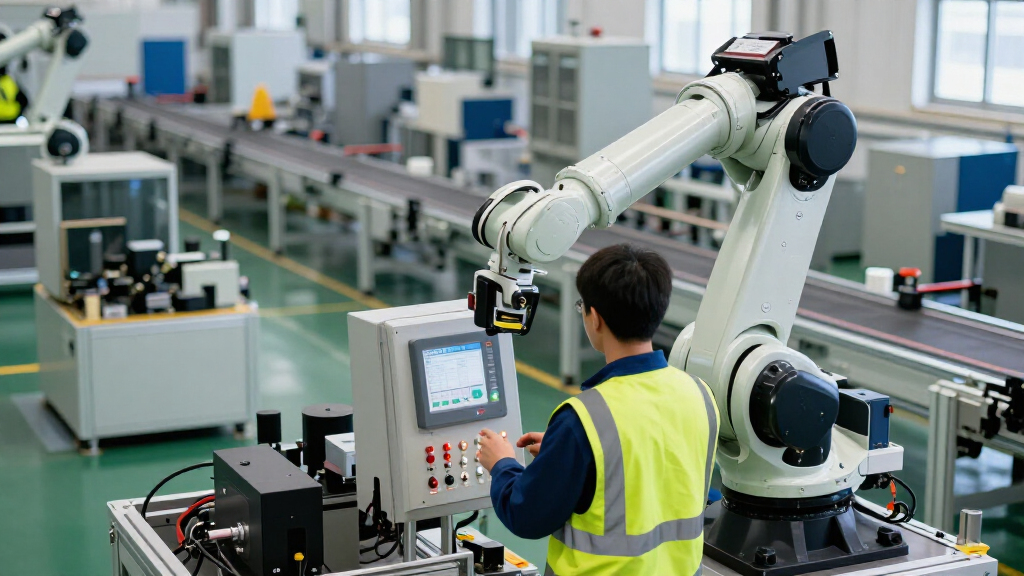
Siemens is shifting focus from language-based AI to physical-world industrial AI, partnering with NVIDIA to build a platform that optimizes manufacturing processes. This move leverages Siemens’ domain expertise and proprietary data, aiming to transform factory operations.
Siemens has revealed a major strategic shift toward industrial AI, partnering with NVIDIA to develop an Industrial AI Operating System designed to embed AI across the entire manufacturing lifecycle. This initiative aims to leverage Siemens’ extensive industrial data and domain expertise to transform factory operations, marking a significant move away from language-based AI towards physical-world applications.
During CES 2026, Siemens CEO Roland Busch emphasized that ‘Industrial AI is no longer a feature; it’s a force that will reshape the next century’. The core of this effort is the Industrial Foundation Model (IFM), announced at Hannover Messe 2025, which processes 3D models, engineering drawings, sensor telemetry, and automation logic to optimize manufacturing and engineering.
The partnership with NVIDIA is central to this strategy, with plans to develop GPU-accelerated simulation tools and generative digital twins that actively engineer and optimize physical systems in real time. The first fully AI-driven factory is expected to launch in 2026 at Siemens’ Electronics Factory in Erlangen, Germany, serving as a blueprint for global implementation. Siemens also plans to introduce Digital Twin Composer and several industrial copilots to support the digital transformation of manufacturing processes.
Siemens asserts that its proprietary, decades-long accumulated industrial data and domain expertise give it a competitive advantage, as general-purpose AI models are deemed less effective for physical-world applications. The company’s existing relationships with clients like PepsiCo, Audi, and other manufacturers position it to integrate AI into ongoing operations, rather than starting from scratch.
Why Siemens’ Industrial AI Shift Is a Major Industry Development
This move signals a significant shift in how industrial AI is being developed and deployed. Siemens’ focus on physical-world AI, backed by proprietary data and domain expertise, could accelerate automation and optimization in manufacturing, supply chains, and infrastructure. It also underscores the trend of industrial giants leveraging AI not through language models, but through models tailored for physical systems, which could redefine industry standards and competitive dynamics.
industrial AI software for manufacturing
As an affiliate, we earn on qualifying purchases.
As an affiliate, we earn on qualifying purchases.
Industrial AI Development and Siemens’ Strategic Position
While AI conversations have predominantly centered around chatbots and language models, Siemens has taken a different route, emphasizing physical-world AI tailored for industrial applications. The company’s announcement builds on its longstanding presence in automation and industrial software, now integrating AI to enhance operational efficiency and product design. The partnership with NVIDIA, announced at CES 2026, represents a strategic move to leverage GPU acceleration and physics-based simulation for manufacturing. Historically, Siemens has accumulated extensive industrial data and domain knowledge, which it claims provide a barrier to entry for competitors in this space.
Prior to this, Siemens had announced the Industrial Foundation Model at Hannover Messe 2025, marking its first step toward building AI models capable of understanding complex industrial data. The current initiative aims to embed AI more deeply into factory floors, with the first fully AI-driven factory scheduled for 2026. Meanwhile, competitors like Palantir and Qualcomm are also exploring industrial AI, indicating a rapidly evolving landscape.
“‘Industrial AI is no longer a feature; it’s a force that will reshape the next century’”
— Roland Busch, Siemens CEO
As an affiliate, we earn on qualifying purchases.
Unconfirmed Aspects of Siemens’ Industrial AI Ambitions
While Siemens has announced ambitious plans, specific hardware configurations, deployment timelines, and validated performance metrics remain undisclosed. The effectiveness of the AI models in real-world factory settings, beyond initial pilot projects, is still unproven. The dependency on NVIDIA’s infrastructure raises questions about sovereignty and long-term independence, especially for European clients concerned about reliance on American technology. Additionally, the pace at which this AI transformation will penetrate the industrial sector remains uncertain, given the long replacement cycles typical in manufacturing.
GPU-accelerated industrial simulation
As an affiliate, we earn on qualifying purchases.
As an affiliate, we earn on qualifying purchases.
Next Steps for Siemens’ Industrial AI Rollout and Industry Adoption
Siemens plans to launch its fully AI-driven factory in Erlangen in 2026, serving as a showcase for its technology. The company will also introduce Digital Twin Composer and expand its industrial copilots, aiming to integrate these tools into existing customer operations gradually. Monitoring the performance of these implementations and gathering third-party validation will be crucial. Industry observers will watch for early pilot results, hardware deployment details, and how competitors respond as Siemens advances its physical AI platform.
As an affiliate, we earn on qualifying purchases.
Key Questions
How does Siemens’ approach differ from traditional AI in manufacturing?
Siemens focuses on physical-world AI models tailored for industrial data like 3D models, sensor telemetry, and automation logic, rather than language-based AI or general-purpose models. This approach aims to optimize manufacturing processes directly through domain-specific AI systems.
What role does NVIDIA play in Siemens’ industrial AI strategy?
NVIDIA provides GPU-accelerated simulation tools, physics-based AI models, and the underlying infrastructure for Siemens’ platform. The partnership is central to enabling real-time, generative digital twins and advanced simulations.
When will Siemens’ fully AI-driven factory be operational?
The first factory, at Siemens’ Electronics Factory in Erlangen, Germany, is scheduled to launch in 2026, serving as a prototype for broader deployment.
What are the risks or challenges Siemens faces with this AI push?
Key challenges include reliance on NVIDIA’s technology, unproven performance in live factory environments, long sales cycles in industrial markets, and potential geopolitical concerns about technology sovereignty.
Source: ThorstenMeyerAI.com
Fall Picks
fall essentials
As an affiliate, we earn on qualifying purchases.