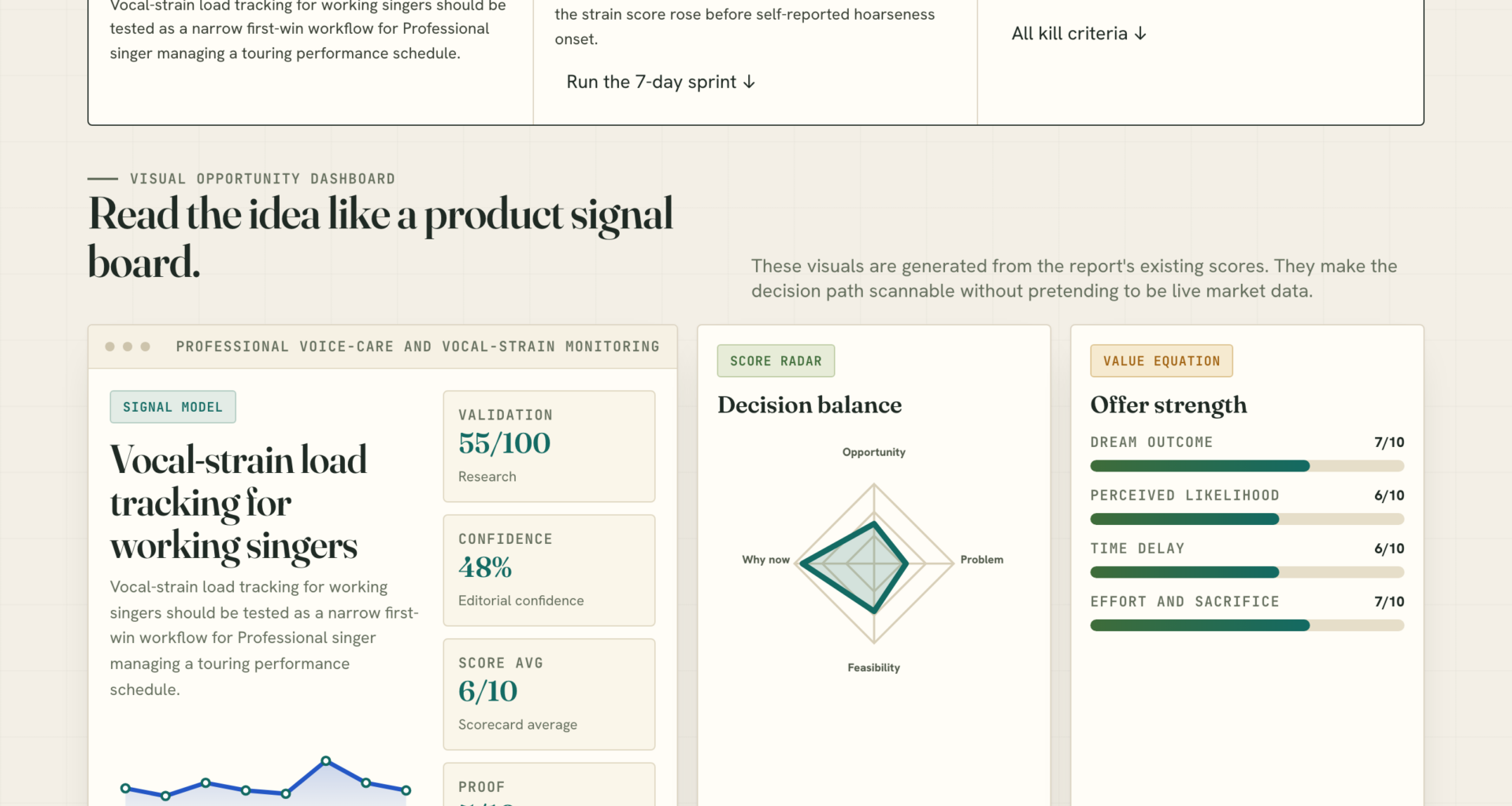

📊 Full opportunity report: Vocal-strain load tracking for working singers on IdeaNavigator AI — validation score, market gap, and execution plan.

Get smart everyday buys delivered free with Prime
- Fast, free delivery on millions of items
- Prime Video, Amazon Music and more included
- Member-only deals all year
TL;DR
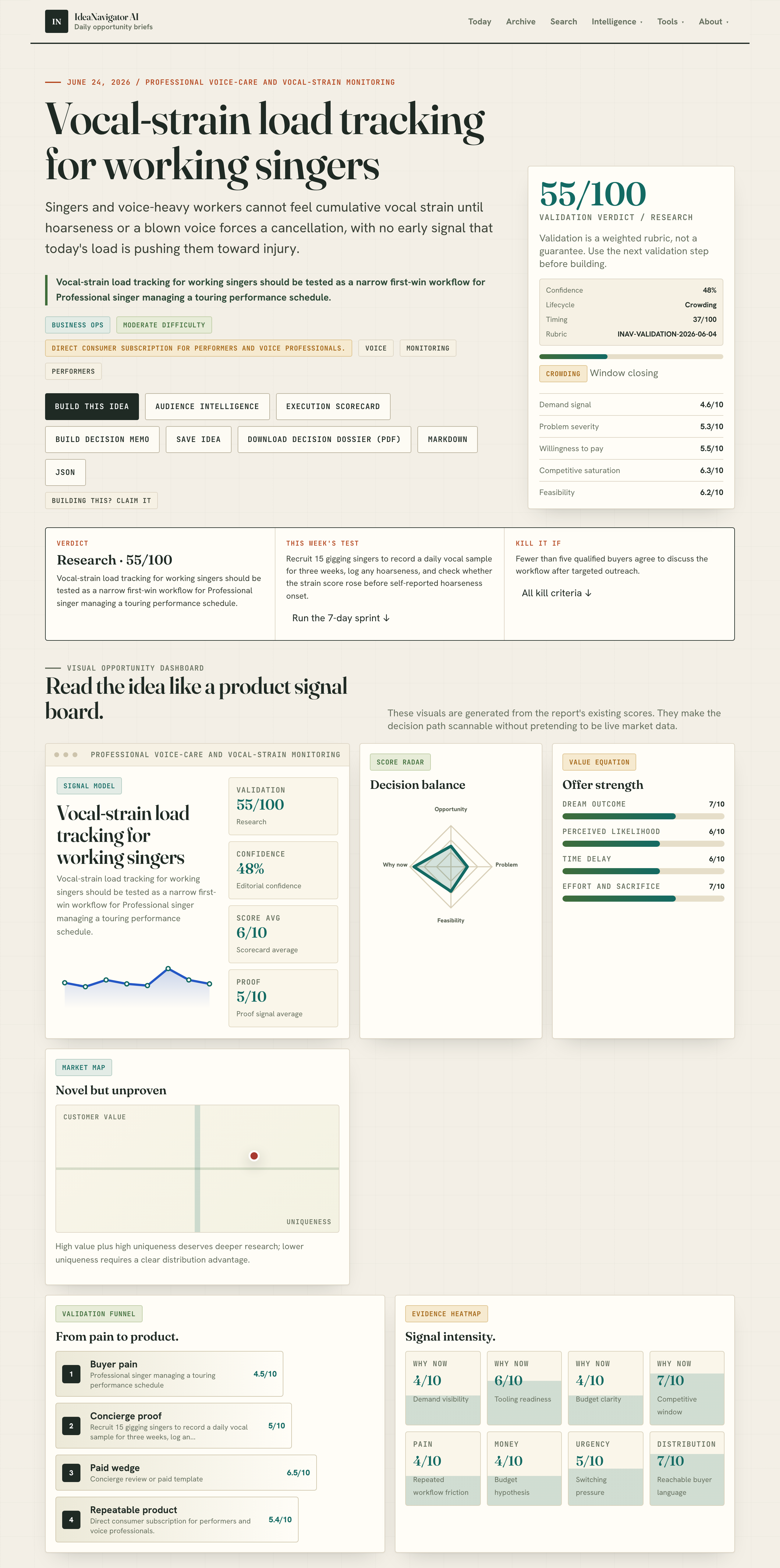
A new vocal strain tracking app is being tested with gigging singers to monitor cumulative vocal load. It aims to prevent voice injuries by providing early signals based on audio analysis after performances. Validation involves recording daily samples and comparing strain scores with self-reported hoarseness.
A new vocal strain monitoring app is entering pilot testing with professional touring singers to evaluate its ability to detect early signs of vocal fatigue and prevent injury. This development responds to the challenge singers face in recognizing cumulative strain until voice issues force cancellations, offering a potential tool for self-managed vocal health.
The app allows singers to record a brief vocal sample after each performance. Using audio analysis, it scores the cumulative vocal strain against each singer’s baseline and identifies tone shifts that have historically preceded hoarseness. The goal is to provide early alerts and suggest warm-up routines to mitigate injury risk.
IdeaNavigator AI reports that the prototype is being tested with a group of 15 gigging singers over a three-week period. Participants will log daily samples, note instances of hoarseness, and compare these self-reports with the app’s strain scores. The validation aims to determine whether the app can reliably predict vocal issues before they become problematic.
Potential Impact on Vocal Health Management
This development could significantly improve how professional singers manage vocal health during demanding touring schedules. By providing early warnings of vocal fatigue, the app has the potential to reduce voice injuries and improve career longevity. It also offers a self-management tool that does not require constant access to a voice coach, aligning with the trend of gig-economy performers managing their schedules independently.Products Worth Considering

Dell UltraSharp U2424H 24-Inch FHD Monitor

Dell 32 Plus 4K Monitor (S3225QS), 31.5-Inch VA, 120Hz, FreeSync Premium

Dell UltraSharp 27 Thunderbolt Hub Monitor (U2726DER), QHD
As an affiliate, we earn on qualifying purchases.
Advances in Audio Analysis Enable Vocal Monitoring
Recent technological progress in on-device audio analysis makes it feasible to assess vocal characteristics in real time. Traditionally, vocal health monitoring relied on subjective feedback or frequent visits to specialists. The new approach leverages smartphone capabilities to provide accessible, daily monitoring tailored to individual singers. The concept builds on prior research indicating that tone shifts often precede vocal injury, but practical tools for self-monitoring have been limited until now.“Using audio analysis to detect early signs of vocal fatigue could transform singer health management.”
— an anonymous researcher
Unverified Effectiveness and User Adoption
It is not yet confirmed whether the app’s strain scores will reliably predict hoarseness or injury in real-world conditions. The pilot study is ongoing, and results are pending. Additionally, user acceptance and consistent use of the app remain to be seen, as some singers may be hesitant to rely on automated assessments for vocal health.
Next Steps in Validation and Deployment
The pilot study will conclude within the next few weeks, with researchers analyzing whether the app’s scores correlate with self-reported hoarseness. If successful, developers plan to refine the algorithm and expand testing to a larger group. Future steps include integrating the app into commercial platforms and exploring subscription models for voice professionals.
Key Questions
How does the app analyze vocal strain?
The app records a short vocal sample after each performance and uses audio analysis algorithms to assess tone stability, pitch, and other characteristics linked to vocal fatigue. It then compares these metrics to the singer’s baseline to generate a strain score.
Can this app replace traditional vocal coaching?
No, the app is designed as a supplementary tool for self-monitoring. It aims to provide early warnings and help singers manage their vocal health between coaching sessions.
What are the limitations of this technology?
The accuracy of the strain scores depends on the quality of recordings and individual variability. It is still under validation whether the app can reliably predict injury risk across diverse singing styles and voice types.
Will the app be available commercially?
If validation proves successful, developers plan to offer the app through subscription models targeted at professional singers and voice coaches.
Source: IdeaNavigator AI