
📊 Full opportunity report: How To Assess Influencer Fit For A New DTC Product on IdeaNavigator AI — validation score, market gap, and execution plan.

Get smart everyday buys delivered free with Prime
- Fast, free delivery on millions of items
- Prime Video, Amazon Music and more included
- Member-only deals all year
TL;DR

A proposal from IdeaNavigator AI would score potential launch influencers using audience-fit signals, engagement authenticity and available category sales history. It remains a concept: the proposal suggests ranking rosters for 10 launches in advance and comparing the sealed predictions with attributed sales.
IdeaNavigator AI has proposed a scoring workflow to help direct-to-consumer (DTC) brands choose influencers for product launches, ranking candidates by audience fit, engagement authenticity and category conversion history where that data is available. The proposal is not a reported product launch or proven sales tool: IdeaNavigator AI suggests validating it by scoring rosters for 10 launches before they happen and comparing predictions with attributed sales afterward.
In its proposal, IdeaNavigator AI targets a specific buyer: a DTC brand planning an influencer roster for a new product. The company describes a familiar measurement problem: teams may select partners based on follower counts and subjective impressions, then find out only after launch which creators were associated with sales. It argues that this can leave brands repeating the same learning process from one launch to the next, without a consistent way to set partner pricing.
IdeaNavigator AI’s suggested minimum viable product would take in information about the product and target customer, then assess candidate influencers using several signals. These include how closely an influencer’s audience matches the intended customer, whether engagement appears authentic, and relevant category conversion history when such records exist. The proposed output is a ranked roster, paired with suggested offer structures.
IdeaNavigator AI identifies affiliate links, post-purchase surveys and Spark Ads data as possible sources of sales-impact evidence, saying these measurement inputs exist but are spread across tools. The proposal does not provide evidence that the data can currently be combined reliably for every campaign, or specify how the proposed scores would handle missing or inconsistent attribution.
Better Launch Decisions Need Evidence
Influencer choices affect how a DTC brand spends launch budgets and which partners receive products, fees, commissions or paid amplification. As IdeaNavigator AI presents it, a consistent pre-launch ranking could give teams a documented way to compare candidates instead of relying mainly on reach or informal judgment. If predictions are checked against sales after each launch, the process could also help a brand update its assumptions for later campaigns.
The central business question is not whether a score can produce a ranked list, but whether that ranking offers useful predictive value beyond the information a brand already has. Audience overlap and engagement can indicate potential relevance, but neither alone establishes that a creator will generate purchases. A scoring system that claims to guide spending would need to show how well its recommendations correspond with measured outcomes, and how the result changes across products and customer groups.
Pricing is part of the opportunity described by IdeaNavigator AI: the proposal suggests subscriptions tiered by the volume of rosters scored. That is a business model proposal, not evidence of demand, customer adoption or commercial performance. For brands, the practical value would depend on whether the analysis is sufficiently accurate and repeatable to justify the time, data access and subscription cost.
Products Worth Considering

Canon Color imageCLASS MF753Cdw II Wireless All-in-One Color Laser Printer
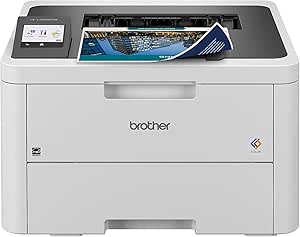
Brother HL-L3280CDW Wireless Color Laser Printer

Dell UltraSharp 27 Thunderbolt Hub Monitor (U2726DER), QHD
As an affiliate, we earn on qualifying purchases.
A Proposed Test Before Scaling
IdeaNavigator AI places the idea within influencer marketing analytics and frames it as a narrow workflow rather than a broad platform for every marketing decision. The proposal identifies its first customer as a DTC brand assembling a launch roster, with an initial task of comparing potential partners against a defined product and target audience.
IdeaNavigator AI suggests scoring rosters for 10 launches before results are known, sealing those predictions, and comparing them with realized per-influencer attributed sales. Sealing the rankings before outcomes are available would make it harder to adjust predictions after the fact. The proposal does not describe participating brands, the scoring formula, how a sale would be assigned to an influencer, or what threshold would count as a successful prediction.
That distinction matters because attribution signals are not interchangeable. Affiliate links may record tracked referrals, while post-purchase surveys rely on customer responses; paid-ad data may reflect a different campaign setup. Although IdeaNavigator AI names these inputs, its proposal does not set out a common measurement method. Any trial would need to define its sales window and attribution rules before comparing predicted rankings with results.
The Scoring Evidence Is Unreported
IdeaNavigator AI’s proposal provides no completed test, performance figures, customer interviews, product availability or launch date. It is therefore unclear whether the proposed workflow has been built, whether any brands are using it, or whether its rankings have predicted sales in practice. The 10-launch exercise is presented as a validation plan, not as a result.
Other open questions concern the underlying data and method. The proposal does not explain how audience fit or authentic engagement would be measured, how category conversion history would be obtained, or how the system would treat creators with limited sales records. It also does not specify how attribution would account for overlapping influencer exposure, repeat purchases, or customers who encounter several marketing channels before buying.
IdeaNavigator AI also does not describe suggested offer structures or subscription tiers in detail. Without disclosed prices, scoring criteria and trial outcomes, readers cannot assess the system’s expected accuracy, cost or likely return for a brand. Those questions would need answers from a product specification or independently reviewable test data.
Ten Launches Could Test Predictions
The next step proposed by IdeaNavigator AI is a pre-registered-style comparison across 10 launches: score each roster before the campaign, keep the predictions fixed, then compare rankings with per-influencer sales attributed under a stated method. A useful report would disclose the scoring inputs, sales window, attribution rules and whether results differ by product category or creator size.
Until such findings are available, DTC teams considering the approach can treat it as a testable planning concept, not a demonstrated way to choose high-performing partners. Any pilot would be more informative if brands preserve the original rankings, record the campaign terms and separately report missing or uncertain attribution. IdeaNavigator AI has announced no test schedule or outcome in the proposal.
Source: IdeaNavigator AI proposal
Key Questions
What is the proposed influencer-scoring tool meant to do?
IdeaNavigator AI’s proposal would assess potential launch partners using audience fit, engagement authenticity and category conversion history where available, then return a ranked roster and suggested offer structures.
Has the scoring approach been shown to increase sales?
No results are provided in IdeaNavigator AI’s proposal. It describes a possible product and recommends testing its predictions against attributed sales across 10 launches.
What data could inform the scores?
IdeaNavigator AI names affiliate links, post-purchase surveys and Spark Ads data. Its proposal does not explain how those different signals would be combined or how missing data would be handled.
How would a brand test whether the rankings work?
As IdeaNavigator AI proposes, score and seal each roster before its launch, then compare the predictions with per-influencer attributed sales. The test would need clear attribution rules and a defined sales window to make the comparison interpretable.
Source: IdeaNavigator AI