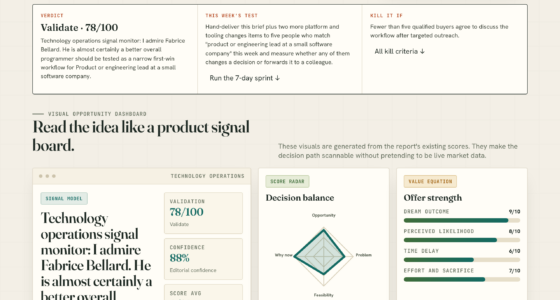
📊 Full opportunity report: Data: The One Thing You Can’t Rent on ThorstenMeyerAI.com — validation score, market gap, and execution plan.

Get smart everyday buys delivered free with Prime
- Fast, free delivery on millions of items
- Prime Video, Amazon Music and more included
- Member-only deals all year
TL;DR
The AI industry faces a new bottleneck: access to scarce, high-quality data. Companies are now fencing and licensing data, making it a costly and strategic resource that cannot be rented like compute. This shift impacts industry competition and innovation.
In 2026, the AI industry has shifted from renting compute to facing a new chokepoint: access to unique, verified data. Industry players are increasingly fencing, licensing, and litigating over data that cannot be simply rented or scraped, marking a fundamental change in how AI models are trained and developed.
Recent developments confirm that the era of freely scraping large datasets from the internet is ending. Notably, Anthropic settled a copyright dispute over pirated training data, signaling a move toward a market-based licensing regime for data. The case set a precedent that data used for training must be legally acquired, effectively ending the free-for-all approach of the past.
Major publishers like The New York Times are shifting from litigation to licensing agreements, further emphasizing that data is now a paid resource. This change favors well-funded companies able to afford licensing fees, creating a barrier to entry for startups. Meanwhile, synthetic data, while increasingly used, carries risks of errors and model collapse, highlighting the importance of verified human-made data.
Additionally, the industry is witnessing a strategic move towards fencing the most valuable data, such as expert annotations, military intelligence, and proprietary research, which are difficult or impossible to replicate or buy. Companies like Ukraine’s Avengers Labs exemplify this trend by licensing access to specialized datasets generated from real-world operations.
Data: The One Thing You Can’t Rent
The free part of “all human knowledge” is running out. As compute and models commoditize, the corpus you can’t replicate becomes the moat — so data is being fenced, priced, and, in places, treated as a national asset.
Data was supposed to be the abundant input. It’s the scarce one. It’s also the chokepoint you can actually own — so guard your proprietary data, and don’t hand it to a provider who can become your competitor (the lesson everyone fled Scale to learn). Nations: license it like Ukraine — keep the model, keep the leverage.
Implications of Data Fencing for AI Industry Competition
This shift signifies that access to high-quality, verified data will determine competitive advantage in AI. Companies that control valuable datasets can lock out rivals, creating a new form of industry moat. It also raises concerns about data monopolies, increased costs for AI development, and reduced innovation among smaller players unable to afford licensing fees or proprietary data acquisition.
high quality data licensing services
As an affiliate, we earn on qualifying purchases.
As an affiliate, we earn on qualifying purchases.
Legal and Market Changes Reshaping Data Access
Historically, AI training relied on freely available web data, but legal rulings like Anthropic’s settlement and ongoing lawsuits have established that data must be legally licensed. The move toward paid data access is reinforced by the rising value of expert-generated datasets, which are expensive and scarce. Companies like Meta and Surge are investing heavily in acquiring or developing proprietary data, while vendors dependent on a few large clients face declining valuations, exemplified by Appen’s collapse.
Meanwhile, synthetic data and AI-generated content are supplementing real data but are not a complete substitute due to quality and verification issues. The industry is now in a phase where data ownership and licensing are central to strategic positioning.
“The court’s ruling confirms that legally acquired data can be transformative fair use, but pirated data is not protected, setting a clear legal boundary.”
— A legal expert involved in the Anthropic settlement
As an affiliate, we earn on qualifying purchases.
Unclear Long-term Impact of Data Fencing
It remains uncertain how widespread and durable these licensing regimes will become, and whether smaller companies or new entrants will find ways to access or generate valuable data without prohibitive costs. The long-term effects on innovation, competition, and AI capabilities are still developing as legal and market frameworks evolve.
professional data annotation software
As an affiliate, we earn on qualifying purchases.
As an affiliate, we earn on qualifying purchases.
Future Developments in Data Licensing and Access
Expect continued legal battles and negotiations over data rights, with more companies formalizing licensing agreements. Advances in synthetic data and privacy-preserving techniques may offer alternative pathways, but the core issue of data scarcity and control will remain central. Monitoring regulatory changes and industry consolidation will be key to understanding how access to data shapes AI’s future.
AI training data verification services
As an affiliate, we earn on qualifying purchases.
As an affiliate, we earn on qualifying purchases.
Key Questions
Why is data now more valuable than compute in AI development?
Because the most critical and scarce resource for training advanced AI models is verified, high-quality data, which cannot be rented or scraped freely anymore due to legal and market restrictions.
How do legal rulings like the Anthropic settlement affect AI companies?
They establish that data must be legally acquired, pushing companies to license data and avoid piracy, which increases costs but also creates barriers for smaller players.
What types of data are becoming the most valuable?
Expert-annotated datasets, proprietary research, military intelligence, and other specialized, verified data that cannot be easily replicated or bought from open sources.
Will synthetic data replace real data in training AI models?
While synthetic data is increasingly used to supplement real data, it carries risks of errors and model collapse, so verified human-made data remains essential for high-stakes domains.
What does this mean for startups and smaller AI labs?
They may face higher barriers to access valuable data, potentially limiting their ability to compete with well-funded incumbents who can afford licensing fees and proprietary datasets.
Source: ThorstenMeyerAI.com
Columbus Day / Indigenous Peoples' Day Picks
long weekend sales
As an affiliate, we earn on qualifying purchases.