
🔍 Read the full analysis: AI III: The Twelve Rooms Of The Tower As A Model For Safe AI Use on ThorstenMeyerAI.com

Get smart everyday buys delivered free with Prime
- Fast, free delivery on millions of items
- Prime Video, Amazon Music and more included
- Member-only deals all year
TL;DR
The AI Tower model introduces twelve rooms as a framework for safe AI use, covering retrieval, prompt design, autonomous agents, and automation. This approach aims to improve AI reliability and safety.
Thorsten Meyer’s Inside AI series introduces The Twelve Rooms of the Tower, a practical framework for understanding and deploying AI safely. The model, launched in early 2024, offers twelve distinct modules, or ‘rooms,’ each addressing a key aspect of AI use, from retrieval to automation, with an emphasis on transparency and safety.
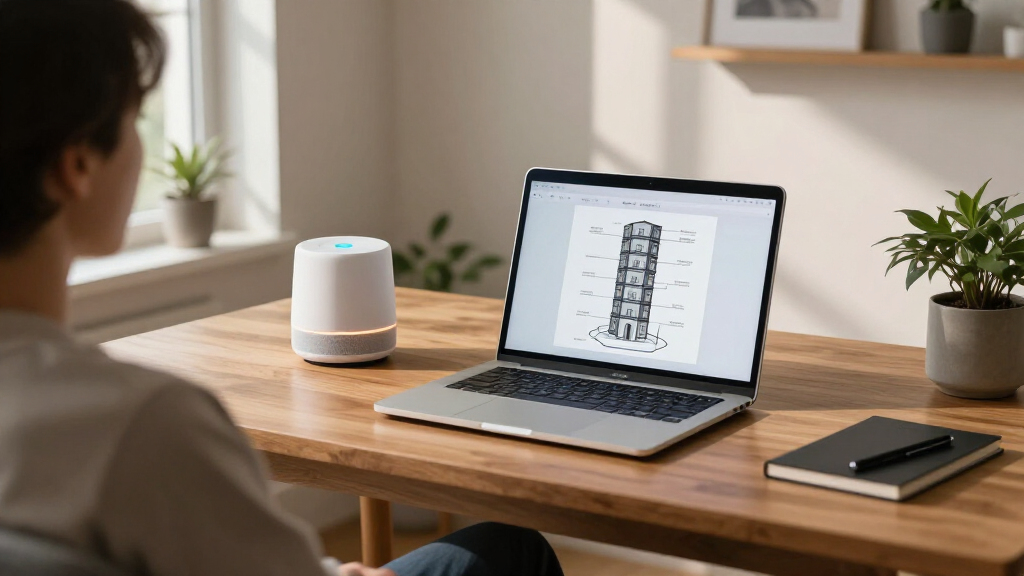
The AI Tower is a browser-based tool that does not require sign-up, cookies, or tracking. It is designed to help users understand how different AI functions work and how to implement them responsibly. The twelve rooms serve as interactive guides, each focusing on a specific question, such as how AI fetches information from personal documents, how to build custom assistants, and how autonomous agents operate within limits.
According to Meyer, the model emphasizes safety by illustrating the limitations and potential pitfalls of each AI function. For example, the retrieval process is shown to be imperfect, with a Stanford study cited indicating legal research tools built with retrieval-augmented generation still produce incorrect or poorly sourced answers 17-33% of the time. The framework encourages users to verify AI outputs and set clear boundaries for autonomous actions.
Part of the appeal is the accessibility: users can try each ‘room’ directly in their browser, testing scenarios like creating a custom assistant or automating repetitive tasks. Meyer states that this hands-on approach helps demystify AI and promotes responsible use, especially as AI becomes more integrated into everyday workflows.
Implications for Safe AI Deployment and User Understanding
The AI Tower model offers a structured way to understand and mitigate risks associated with AI deployment. By breaking down complex functions into manageable, testable modules, it helps users recognize limitations, verify outputs, and set appropriate boundaries. This approach is particularly relevant as AI systems grow more autonomous and embedded in critical processes, reducing the chance of errors, misuse, or unintended consequences.
For organizations and individual users, adopting this framework can lead to more responsible AI integration, fostering trust and safety. It also provides a common language for discussing AI capabilities and limitations, which is essential as regulatory and ethical considerations evolve.
As an affiliate, we earn on qualifying purchases.
Development of Practical Models for AI Safety and Usability
The concept of structured guides for AI safety is not new, but Meyer’s AI Tower advances this idea by offering an interactive, modular approach tailored for everyday users. Previous efforts have focused on high-level principles or technical safeguards; this model emphasizes hands-on testing and understanding through twelve specific ‘rooms.’
The series builds on prior parts, which covered the AI museum and the Engine Room, to create a comprehensive toolkit for safe AI use. The release aligns with broader industry efforts to improve transparency, reduce errors, and promote responsible AI development amid increasing adoption in business and personal contexts.
While the model is new, its principles echo ongoing discussions in AI safety communities about the importance of user education, verification, and bounded autonomy. Meyer’s approach offers a practical, accessible way to implement these principles at scale.
“The Twelve Rooms of the Tower provide a practical, interactive way to understand and test AI functions responsibly.”
— Thorsten Meyer
As an affiliate, we earn on qualifying purchases.
Unconfirmed Aspects of the AI Tower Framework’s Adoption
It is not yet clear how widely the AI Tower model will be adopted outside of Meyer’s initial demonstrations. The effectiveness of the framework in real-world, high-stakes environments remains to be tested, and its impact on reducing AI errors or misuse is still under evaluation.
Additionally, the extent to which users will consistently verify AI outputs or follow recommended boundaries is unknown, raising questions about its practical safety benefits at scale.
As an affiliate, we earn on qualifying purchases.
Next Steps for Broader Implementation and Validation
Following the initial launch, Meyer plans to collaborate with AI developers and organizations to pilot the AI Tower framework in diverse settings, including corporate workflows and educational tools. Further research will assess its effectiveness in improving AI safety and user understanding.
Expect updates on user feedback, case studies, and potential integration into AI development platforms over the coming months. The goal is to refine the model based on real-world testing and promote wider adoption of responsible AI practices.
As an affiliate, we earn on qualifying purchases.
Key Questions
What are the twelve rooms in the AI Tower?
The twelve rooms cover key aspects such as retrieval from personal documents, building custom assistants, prompt engineering, autonomous agents, and automation workflows. Each room provides practical guidance and testing scenarios.
Can I try the AI Tower myself?
Yes, the AI Tower is accessible via a browser, with interactive modules that do not require sign-up or tracking. Users can test different AI functions directly in their environment.
How does this framework improve AI safety?
It offers a structured, hands-on way to understand AI limitations, verify outputs, and set boundaries for autonomous actions, reducing errors and misuse.
Will this model be adopted by AI developers?
It remains to be seen, but Meyer’s approach aims to influence best practices by providing practical, accessible safety tools that can be integrated into AI development and deployment processes.
What are the limitations of the AI Tower approach?
Its effectiveness depends on user engagement and adherence to safety practices. Its impact on high-stakes or complex AI systems still requires further validation.
Source: ThorstenMeyerAI.com
Fall Picks
fall essentials
As an affiliate, we earn on qualifying purchases.