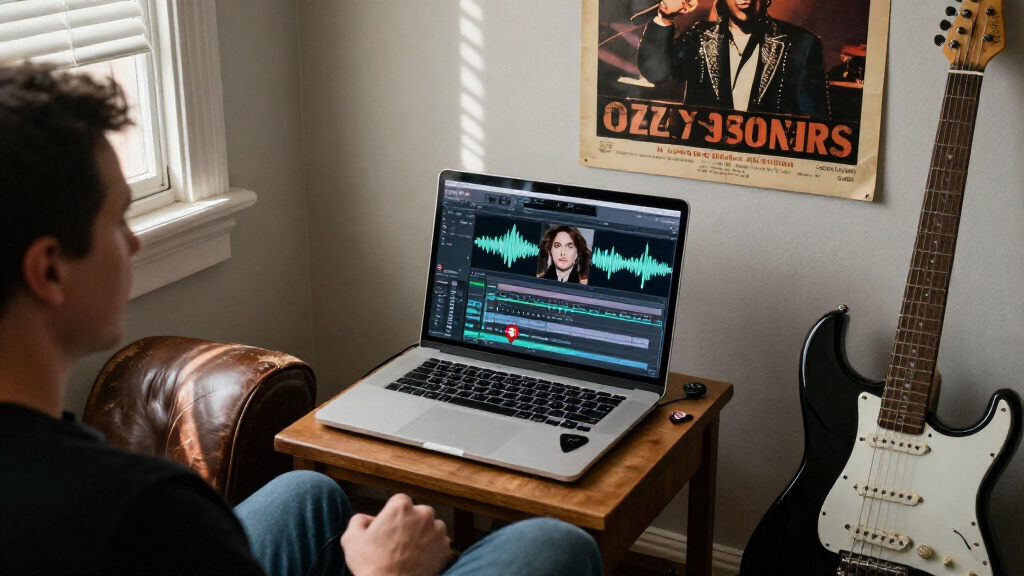

🔍 Read the full analysis: Why AI Controversies Can Divide Fans: Digital Ozzy And Plagiarism on ThorstenMeyerAI.com

Get smart everyday buys delivered free with Prime
- Fast, free delivery on millions of items
- Prime Video, Amazon Music and more included
- Member-only deals all year
TL;DR
A source report dated October 26, 2026, describes disputes involving an AI-generated Odyssey episode, Ozzy Osbourne’s planned digital avatar and an allegation that A$AP Rocky’s video used a VFX artist’s footage. The cases have different facts and levels of certainty, but raise recurring questions about creative quality, consent and credit. The Rocky allegation remained unanswered in the report, and the Ozzy avatar’s planned debut had not occurred.
A cluster of AI-related entertainment disputes reported between October 19 and 26 has put consent, credit and creative quality at the center of public debate, from an AI-made Odyssey episode to a planned Ozzy Osbourne avatar and an allegation involving A$AP Rocky’s music video. The cases are distinct: some details are confirmed, while the claim that Rocky’s video copied a VFX artist’s footage was an allegation that had not received a published response at the time of the report.
On October 23, an account associated with xAI’s Grok Imagine posted a roughly seven-minute “Episode 1” of an Odyssey series, described as a creative collaboration with Wonder Studios and director Dev Walker. It followed Elon Musk’s July promise that Grok Imagine would produce a full-length, “historically accurate” version of Homer’s Odyssey before year-end. TechCrunch reviewer Anthony Ha noted moments that looked like live-action footage but judged the clip “completely airless.” The source report said the post had drawn four million views by its publication; that is a reported view count, not a measure of audience approval.
Jack Osbourne addressed backlash to the planned Digital Ozzy avatar in an interview posted October 21, saying, “The backlash, it was my own fault.” The Osbourne family and technology partners had announced the project in May, describing an interactive avatar based on Ozzy Osbourne’s voice, image and movement. Jack said a remark about placing the avatar in commercial templates had led people to think it would be used to sell products. The planned summer debut had not happened by the report’s publication.
A separate dispute concerns A$AP Rocky’s “Shroom Clouds” video, released October 19 with AI artists listed in its credits. VFX artist Cache Bunny alleged that a shot used his 2019 footage, processed with AI to place Rocky in the scene. The report did not present the allegation as established fact and said no response from Rocky’s side had been published. At a concert on October 24, Jay-Z told the audience to “Question everything in this world of AI,” a warning about trust rather than a specific allegation about any of these projects.
Consent and Credit Shape Audience Trust
The episodes show why a label saying that content was made with AI may not settle audience concerns. The Grok Imagine clip was openly identified as AI-made, yet the central response discussed in the report concerned its craft and perceived quality. The Ozzy dispute, by contrast, centers on how the family described potential commercial uses and how fans interpreted them. The Rocky case raises a different issue: whether a creator’s existing footage was used without credit or permission, a claim that remains unverified in the available account.
Those distinctions matter to artists, rights holders, viewers and companies using generative tools. Consent, attribution and disclosure are separate questions; addressing one does not automatically answer the others. A family may authorize an avatar, for example, while fans still object to a particular use. And an AI credit in a video does not resolve whether underlying material was properly licensed. The controversies therefore point to practical disputes over control and compensation as well as artistic judgment, without proving that audiences reject AI technology as a whole.
Products Worth Considering

Logitech MX Mechanical Full-Size Wireless Mechanical Keyboard, Tactile Quiet Switches, Backlit Keys, Bluetooth, USB-C, Multi-Device, Graphit

Logitech MX Master 4 for Mac, Ergonomic Bluetooth Mouse with Haptic Feedback, Ultra-Fast Scrolling, USB-C Charging, for MacOS, iPadOS, Windo

Dell XPS 13 9350 Laptop, 13.4 FHD+ Display, Intel Ultra 7 256V, 16GB DDR5, 1TB SSD
As an affiliate, we earn on qualifying purchases.
Four Disputes, Different Questions
The source report places these events within a single week, but they do not share one cause or evidentiary status. Musk’s dispute with director Christopher Nolan began with criticism of the casting in Nolan’s film, according to the report; the subsequent Grok Imagine project was framed as a competing take on Homer. Nolan had called the casting criticism “irrelevant,” and separately described public skepticism toward AI video as healthy. His film, the report said, had earned more than $1.78 billion worldwide at the time. That figure provides a box-office comparison, not proof that the AI episode was intended to compete commercially on equal terms.
The Osbourne family’s announcement came after Ozzy’s death on July 22, 2025. Jack has since said the project was intended to give the family control over his digital image, while acknowledging that his own explanation helped trigger concern. The report also points to uses of AI with artist involvement, including machine learning used to restore a John Lennon demo for the Beatles’ “Now and Then” and an AI-assisted Randy Travis song developed with the singer and his family. These examples differ from the disputed cases and do not establish a universal standard for consent.
The report also notes that the European Union’s AI Act disclosure rules for deepfakes took effect on August 2, 2026, with a lighter, non-intrusive duty for evidently artistic work. The legal requirements are relevant to labeling but do not, by themselves, determine questions of ownership, permission or whether a work is artistically successful.
“The backlash, it was my own fault.”
— Jack Osbourne, on the Great Company podcast
The Avatar and Footage Claims
Several points remain unresolved. The source report said the A$AP Rocky footage allegation had no published response from Rocky’s side as of October 26, and it did not establish whether the shot used Cache Bunny’s material or whether permission had been granted. The planned Digital Ozzy avatar’s timing and eventual form were also unclear because its announced summer debut had not taken place. The report does not establish whether the project was cancelled or delayed.
It is also unclear whether Grok Imagine will deliver the full-length Odyssey Musk promised before the end of 2026. The seven-minute episode was a posted installment, not evidence that the promised feature had been completed. More broadly, the source report offers examples of reactions and disputes, not representative audience research; it cannot establish how fans as a whole view AI-made entertainment.
Responses and Project Updates
The next developments to watch are any response from A$AP Rocky’s representatives or the video’s production team, and any evidence clarifying the source and authorization of the disputed footage. The Osbourne family or its technology partners may also provide an updated timeline or explain how the avatar would be used, particularly in commercial settings. Until then, the project’s status should be described as announced but not debuted, based on the report.
For Grok Imagine, the key milestone is whether xAI delivers the promised full-length Odyssey by year-end and how it is received. The cases may prompt further discussion of labeling, licensing and control over digital likenesses, but the available report does not identify a new industry policy or a finding against any party. Each dispute will depend on its own evidence and any statements or agreements that emerge.
Key Questions
What is the main development in this report?
A series of entertainment-related AI disputes and comments reported over October 19–26, 2026, has focused attention on creative quality, consent and attribution.
Was A$AP Rocky’s video proven to use the VFX artist’s footage?
No. Cache Bunny alleged that a shot in “Shroom Clouds” used his 2019 footage with AI changes. The report said the allegation had not received a published response from Rocky’s side and did not establish that it was true.
Did the Digital Ozzy avatar launch?
Not according to the October 26 report. The family and technology partners had announced the project, but its planned summer debut had not happened; whether it was delayed or cancelled was unclear.
Was the Grok Imagine Odyssey a full-length film?
No. The October 23 post was a roughly seven-minute episode. Musk had previously promised a full-length version before the end of 2026, but the report did not say that it had been completed.
Source: ThorstenMeyerAI.com