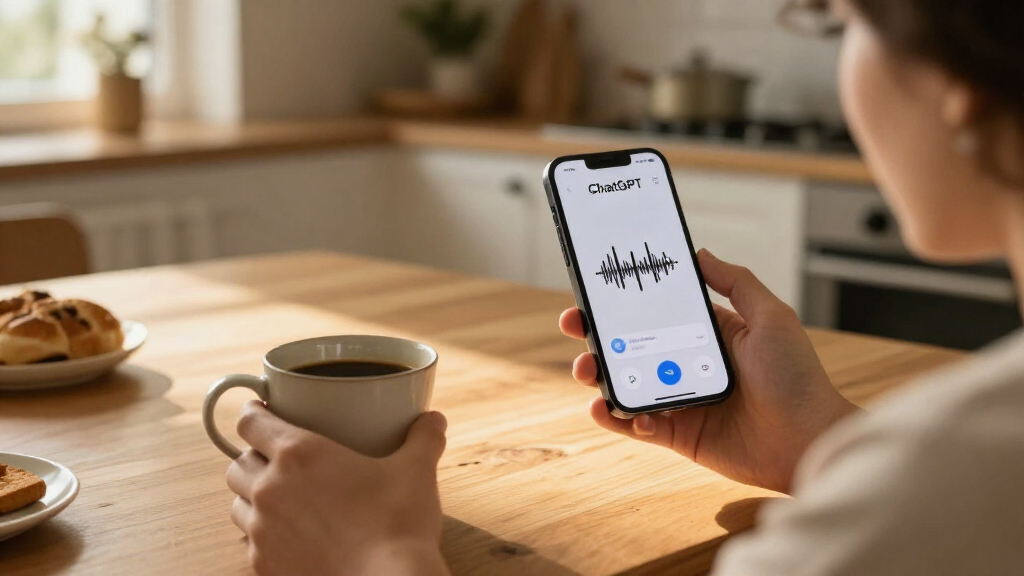
🔍 Read the full analysis: Two ChatGPT Voice Modes Are Going Away—Does Yours Stay? on ThorstenMeyerAI.com

Get smart everyday buys delivered free with Prime
- Fast, free delivery on millions of items
- Prime Video, Amazon Music and more included
- Member-only deals all year
TL;DR
OpenAI says it will retire ChatGPT’s Advanced and Standard voice modes on December 11, 2026, and switch users who selected them to GPT-Live. Live video and screen sharing will remain on Advanced voice until GPT-Live supports them; OpenAI has not given a date for that change.
OpenAI will retire ChatGPT’s Advanced and Standard voice modes on December 11, 2026, leaving GPT-Live as the only general voice option in the app’s settings. Users who selected either older mode will be switched to GPT-Live, according to OpenAI’s help-center guidance as reported by Interesting Engineering and FourWeekMBA.
OpenAI announced the change on November 10, giving users 31 days before the two modes are removed from Settings > Voice. Until then, people can continue using Advanced or Standard. OpenAI says users do not need to move their chat history: past conversations will remain available and can be continued by text or voice. A voice continuation after the change will use GPT-Live.
There are stated exceptions. Live video and screen sharing will continue to use Advanced voice until GPT-Live can support those features; OpenAI has not announced when that capability will arrive. Voice with custom GPTs is also set to remain on Advanced voice until December 11, the same date OpenAI has set for retiring custom GPTs, according to help-center wording quoted by FourWeekMBA.
OpenAI says voice use has “nearly doubled” since GPT-Live launched in July and that “virtually all” ChatGPT voice users now use the newer mode. Those figures are the company’s explanation for consolidating the options; the announcement did not provide a detailed usage breakdown or figures for users of each mode.
Two Voice Modes Are Going Away Does Yours Stay?
OpenAI plans to retire Advanced and Standard voice in ChatGPT. Most users will switch to GPT-Live, while some features stay on Advanced for now.
What changes for users
The switch changes how voice chats continue, while past conversations remain available.
Keep using Advanced or Standard voice during the notice period.
Both choices leave Settings > Voice; users who selected them switch to GPT-Live.
Chat history stays available. Spoken follow-ups use GPT-Live.
How the voice modes differ
| Mode | How it works |
|---|---|
| Standard | Speech recognition, language model, then speech generation |
| Advanced | Processes speech directly and replies after the user stops |
| GPT-Live | Designed to listen and speak at the same time |
Features with a longer transition
Some uses of Advanced voice continue after the general settings change.
- Live video and screen sharing, until GPT-Live supports them
- Voice with custom GPTs until December 11
- No date announced for GPT-Live support for live video or screen sharing
- Whether GPT-Live will match preferred voices and conversational behavior
What businesses and developers should know
The announced retirement covers voice settings in the ChatGPT product.
- It does not announce an API-wide voice shutdown.
- Some older API voice and audio models have separate retirement dates.
- Users have reported concerns, but their scale is not established.
What the Change Means for Voice Users
For most users, the practical change is a default voice switch rather than a loss of conversation history. People who rely on Advanced or Standard will still be able to access their past chats, but spoken follow-ups will run through a different system. That can matter to users who have grown accustomed to a particular voice or interaction style, and to people who use voice as an accessibility tool.
Some users have objected to the change on OpenAI’s community forum and in comments reported by TechRadar. Complaints cited by those sources include interruptions, conversational filler and a less familiar sound. These are user reports, not a verified assessment of GPT-Live’s performance, and the sources do not establish how widespread the dissatisfaction is. OpenAI’s claim that virtually all users have moved to GPT-Live also does not show whether people who prefer the older modes have suitable alternatives.
The announcement concerns voice modes in the ChatGPT product. It is not, by itself, an announcement that OpenAI is ending voice access through its developer API. Businesses and developers should distinguish the ChatGPT settings change from separate API model retirement notices, which have their own dates and scope.
Products Worth Considering

Logitech MX Master 4 for Mac Wireless Ergonomic Mouse, White Silver

Apple MacBook Air 13.6-inch Laptop with M5 Chip, 16GB Memory, 512GB SSD, Midnight

Apple MacBook Neo 13-inch Laptop with A18 Pro Chip, 8GB Memory, 256GB SSD, Liquid Retina Display, and 1080p Camera — Blush
As an affiliate, we earn on qualifying purchases.
How GPT-Live Differs From Older Modes
The three modes use different approaches to speech. Standard voice linked speech recognition, a language model and speech generation in sequence, according to help-center information quoted by FourWeekMBA and a description from TechRadar. Advanced voice processes speech directly but works in turns, waiting for the user to stop before replying.
GPT-Live is designed for full-duplex conversation: it can listen and speak at the same time. OpenAI’s developer documentation describes the API model GPT-Live-1 as a real-time voice model that can also hand reasoning or tool use to a backend agent. OpenAI introduced GPT-Live on July 8 and said it was powering ChatGPT Voice. The company has said it plans to bring features from the older modes to GPT-Live and improve response depth, continuity and personalization, according to reports by Android Authority and Interesting Engineering.
OpenAI’s product change should not be confused with all upcoming audio-model retirements. The company’s API deprecation page did not list a voice deprecation for November 10, while the source material notes separate shutdown dates for some older API voice and audio models between January 6 and February 26, 2027. Those API dates concern specific developer models, not the December ChatGPT settings change.
““I’m beyond disappointed because ChatGPT means a lot to me.””
— A ChatGPT user quoted in TechRadar’s November 11 report
Open Questions on Features and Feedback
OpenAI has not said when GPT-Live will support live video or screen sharing, so Advanced voice will remain involved in those features for an unspecified period. It is also unclear whether GPT-Live will reproduce the particular voices and conversational behavior that some users prefer in Advanced or Standard, or whether OpenAI will add controls to address those concerns.
The scale of user opposition is not established. TechRadar described critics as a small but vocal group, while a thread titled “Keep Standard Voice Mode!” on OpenAI’s community forum had 100 posts by November 12, according to the source material. That count is a snapshot of one discussion, not a measure of all affected users. OpenAI’s adoption statement likewise does not specify the number of users still using older modes.
The help-center details about exceptions and chat history were reported by other outlets because the pages were not machine-readable in the source account. OpenAI’s X post confirms the retirement announcement and its stated usage rationale, but the full operational details are attributed to the outlets quoting the help center.
The December 11 Voice Switch
Users can keep using Advanced or Standard voice during the notice period, through December 10, 2026. On December 11, OpenAI plans to remove both choices from Settings > Voice and switch people who selected them to GPT-Live. Existing chats are expected to remain accessible, with no manual migration required, according to the help-center information reported by Interesting Engineering and FourWeekMBA.
OpenAI has not announced a date for moving live video and screen sharing to GPT-Live. Users and developers watching for further changes should also track separate notices about custom GPTs and API audio models, since those changes have different scopes and schedules. The next clear milestone for ChatGPT users is the December 11 retirement date; whether OpenAI responds to complaints or updates its feature plans before then remains to be seen.
Key Questions
Which ChatGPT voice modes are going away?
Advanced voice and Standard voice are scheduled to be removed from ChatGPT on December 11, 2026. GPT-Live will remain as the general voice mode.
Will my old voice conversations be deleted?
No deletion is described in the reported help-center guidance. Previous conversations are expected to stay in chat history and can be continued by text or voice; spoken continuations will use GPT-Live.
What happens to live video and screen sharing?
Those features will continue using Advanced voice until GPT-Live supports them. OpenAI has not said when that support will be ready.
Does this announcement end voice access through OpenAI’s API?
The announcement concerns voice modes in the ChatGPT app and does not announce an API-wide voice shutdown. Some older API voice and audio models have separate retirement dates, so developers should check the relevant model notices.
When will the modes disappear from ChatGPT?
OpenAI announced a retirement date of December 11, 2026. Users can continue using Advanced and Standard during the transition period before that date.
Source: ThorstenMeyerAI.com