
When someone decides to finally get their money in order, these two books show up on nearly every recommendation list — and they represent almost opposite answers to the same question. Dave Ramsey’s The Total Money Makeover treats debt as an emergency, prescribes a strict sequence of seven “baby steps,” and asks you to cut spending to the bone until you’re debt-free. Ramit Sethi’s I Will Teach You to Be Rich treats willpower as the real problem, prescribes automated accounts that run themselves, and explicitly tells you to spend guilt-free on the things you love while cutting ruthlessly on everything else.

Get smart everyday buys delivered free with Prime
- Fast, free delivery on millions of items
- Prime Video, Amazon Music and more included
- Member-only deals all year

The Psychology of Money: Timeless Lessons on Wealth, Greed, and Happiness
- ✔ Format: Paperback / Hardcover / eBook
- ✔ Category: Behavioral finance
- ✔ Structure: Short essay collection

Personal Finance For Dummies
- ✔ Format: Paperback / eBook
- ✔ Category: Comprehensive personal finance reference
- ✔ Structure: Topic-by-topic instructional guide
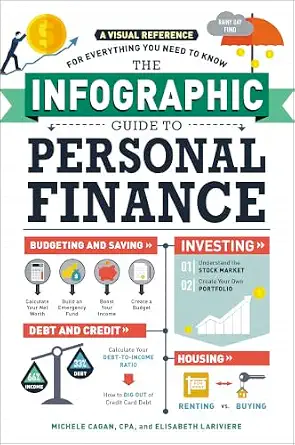
The Infographic Guide to Personal Finance: A Visual Reference for Everything You Need to Know
- ✔ Format: Paperback
- ✔ Category: Visual personal finance reference
- ✔ Structure: Infographic-based topic pages
The real decision readers face is not “which book has better information” — both cover budgeting, debt, and investing — but which philosophy matches their situation and personality. If you’re drowning in consumer debt and need a dramatic intervention, Ramsey’s all-or-nothing approach is built for you. If you have a decent income, manageable or no debt, and want to build wealth without living austerely, Sethi’s system is the better fit. This guide compares them head-to-head so you can figure out which one belongs on your shelf — or whether you need both at different stages of your financial life.
At a Glance
| Criteria | The Total Money Makeover (Dave Ramsey) | I Will Teach You to Be Rich (Ramit Sethi) | Winner |
|---|---|---|---|
| Core philosophy | No debt ever; strict discipline and gazelle-intensity budgeting | Automate everything; spend extravagantly on what you love, cut mercilessly elsewhere | Depends |
| Debt payoff approach | Debt snowball: smallest balance first, regardless of interest rate; all debt except mortgage gone before investing | Pay off high-interest debt first (mathematically optimal), keep low-interest debt while investing | A |
| Investing guidance | Actively managed mutual funds via load-charging advisors; 12% return assumption; anti-index-fund tone | Low-cost index funds and target-date funds; realistic return expectations; 401(k) and Roth IRA prioritization | B |
| Ease of implementation | Simple steps, but demands extreme sustained discipline and spending cuts | Moderate — one-time setup of automatic transfers and accounts, then nearly zero effort | B |
| Flexibility and quality of life | Low — no credit cards, minimal discretionary spending until debt-free | High — conscious spending plan explicitly budgets for guilt-free fun | B |
| Behavioral psychology | Excellent for debtors: shame-free urgency, wins through quick payoffs | Excellent for avoiders: removes daily decisions instead of demanding willpower | Depends |
| Credibility of financial specifics | Mixed — debt advice is solid, investment specifics widely criticized | Strong — investment specifics align with mainstream fee-only advice | B |
| Long-term wealth building | Weaker — wealth building treated as a late-stage afterthought | Stronger — automation, compounding, and negotiation are the core of the book | B |
The Psychology of Money: Timeless Lessons on Wealth, Greed, and Happiness
This option stands out for a simple reason: it tackles the part of personal finance that actually fails most people — behavior, not math. Written as a series of short, story-driven essays, it argues that financial success depends far more on patience, humility, and emotional discipline than on picking the perfect strategy. Compared with Personal Finance For Dummies, which hands you a detailed playbook, this book deliberately avoids step-by-step instructions; instead it reshapes how you think about saving, risk, and what wealth is actually for. That framing is why it earns our top spot: the mechanics in any how-to book can become outdated or need adaptation, but the lessons here are genuinely timeless.The writing style is another differentiator. Where the Infographic Guide compresses information into visuals, this book uses narrative — anecdotes about investors, lottery winners, and business failures — to make behavioral concepts stick. That makes it the rare finance title that experienced investors and complete novices can read side by side and both get value from. The tradeoff is real, though: if you open it expecting a budgeting template or an explanation of how a Roth account works, you will close it disappointed. It pairs beautifully with the Dummies guide rather than replacing it.
Pros:
- Behavior-focused lessons that apply equally to beginners and experienced investors
- Short, story-driven chapters that are easy to read in sittings
- Timeless principles that will not go stale with market changes
- Approachable writing that makes behavioral finance genuinely enjoyable
Cons:
- Contains virtually no concrete how-to instruction or actionable templates
- Readers seeking tactical budgeting or investing guidance will need a second book
- Essay format means some concepts are illustrated rather than fully explained
Best for: Readers at any experience level who want to fix their money mindset and decision-making, not just their spreadsheets
Not ideal for: Anyone who needs explicit, step-by-step instructions for budgeting, investing accounts, or debt payoff right now
Bottom line: The best overall pick because lasting financial results come from behavior, and no other book in this lineup explains behavior this well.
“The best overall pick because lasting financial results come from behavior, and no other book in this lineup explains behavior this well.”
Personal Finance For Dummies
If The Psychology of Money is the why, this book is the how. The For Dummies franchise has spent decades perfecting the art of the comprehensive beginner reference, and this edition continues that tradition: budgeting, saving, insurance, taxes, debt, retirement accounts, and investing are all laid out in plain language with the assumption that you know nothing going in. Compared with the Infographic Guide, which also targets beginners, this one goes dramatically deeper — it is the difference between a map of the territory and a turn-by-turn route. For a reader who wants to actually do something this week — set up a budget, choose a debt payoff method, open the right account — this is the pick that makes the most sense.The cost of that completeness is weight, figuratively and literally. This is not a book you read in an afternoon; it is one you work through and return to. Where The Psychology of Money charms you through stories, the Dummies format is functional and utilitarian — clear, but rarely inspiring. Some readers will find certain chapters more relevant than others and skip freely, which the structure accommodates well. This model is better suited to someone building a real financial foundation than to a reader looking for motivation or a quick overview.
Pros:
- Comprehensive coverage of budgeting, debt, insurance, taxes, and retirement in one volume
- Assumes zero prior knowledge, making it genuinely beginner-friendly
- Reference-style structure lets you jump straight to the topic you need
- Translates jargon-heavy financial concepts into plain, actionable language
Cons:
- Length and density make it a commitment rather than a quick read
- Utilitarian style offers little motivation for readers who struggle with money habits
- Some chapters will be irrelevant depending on your life stage
Best for: Beginners who want a complete, practical roadmap covering every major personal finance topic in one place
Not ideal for: Experienced readers looking for advanced strategy, or anyone wanting a short motivational read
Bottom line: The most complete and actionable option here — ideal as your one-book foundation for managing money.
“The most complete and actionable option here — ideal as your one-book foundation for managing money.”
The Infographic Guide to Personal Finance: A Visual Reference for Everything You Need to Know
Not everyone learns from walls of text, and this book exists for exactly that reader. By translating personal finance fundamentals into charts, diagrams, and infographics, it covers a surprisingly broad range of topics — budgeting, credit, saving, investing basics — in a format you can genuinely absorb in a single afternoon. Compared with Personal Finance For Dummies, the difference is depth versus speed: the Infographic Guide gives you the shape of each concept in one image where the Dummies guide spends pages on it. For a visual learner who has bounced off traditional finance books, this is the entry point that finally sticks.The limitation is the mirror image of its strength. Because each topic is compressed into a single visual, there is little room for nuance, edge cases, or step-by-step execution — and once you understand the basics, the book has largely done its job. It also lacks the behavioral dimension that makes The Psychology of Money so durable; this is a book about what things are, not about how to feel and act around them. Our honest take: it works best as a first book or a companion, not as your only book. Give it to a teenager, a partner who refuses to read about money, or yourself as a fast on-ramp before moving to the Dummies guide.
Pros:
- Infographic format makes complex concepts graspable at a glance
- Fastest way in this lineup to get a working overview of personal finance
- Broad topic coverage in a single compact reference
- Non-intimidating for readers with zero financial background
Cons:
- Too basic for anyone who already knows the fundamentals
- Visual compression leaves little room for nuance or execution details
- No coverage of the behavioral and emotional side of money decisions
Best for: Visual learners, teens, and absolute beginners who want a fast, unintimidating introduction to money basics
Not ideal for: Readers with existing financial knowledge or those who need detailed, actionable instructions
Bottom line: The best on-ramp for visual learners and reluctant readers, but one you will outgrow quickly.
“The best on-ramp for visual learners and reluctant readers, but one you will outgrow quickly.”
As an Amazon Associate we earn from qualifying purchases.
Key Differences
The deepest difference is what each author believes is broken. Ramsey believes your behavior is broken: you got into debt because you overspent, and the cure is a radical, almost confrontational change in habits — cash envelopes, no credit cards, selling things you don’t need, and a “gazelle intense” attack on every balance. Sethi believes your system is broken: you overspend not because you’re weak but because managing money manually every month is exhausting, so his cure is setting up automatic transfers once so your savings, investing, and bills happen without your involvement. This leads to opposite daily experiences. A Ramsey follower lives with tight constraints and visible progress on a debt thermometer; a Sethi follower sets up accounts in an afternoon and then mostly stops thinking about money.
The second major difference is how each book treats the debt-versus-invest question. Ramsey insists you pause all investing (except enough to get a 401(k) match) until all non-mortgage debt is gone, and he recommends paying off the smallest balance first for motivational wins even when it costs more interest. Sethi recommends attacking the highest-interest debt first and argues that carrying low-interest debt like student loans while investing can be mathematically correct. Ramsey’s method costs more in interest but works better for people who need emotional momentum; Sethi’s is more efficient but assumes you’ll actually stick with a plan that has fewer visible victories.
The third difference is investment quality, and here the gap is not close. Ramsey directs readers toward actively managed mutual funds sold through his network of endorsed advisors, assumes a 12% average stock return that most planners consider unrealistic, and is dismissive of index funds. Sethi recommends low-cost index funds and target-date funds, which is the same advice given by most fee-only financial planners. If your goal is long-term wealth rather than debt escape, Sethi’s guidance is simply better supported.
Detailed Comparison
Core philosophy and daily experience (major difference)
Ramsey’s book asks you to change who you are: live on rice and beans, cut up credit cards, and throw every dollar at debt. Sethi’s book asks you to change your setup: automate transfers, negotiate bills once, and let the system run. The Ramsey path is emotionally demanding but produces rapid visible change; the Sethi path requires a focused setup period and then near-zero ongoing effort. Neither is universally right — Ramsey’s intensity suits someone in a genuine debt crisis, while Sethi’s automation suits someone whose problem is neglect rather than overspending. For a middle-income person with average habits, Sethi’s approach is easier to sustain for years, which makes it the more practical default.
Debt payoff strategy (The Total Money Makeover (Dave Ramsey) wins — major)
This is Ramsey’s home turf and he wins it. The debt snowball — listing debts smallest to largest and paying minimums on everything except the smallest — is not mathematically optimal, but research on debt payoff behavior consistently shows that early wins increase the odds of completion. Ramsey also builds the emotional scaffolding around it: emergency fund first, then attack. Sethi covers debt competently (highest interest first, credit card debt as a top priority) but it is one chapter among many, not the book’s center of gravity. If you have five-figure consumer debt, Ramsey’s book is the more complete intervention. If your debt is a manageable student loan at 5%, Sethi’s advice to invest while paying it down is the smarter math.
Investing guidance quality (I Will Teach You to Be Rich (Ramit Sethi) wins — major)
This is where the books diverge sharply on substance. Sethi recommends low-cost index funds, target-date funds, and clear account prioritization (401(k) match, then Roth IRA, then max the 401(k)), which reflects mainstream professional consensus. Ramsey recommends growth-stock mutual funds through his endorsed local advisors — who typically sell loaded funds with sales commissions — and builds projections on a 12% historical return assumption that most analysts consider inflated. Following Ramsey’s investing chapter could realistically cost you tens of thousands of dollars in fees and unrealized returns over a decade. If investing is your primary goal, this criterion alone should decide your purchase.
Ease of implementation (I Will Teach You to Be Rich (Ramit Sethi) wins — moderate)
Sethi’s system is mostly a one-time project: open the right accounts, set automatic transfers, consolidate, negotiate two bills, and you’re largely done. It is designed for people who will never enjoy tracking expenses. Ramsey’s baby steps are simple to understand but demand continuous discipline — cash envelope budgeting, monthly budget meetings, and sustained austerity that can last years. Sethi’s approach wins for anyone with average willpower; Ramsey’s works only for those who can maintain intensity or who genuinely need the rigid structure to avoid relapse.
Flexibility and quality of life (I Will Teach You to Be Rich (Ramit Sethi) wins — moderate)
Sethi’s “conscious spending plan” deliberately allocates money for guilt-free spending on things you love — travel, eating out, whatever matters to you — funded by cutting ruthlessly on things you don’t care about. Ramsey’s plan, at least during debt payoff, treats nearly all discretionary spending as leakage. If you view a financially disciplined life as one that should still include enjoyment, Sethi’s framework is more livable and more sustainable. Ramsey would argue the austerity is temporary and the sacrifice is the point; for a person facing $40,000 of credit card debt, he’s probably right, but for everyone else the constraint is unnecessary.
Behavioral psychology (moderate difference)
Both authors are better psychologists than mathematicians, but they target different failure modes. Ramsey targets the spender: someone who needs external structure, quick wins, and a community cheering them on. Sethi targets the avoider: someone who knows what to do but never gets around to it, and whose problems disappear once decisions are automated. Neither diagnosis fits everyone. If your money problems come from overspending, Ramsey understands you better. If they come from neglect and disorganization, Sethi does.
Long-term wealth building (I Will Teach You to Be Rich (Ramit Sethi) wins — major)
The Total Money Makeover is front-loaded: its energy goes into baby steps one through three (emergency fund, debt, emergency fund again), and wealth building appears late and thinly, largely pointing readers toward Ramsey’s other products and advisors. Sethi’s entire book is oriented around building wealth early — investing in your twenties, automating contributions, negotiating salary, and letting compounding work. For a reader who is already solvent and wants to grow net worth, Sethi delivers far more actionable long-term material.
The Total Money Makeover (Dave Ramsey): Pros and Cons
Pros:
- Best-in-class framework for escaping serious consumer debt
- Debt snowball method is behaviorally effective despite being mathematically suboptimal
- Shame-free, motivational tone that resonates with people in financial crisis
- Clear, sequential steps that remove decision fatigue
- Strong emphasis on emergency funds before anything else
Cons:
- Investing guidance steers readers toward commissioned advisors and loaded mutual funds
- 12% return assumption produces unrealistic retirement projections
- All-or-nothing rules (no credit cards, no investing during payoff) overshoot for moderate situations
- Dismissive of mathematically superior strategies without honest engagement
- Wealth-building content is thin and funnels toward the author’s paid ecosystem
I Will Teach You to Be Rich (Ramit Sethi): Pros and Cons
Pros:
- Automation system dramatically reduces ongoing effort and decision fatigue
- Index fund investing advice aligns with mainstream fee-only planner consensus
- Conscious spending plan lets you enjoy money while still saving aggressively
- Covers salary negotiation and earning more, not just spending less
- Realistic about returns and about human laziness
Cons:
- Debt crisis coverage is comparatively light — one chapter, not a program
- The casual, jokey tone will grate on readers who want gravitas
- Assumes a reasonably stable income; less useful for irregular earners in crisis
- Minimal guidance for people who genuinely can’t cover basics, since the system assumes money to automate
- Some advice (specific account types, bank recommendations) ages faster than Ramsey’s principles
Who Should Choose What
Choose The Total Money Makeover (Dave Ramsey) if:
- You carry $10,000+ in credit card, auto, or other consumer debt and feel out of control
- You’ve tried moderate approaches before and relapsed into overspending
- You respond well to strict rules, structure, and a clear sequence with visible milestones
- Your relationship with credit cards is genuinely problematic, not casual
Choose I Will Teach You to Be Rich (Ramit Sethi) if:
- You have stable income, manageable or no high-interest debt, and want to build wealth
- You know what you should do financially but never get around to it — automation fixes that
- You want to keep enjoying spending on things you love while saving systematically
- You want investing advice that matches what fee-only fiduciary planners actually recommend
Skip both if: You’re in true financial crisis — unable to pay rent or food — where budgeting books won’t help and you need income support, benefits counseling, or a nonprofit credit counselor instead.
Value for Money
Both books cost roughly the same — under $20–30 in most formats — so price is not a differentiator; what matters is which one you’ll actually act on. Neither is a bad purchase on value grounds, and both deliver far more actionable content than the average book in the genre. The honest framing is that they solve different problems, and buying the wrong one for your situation wastes more than money: it wastes the motivational momentum that comes from reading the right book at the right time. If forced to pick one for the general population of readers under 45 with income and no debt crisis, Sethi’s book is the better long-term value because its investing advice compounds in your favor for decades, while Ramsey’s commissioned-fund guidance can actively cost you money. If you are in a debt hole, Ramsey’s book is the better value despite the weak investing chapter, because escaping 20% APR credit card debt saves you far more than any fund choice.
Final Verdict
If you have significant consumer debt and a spending problem, choose The Total Money Makeover — its debt snowball and intensity-driven approach are the most effective program in print for that specific situation, and its weak investing chapter is a problem you can solve later with a different book. If you are solvent, employed, and trying to build wealth without living austerely, choose I Will Teach You to Be Rich — its automation system plus index fund investing is the stronger, more sustainable, and more professionally credible path.
For most readers who are not in a debt crisis, Sethi’s book is the better overall choice, and that is the clearest judgment this comparison supports: Ramsey wins the debt criterion, but Sethi wins investing, implementation effort, flexibility, and long-term wealth building — four of the five criteria that matter most once debt is under control. The ideal sequence for many people is actually both, in order: Ramsey to get out of the hole, then Sethi to build on the clean foundation. If you buy only one and debt is not your problem, buy Sethi.
Frequently Asked Questions
Can I follow both books at the same time?
Not fully — their debt and credit-card philosophies conflict. Ramsey forbids credit cards and pauses investing during debt payoff; Sethi uses credit cards responsibly and invests while carrying low-interest debt. The practical combination is sequential: use Ramsey’s baby steps while in debt, then switch to Sethi’s automation and index fund system once only low-interest debt or a mortgage remains.
Is the debt snowball really worse than paying highest-interest debt first?
Mathematically yes, the snowball costs more in interest. Behaviorally, it often wins: paying off a small balance quickly creates momentum and proves the plan works, which increases follow-through. If you are highly disciplined, pay highest-interest first and save the money. If you have failed at debt payoff before, use the snowball — a plan you finish beats a plan you abandon.
Why is Ramsey’s investing advice criticized?
Three reasons: he recommends actively managed mutual funds often sold through his network of advisors with sales commissions (loads), he uses a 12% historical average return assumption that most planners consider unrealistic for projections, and he is dismissive of low-cost index funds despite their strong long-term track record. His debt and emergency fund advice is widely respected; his investing chapter is the part critics tell readers to replace.
Which book is better for a complete beginner?
Both are written accessibly for beginners with no prior knowledge. For a beginner with debt, Ramsey is more direct and prescriptive — you always know the next step. For a beginner with income and no debt, Sethi covers more ground (banking, investing, negotiation, automation) and sets up better lifelong habits. A beginner under 30 with student loans and a job should probably start with Sethi.
Are the specific numbers and recommendations in these books outdated?
Ramsey’s principles age well because they are behavioral rather than technical. Sethi’s book was substantially updated in 2019, and it acknowledges that specific banks, apps, and account details change — the system is what matters, not the vendor names. Either way, verify current contribution limits and rates rather than relying on printed figures.
Halloween Picks

Vexalify 11-Inch Halloween Pumpkin Fog Machine with 12-Color Lights

Jenaai 5.3-Foot Motion-Activated Halloween Animatronic Skeleton

Haunted Hill Farm 2-Ft. Zombie Raccoon Halloween Animatronic
As an affiliate, we earn on qualifying purchases.