
📊 Full opportunity report: Forezai · TradingAgents: A Trading Firm Made of Agents on ThorstenMeyerAI.com — validation score, market gap, and execution plan.

Get smart everyday buys delivered free with Prime
- Fast, free delivery on millions of items
- Prime Video, Amazon Music and more included
- Member-only deals all year
TL;DR
Forezai has unveiled TradingAgents, a framework that organizes AI agents into a structured trading firm. It emphasizes structured disagreement and oversight, aiming to improve decision quality and accountability in automated trading.
Forezai has launched TradingAgents, a framework that simulates a structured trading firm composed of specialized AI agents. This development aims to address the overconfidence problem inherent in single-model systems by organizing multiple agents with distinct roles, including analysts, a trader, and a risk manager. The system emphasizes transparency, accountability, and structured debate, reflecting real-world trading desk practices.
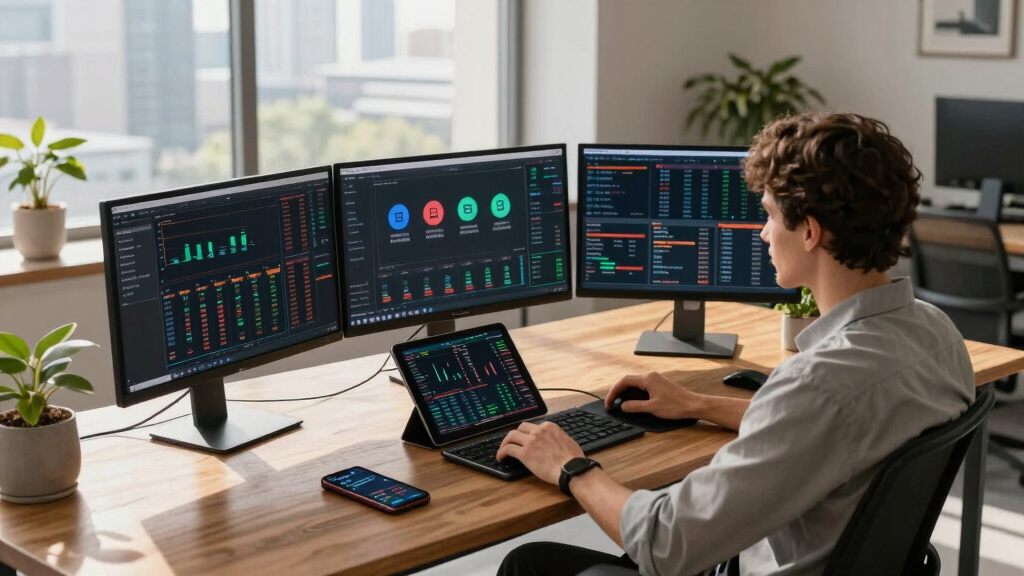
TradingAgents is designed as a multi-agent research platform that organizes AI components into a decision-making hierarchy similar to a human trading desk. It features analyst agents focused on fundamentals, news, sentiment, and technical signals, each providing distinct insights. These findings are debated by a bull and bear researcher, fostering structured disagreement intended to prevent overconfidence in any single model.
The debate culminates with a trader agent proposing a specific action, which then passes to a risk manager agent. The risk manager’s role is to vet, size, or veto the proposed trade, with a default conservative stance often resulting in no trade. Every decision step is recorded for transparency and auditability, ensuring traceability of the reasoning process.
Forezai emphasizes that the value lies not in the intelligence of individual agents but in the organizational architecture that promotes disagreement and oversight. The framework is designed to be provider-agnostic, allowing different models to be swapped in and out, and is built to run on owned compute, prioritizing local control and security.
TradingAgents — a firm made of agents
A single model is an overconfidence machine. So this isn’t one AI — it’s a whole desk: analysts, a bull and a bear who argue, a trader, and a risk manager who can say no.
Not financial, investment, legal or tax advice; not a recommendation or solicitation to trade, invest or use any software. Forezai · TradingAgents is an experimental research framework, provided “as is” without warranty of accuracy or profitability. Trading and automated trading carry a substantial risk of loss including total loss of capital; past or backtested performance does not indicate future results. Market and trading-software access is regulated or restricted in some jurisdictions — you are solely responsible for compliance with applicable law. Consult a licensed professional before any financial decision. Produced with AI assistance under human editorial oversight; independent commentary, the author’s own views. Product and company names are trademarks of their respective owners; mention does not imply endorsement.
Implications of Structured Multi-Agent Trading Framework
TradingAgents represents a shift toward more disciplined and transparent automated trading systems. By formalizing roles that mirror human trading desks—analysts, debate, and risk oversight—it aims to reduce overconfidence and improve decision accountability. This approach could influence how AI-driven trading systems are designed in the future, emphasizing organizational structure over single-model reliance.
For traders and developers, this framework offers a way to implement multi-model, multi-role strategies that are auditable and adaptable. It also underscores the importance of structured disagreement as a safeguard against model overconfidence, which can lead to costly errors in volatile markets.
As an affiliate, we earn on qualifying purchases.
Background on AI in Trading and Organizational Approaches
Recent developments in AI-driven trading have often focused on single models or forecasts, such as Forezai’s Polybot, which compares model estimates to market prices. Critics have highlighted the risks of overconfidence and lack of oversight in such systems. Traditional trading firms organize their decision-making hierarchically, with roles dedicated to analysis, debate, and risk management, to mitigate these risks. Forezai’s TradingAgents builds on this organizational principle, translating it into an AI framework that emphasizes structured disagreement and accountability.
The release follows a broader industry trend toward explainability, transparency, and modularity in AI systems, especially in high-stakes financial contexts. Forezai’s TradingAgents is developed privately and is not publicly available.
“TradingAgents is not about building smarter agents but about organizing them like a real trading desk—specialized roles, structured debate, and oversight.”
— Thorsten Meyer, Forezai
As an affiliate, we earn on qualifying purchases.
Unconfirmed Aspects and Limitations of TradingAgents
While TradingAgents has been publicly announced, it remains an experimental framework. Its effectiveness in live trading environments, profitability, and robustness across different market conditions are not yet confirmed. The actual impact of structured disagreement on trading performance is still to be empirically validated, and user adoption or integration with existing trading systems is ongoing.
As an affiliate, we earn on qualifying purchases.
Next Steps for Development and Adoption
Forezai plans to continue refining TradingAgents through community feedback and real-world testing. Future developments may include integrating additional roles, enhancing model interoperability, and developing tools for better analysis of decision rationales. The team will also monitor how users adopt and adapt the framework, with potential collaborations with trading firms or research institutions to evaluate its practical benefits.
As an affiliate, we earn on qualifying purchases.
Key Questions
How does TradingAgents improve over single-model systems?
It organizes multiple specialized AI roles, incorporates debate and oversight, and records decision rationales, reducing overconfidence and increasing transparency.
Is TradingAgents suitable for live trading?
Currently, it is an experimental research framework. Its performance in live markets has not been established, and users should approach it as a tool for development and testing.
Can I customize the roles and models within TradingAgents?
Yes, the framework is designed to be provider-agnostic and modular, allowing different models and roles to be swapped in and out.
What are the main benefits of a structured multi-agent approach?
It promotes disciplined decision-making, accountability, and reduces the risk of overconfidence by formalizing debate and oversight.
Is TradingAgents open source?
No, Forezai’s TradingAgents is developed privately and is not publicly available. The upstream TradingAgents project by TauricResearch is open source under the Apache-2.0 license.
Source: ThorstenMeyerAI.com
Fall Picks
fall essentials
As an affiliate, we earn on qualifying purchases.