FDIC-insured savings accounts can protect eligible bank deposits up to the applicable limit, but choosing one also means weighing access, interest rates, fees, and account rules. My best overall pick is My Three Favorite High-Yield Savings Accounts for its direct focus on comparing savings options, while Best Savings Accounts for April 2025 is useful for rate-focused shoppers and Getting Started with High-Yield Savings Accounts is a gentler entry point for beginners. The main tradeoff is between chasing a competitive yield and keeping your money accessible with terms you understand. These seven guides vary in how much they cover savings accounts alongside CDs, Treasury bills, and money market funds. Read on for the full comparison and help choosing a guide that fits your priorities.

Get smart everyday buys delivered free with Prime
- Fast, free delivery on millions of items
- Prime Video, Amazon Music and more included
- Member-only deals all year
Key Takeaways
- My Three Favorite High-Yield Savings Accounts ranks first because its stated focus stays closest to comparing savings account options, rather than spreading attention across several cash products.
- Best Savings Accounts for April 2025 has a clear rate-shopping angle, but its dated title means readers should verify current rates and account terms independently.
- Getting Started with High-Yield Savings Accounts is the most approachable starting point for readers who feel uncertain about opening an online savings account.
- Four guides compare savings accounts with other cash choices, including CDs, Treasury bills, money market funds, or Series I bonds; those are more useful for readers choosing where cash belongs, not just which account to open.
- The lineup consists of educational guides, not verified bank account offers. None should be treated as proof of a bank’s current FDIC membership, coverage limits, rates, or account conditions.
| High-Yield Savings vs. Certificates of Deposit vs. Treasury Bills vs. Money Market Funds: The Power of Choice |  | Best for Comparing Cash Options | Format: Book | Series: Diverse Entrepreneurs | Series number: 161 | VIEW LATEST PRICE | See Our Full Breakdown |
| High-Yield Savings, CDs, and Money Market Accounts: The Complete Beginner’s Guide |  | Best for Beginners | Series: Money Guide Series | Book number: 69 | Audience: Beginners | VIEW LATEST PRICE | See Our Full Breakdown |
| Best Savings Accounts for April 2025: Get the Best Interest Rate for Your Savings |  | Best for Historical Rate Context | Coverage period: April 2025 | Topic: Savings accounts | Rate focus: Interest rates for savings | VIEW LATEST PRICE | See Our Full Breakdown |
| My Three Favorite High-Yield Savings Accounts: Get Paid While You Save |  | Best for a Shortlist-Style Approach | Topic: High-yield savings accounts | Account count: Three, according to the title | Focus: Earning interest while saving | VIEW LATEST PRICE | See Our Full Breakdown |
| The High-Yield Cash Guide (2026 Edition): Choosing Savings Accounts and CDs | 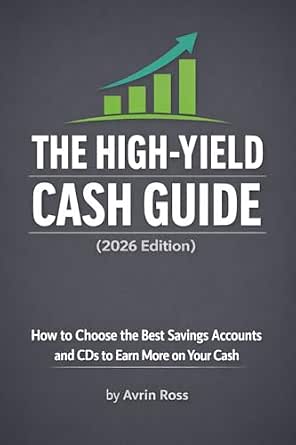 | Best for Savings-and-CD Decisions | Edition: 2026 | Topics: Savings accounts and CDs | Purpose: Choosing savings accounts and CDs for cash | VIEW LATEST PRICE | See Our Full Breakdown |
| Know Your Money: High-Yield Savings vs. Series I Bonds, Certificates of Deposit, Treasury Bills, and Money Market Funds |  | Best for Comparing Savings Alternatives | Product type: Book | Primary subject: High-yield savings accounts | Comparison topics: Series I bonds, certificates of deposit, Treasury bills, and money market funds | VIEW LATEST PRICE | See Our Full Breakdown |
| Getting Started with High-Yield Savings Accounts: Overcoming Your Banking Fears |  | Best for Nervous First-Time Savers | Product type: Book | Primary subject: Getting started with high-yield savings accounts | Stated focus: Overcoming banking fears | VIEW LATEST PRICE | See Our Full Breakdown |
| FDIC insured savings account | Format | FDIC coverage details |
|---|---|---|
| High-Yield Savings vs. Certifi | Book | Not specified in the supplied product data |
| High-Yield Savings | Not specified in the supplied product data | — |
| Best Savings Accounts for Apri | Not specified in the supplied product data | Not specified in the supplied product data |
| My Three Favorite High-Yield S | Not specified in the supplied product data | Not specified in the supplied product data |
| The High-Yield Cash Guide | Not specified in the supplied product data | Not specified in the supplied product data |
| Know Your Money: High-Yield Sa | Not specified in the supplied product data | — |
| Getting Started with High-Yiel | Not specified in the supplied product data | — |
More Details on Our Top Picks
High-Yield Savings vs. Certificates of Deposit vs. Treasury Bills vs. Money Market Funds: The Power of Choice
I’d choose this title when the decision is not simply which savings account to open, but how an FDIC-insured account compares with other places to keep cash. Its coverage of high-yield savings accounts, CDs, Treasury bills, and money market funds gives readers a broader comparison than High-Yield Savings, CDs, and Money Market Accounts, which focuses on deposit-account categories. That wider scope can help clarify that these options do not share the same protections: FDIC insurance applies to eligible deposits at insured banks, while Treasury bills and money market funds have different safeguards and risks. The tradeoff is that the supplied information gives no detail about the book’s length, format, or depth, so I can’t judge how thoroughly it explains those distinctions. It suits readers who want a side-by-side framework, but not someone seeking verified current account rates.
Pros:- Compares four common cash and savings options
- Places high-yield savings accounts alongside alternatives with different protections
- Broader comparison scope than beginner guides focused on deposit accounts
- Part of the Diverse Entrepreneurs book series
Cons:- The supplied details do not specify format or length
- No information confirms how deeply FDIC coverage or other protections are explained
- The product description does not indicate that account rates are current
Best for: Readers deciding whether to keep cash in an FDIC-insured savings account or compare it with CDs, Treasury bills, and money market funds.
Not ideal for: Someone who needs current, verified account rates or detailed bank-specific FDIC coverage information, since the supplied product details do not establish that the book provides either.
- Format:Book
- Series:Diverse Entrepreneurs
- Series number:161
- Topics:High-yield savings accounts, CDs, Treasury bills, and money market funds
- Savings account focus:Compares high-yield savings accounts with other cash options
- FDIC coverage details:Not specified in the supplied product data
Our verdict“Choose this book for a broad comparison of savings and cash options, but look elsewhere for current rates or confirmed FDIC coverage guidance.”
High-Yield Savings, CDs, and Money Market Accounts: The Complete Beginner’s Guide
This is the most directly beginner-oriented choice in the group: it covers high-yield savings accounts, CDs, and money market accounts without adding Treasury bills or funds to the stated scope. That narrower focus may make it easier for a new saver to compare familiar bank products and understand which account type fits their access needs. Compared with The Power of Choice, it leaves out investment alternatives, so it is less useful if the reader is weighing deposits against Treasury bills or money market funds. The title promises a complete guide, but the supplied description does not reveal its format, length, or actual chapter contents. I also can’t confirm that it explains FDIC limits or current rates. It is a sensible starting point for learning categories, not a substitute for checking a bank’s insurance status and account terms.
Pros:- Explicitly designed as a beginner’s guide
- Covers three commonly compared deposit-account categories
- More focused on bank products than The Power of Choice
- Part of the Money Guide Series
Cons:- The supplied data does not specify format or length
- Detailed contents and treatment of FDIC insurance are not provided
- Does not list Treasury bills or money market funds among its topics
Best for: First-time savers who want an introductory comparison of high-yield savings accounts, CDs, and money market accounts before choosing a bank deposit product.
Not ideal for: Readers comparing bank deposits with Treasury bills or money market funds, or anyone needing confirmed details about FDIC limits and current account rates.
- Series:Money Guide Series
- Book number:69
- Audience:Beginners
- Topics:High-yield savings accounts, CDs, and money market accounts
- Format:Not specified in the supplied product data
- Length:Not specified in the supplied product data
Our verdict“Pick this guide if you are new to bank savings products; skip it if you need broader cash-investment comparisons or confirmed insurance details.”
Best Savings Accounts for April 2025: Get the Best Interest Rate for Your Savings
This title’s clearest distinction is its April 2025 time frame: it focuses on savings accounts and interest rates for a specific month rather than presenting itself as a general guide. That makes it less useful for opening an account today than The High-Yield Cash Guide (2026 Edition), whose stated edition is newer, though the supplied data does not confirm that the latter includes current rates either. A date-specific rate discussion can help readers understand what information the title sets out to cover, but rates change and should not be treated as current without verification. The description gives no bank names, account terms, FDIC coverage details, format, or length. I’d regard it as a narrow, dated reference—not a dependable shortlist for choosing an insured account now.
Pros:- Clearly identifies the month and year covered
- Focuses specifically on savings accounts and interest rates
- Provides a narrower subject scope than books comparing several cash products
Cons:- The stated coverage period is April 2025 and may not reflect current rates
- No account names or rate details are included in the supplied data
- Format, length, and FDIC coverage discussion are not specified
Best for: Readers seeking material specifically about savings-account rates in April 2025, rather than a current account recommendation.
Not ideal for: Savers ready to open an account now who need verified current rates, named banks, or explicit FDIC insurance information.
- Coverage period:April 2025
- Topic:Savings accounts
- Rate focus:Interest rates for savings
- Format:Not specified in the supplied product data
- Length:Not specified in the supplied product data
- FDIC coverage details:Not specified in the supplied product data
Our verdict“Use this only for April 2025 rate-focused material; choose a verified current source before selecting an FDIC-insured account.”
My Three Favorite High-Yield Savings Accounts: Get Paid While You Save
The appeal here is its three-account focus: rather than comparing savings accounts with CDs or Treasury bills, the book centers on a small set of high-yield savings options. That framing is more targeted than The Power of Choice, which covers multiple types of cash products, and may suit readers who want account-specific discussion. But the supplied description does not name the accounts, explain how they were selected, or say whether the recommendations are current. For a roundup centered on FDIC-insured savings accounts, those omissions matter: I can’t tell from the provided information whether the three accounts are at insured banks or whether coverage limits are discussed. It may offer a focused starting point, but readers should independently verify each institution’s status, rates, and terms before acting.
Pros:- Focuses specifically on high-yield savings accounts
- Limits its stated scope to three accounts rather than several product types
- Frames savings around earning interest while keeping money in savings
Cons:- The supplied description does not identify the three accounts
- No selection criteria or rate dates are provided
- FDIC status, format, and length are not specified
Best for: Savers who prefer a short, savings-account-only discussion and plan to verify each named institution and its current terms independently.
Not ideal for: Readers who need a documented comparison method, named accounts confirmed as FDIC-insured, or guidance across CDs and other cash options.
- Topic:High-yield savings accounts
- Account count:Three, according to the title
- Focus:Earning interest while saving
- Named accounts:Not specified in the supplied product data
- FDIC coverage details:Not specified in the supplied product data
- Format:Not specified in the supplied product data
Our verdict“Consider it for a focused three-account discussion, but verify the account names, FDIC status, and current terms before choosing.”
The High-Yield Cash Guide (2026 Edition): Choosing Savings Accounts and CDs
This is the lineup’s most recent-dated title, with a stated 2026 edition and a focused comparison of savings accounts and CDs. That gives it a more current framing than Best Savings Accounts for April 2025, although an edition date alone does not prove that rates or bank details are up to date. Its two-product scope may help readers choose between keeping cash accessible in savings and committing it to a CD, while staying narrower than The Power of Choice, which also covers Treasury bills and money market funds. The product data does not say whether the savings accounts are verified as FDIC-insured, or provide format, length, or detailed contents. I’d treat it as a potentially useful decision guide, then confirm insurance status, withdrawal rules, and current rates directly with the bank.
Pros:- Identifies itself as the 2026 edition
- Covers both savings accounts and CDs
- Focuses on choosing where to keep cash
- Offers a narrower decision scope than The Power of Choice
Cons:- The supplied data does not confirm current rates or named institutions
- FDIC coverage details are not specified
- Format, length, and detailed contents are not provided
Best for: Readers weighing an accessible savings account against a CD and who will independently verify current rates and the bank’s FDIC status.
Not ideal for: People seeking a broad comparison with Treasury bills or money market funds, or a confirmed list of insured banks and current offers.
- Edition:2026
- Topics:Savings accounts and CDs
- Purpose:Choosing savings accounts and CDs for cash
- Rate details:Not specified in the supplied product data
- FDIC coverage details:Not specified in the supplied product data
- Format:Not specified in the supplied product data
Our verdict“Choose this for a focused savings-account-versus-CD framework, but verify current terms and FDIC coverage before opening an account.”
Know Your Money: High-Yield Savings vs. Series I Bonds, Certificates of Deposit, Treasury Bills, and Money Market Funds
I’d choose this book for a reader deciding whether an FDIC-insured high-yield savings account fits alongside other places to keep cash. Its stated scope compares savings accounts with Series I bonds, CDs, Treasury bills, and money market funds, a wider set of alternatives than Getting Started with High-Yield Savings Accounts: Overcoming Your Banking Fears, which focuses on getting started with savings accounts. That breadth can help frame tradeoffs such as access to funds and account protection, but the supplied information does not describe the book’s advice, detail, or format. It is a learning resource, not a savings account, and does not itself provide FDIC insurance or an account-opening path. I’d rank it for comparison-minded readers, but skip it if you need verified, current bank terms or a narrowly practical starter guide.
Pros:- Covers high-yield savings accounts alongside four named alternatives
- Makes cross-category comparison the focus
- May help readers identify which cash option merits further research
Cons:- The supplied product information does not describe the depth or accuracy of its guidance
- No format, length, or author details are provided
- It is a book, not an FDIC-insured deposit account or a source of current account terms
Best for: Readers comparing FDIC-insured savings accounts with bonds, CDs, Treasury bills, and money market funds before deciding where to hold cash
Not ideal for: People seeking an FDIC-insured account, current account rates, or detailed guidance on opening a specific bank account
- Product type:Book
- Primary subject:High-yield savings accounts
- Comparison topics:Series I bonds, certificates of deposit, Treasury bills, and money market funds
- ASIN:B0DFQD59TK
- Format:Not specified in the supplied product data
- Author:Not specified in the supplied product data
Our verdict“Choose this as a broad comparison resource if you are weighing savings accounts against several cash alternatives, but not as a substitute for current bank disclosures.”
Getting Started with High-Yield Savings Accounts: Overcoming Your Banking Fears
This book is aimed at a different hurdle than Know Your Money: High-Yield Savings vs. Series I Bonds, Certificates of Deposit, Treasury Bills, and Money Market Funds: getting comfortable with the idea of opening a high-yield savings account. That narrower focus makes it the more relevant pick for a first-time saver whose main concern is banking, rather than someone comparing savings accounts with bonds or funds. The title signals a beginner-oriented approach, but the available information does not explain its specific steps, treatment of FDIC insurance, or format. I would not rely on it alone to verify whether a particular bank is FDIC-insured or to compare current account terms. Its potential value is easing the first decision; its limitation is that the supplied details do not show how much practical guidance it delivers.
Pros:- Specifically focuses on getting started with high-yield savings accounts
- Addresses banking concerns that may hold back first-time savers
- Has an identified series and book number in the supplied data
Cons:- The supplied information does not detail its advice or explain how it addresses FDIC insurance
- Format and length are not provided
- Does not appear to offer the broad investment comparisons covered by Know Your Money
Best for: First-time savers who feel uneasy about banking and want an introductory resource focused on high-yield savings accounts
Not ideal for: Experienced savers comparing account rates, deposit protections, or alternatives such as CDs and Treasury bills
- Product type:Book
- Primary subject:Getting started with high-yield savings accounts
- Stated focus:Overcoming banking fears
- Series:Diverse Entrepreneurs
- Book number:130
- ASIN:B0C47181PY
- Format:Not specified in the supplied product data
Our verdict“Pick this if banking anxiety is your main barrier to opening a high-yield savings account, but seek separate, current information to verify account protections and terms.”

How We Picked
I ranked these seven entries by how directly their stated subject helps someone choose an FDIC-insured savings account, how approachable the framing is, and whether the scope appears suited to a specific decision. A guide centered on high-yield savings accounts ranks ahead of a broad comparison of several asset types because it better matches a reader who has already decided to open a savings account. Beginner clarity and practical usefulness also matter, while dated rate-specific framing lowers a guide’s usefulness for current account shopping.
The supplied titles do not establish that any guide verifies FDIC membership, current rates, account fees, withdrawal conditions, or deposit limits. I treat them as educational resources rather than financial products or endorsements. The ordering reflects the information implied by each title—not a claim that the guides were independently tested or that their recommendations remain current. Readers should confirm account details with the bank and check its FDIC status before depositing funds.
| FDIC insured savings account | Format |
|---|---|
| High-Yield Savings vs. Certifi | Book |
| High-Yield Savings | Not specified in the supplied product data |
| Best Savings Accounts for Apri | Not specified in the supplied product data |
| My Three Favorite High-Yield S | Not specified in the supplied product data |
| The High-Yield Cash Guide | Not specified in the supplied product data |
| Know Your Money: High-Yield Sa | Not specified in the supplied product data |
| Getting Started with High-Yiel | Not specified in the supplied product data |
Factors to Consider When Choosing FDIC Insured Savings Accounts
Use these guides to clarify what you want from a savings account, then check the bank’s terms directly. A strong choice depends on more than a headline rate: the ownership structure, access rules, fees, and your likely balance can all change how useful an account is.
Confirm the Bank and Deposit Are Covered
FDIC coverage applies to eligible deposits at insured banks, not every product marketed as a place to hold cash. Check the institution through the FDIC’s official BankFind tool, especially if you are opening an account through a financial technology company or a partner-bank arrangement. Ask which bank actually holds the deposits and how the account is titled. Coverage limits apply per depositor, per insured bank, for each account ownership category, so several accounts at one bank may not each receive a separate full limit. Do not assume a brokerage money market fund, Treasury bill, or investment cash balance has FDIC insurance; those products follow different protections and risks. Treat insurance verification as a separate check from comparing interest rates.
Compare Yield With Access, Not in Isolation
A high annual percentage yield can help savings grow, but the rate may change and usually is not a long-term promise. Check how often interest compounds and whether the quoted rate is conditional on meeting a balance, activity, or relationship requirement. Then look at how quickly you can move money to your checking account and whether transfers have limits or delays. Emergency savings may be more valuable when it is easy to access than when it earns a slightly higher rate behind extra steps. Money you can leave untouched for a set period may fit a CD better, though that introduces its own withdrawal rules. Choose around the purpose of the cash rather than the biggest number in an advertisement.
Read the Fee Schedule and Minimum-Balance Rules
Monthly maintenance charges, minimum opening deposits, and balance thresholds can reduce the benefit of an otherwise attractive account. Check whether a minimum balance is required to avoid fees or earn the advertised yield, and whether the threshold applies to each account or the combined relationship. A low-balance saver may be better served by a simple account with no recurring fee than by a product with a higher conditional rate. Also review charges for outgoing transfers, paper statements, or other services you may actually use. Do not compare yields without accounting for these conditions. If the fee language is hard to find, ask the bank to explain it before opening the account.
Understand How Your Deposits Are Aggregated
FDIC limits depend on who owns the money and how the account is legally titled, not just the number of account logins or product names. Deposits you hold at the same insured bank in the same ownership category can be combined when coverage is calculated. Joint, trust, and business accounts may receive different treatment, but their rules depend on the actual ownership and records. If you use multiple brands that rely on one partner bank, confirm whether deposits are held at the same institution. Keep account statements and ownership information accurate, particularly after a major life or business change. For balances near or above coverage limits, ask the bank or FDIC how your specific arrangement is treated rather than relying on a general guide.
Match the Product to the Job Your Cash Must Do
Separate cash by purpose before deciding whether all of it belongs in a savings account. Money for an unexpected expense usually calls for reliable access, while funds for a known future date may suit a CD or Treasury bill if the timing and terms fit. Money market funds can offer cash-management features, but they are investments and are not FDIC-insured deposits. Series I bonds have different purchase, access, and inflation-linked rules, so they are not a direct substitute for a readily available bank balance. A common mistake is choosing one product for every goal based only on its current yield. Keep near-term spending money accessible, and compare alternatives only for the portion you can leave under their rules.
Frequently Asked Questions
Are these seven entries actual FDIC-insured savings accounts?
No. The entries are guides and educational resources, not bank accounts or offers to open one. Their titles do not establish that a guide checks a bank’s current FDIC status, deposit terms, or insurance treatment. Use them to shape your questions, then verify the account directly with the institution and the FDIC. Confirm that the deposit is held at an insured bank and that the account type qualifies for coverage.
How can I tell whether an online savings account is FDIC-insured?
Identify the bank that holds the deposit; a website or app brand may not be the insured institution. Search that bank in the FDIC’s BankFind directory and confirm the account’s disclosures name the same institution. If a fintech company or deposit network is involved, ask how funds are placed, whether they remain in your name, and what records support any pass-through coverage claim. Do not rely only on a logo or a general statement that funds are protected. If the arrangement is unclear, pause and request written details before transferring money.
If I have savings and checking at the same bank, do I get separate FDIC limits?
Not automatically. The FDIC generally combines eligible deposits at the same insured bank within the same ownership category when determining coverage, so separate account names or logins do not necessarily create separate limits. Different ownership categories can receive separate treatment when they meet the applicable requirements. Review how each account is titled and include deposits from other brands that use the same bank. For a balance near the coverage limit, use the FDIC’s official resources or ask the institution to explain your exact ownership arrangement.
Should I choose the account with the highest advertised APY?
Not without checking whether the rate is variable, conditional, or limited to a certain balance. Compare the annual percentage yield with fees, minimums, transfer access, and any requirements for earning the advertised rate. A small rate difference may matter less than a monthly charge or a delay when you need emergency funds. Rates can change after account opening, so avoid treating today’s advertised yield as a lasting commitment. Choose a competitive account whose rules fit your balance and how quickly you may need the money.
When should I use a CD or Treasury bill instead of a savings account?
A CD or Treasury bill may fit money you can set aside until a known date, while a savings account is generally better suited to cash you may need on short notice. CDs can impose an early-withdrawal penalty, and Treasury bills have their own purchase, maturity, and sale considerations. Treasury bills are obligations of the U.S. government, not FDIC-insured bank deposits; money market funds are also not FDIC-insured. Compare access rules and protections alongside yield, and avoid locking up emergency reserves just to pursue a higher return. The broader comparison guides in this roundup can help clarify the product differences, but current terms must be checked with the provider.
Conclusion
For most readers who want a focused starting point, I recommend My Three Favorite High-Yield Savings Accounts as the best overall guide in this lineup. The best value in reading time is Getting Started with High-Yield Savings Accounts, which is also my pick for beginners who want a straightforward introduction before comparing account terms. Readers seeking a rate-shopping framework can start with Best Savings Accounts for April 2025, but its dated framing makes direct verification of current rates especially important. I would treat The High-Yield Cash Guide as the best premium-style broad resource for readers weighing savings accounts against CDs, and choose Know Your Money or The Power of Choice for specific comparisons involving bonds, Treasury bills, or money market funds. The guides do not verify live offers, so confirm FDIC status, fees, access rules, and coverage at the bank before opening an account.