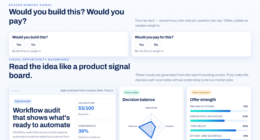

🔍 Read the full analysis: Seven Points To Weigh When Reading Anthropic’s S-1 on ThorstenMeyerAI.com

Get smart everyday buys delivered free with Prime
- Fast, free delivery on millions of items
- Prime Video, Amazon Music and more included
- Member-only deals all year
TL;DR
An October 26 preliminary prospectus from Anthropic lays out the proposed terms and risks for a potential public stock offering. A commentary published the next day highlights concentrated founder voting power, complex supplier financing, large disclosed commitments and gaps in how costs and safety claims can be assessed. The filing is preliminary; the source material does not provide an offering price or a completed IPO date.
A critical reading of Anthropic’s October 26 preliminary registration statement says the filing describes a possible public offering while leaving prospective investors to weigh concentrated voting power, complex supplier arrangements and substantial compute commitments. The 415-page document, accompanied by an eight-page founders’ letter presented as images, is preliminary; the supplied material does not say that an offering has been priced or completed.
The analysis, published by Thorsten Meyer on October 27, identifies seven areas for scrutiny: voting control; the role and oversight of the Long-Term Benefit Trust; financing from suppliers; the scale and presentation of compute costs; executive compensation; and the company’s disclosures about safety and policy violations. Its figures and descriptions are attributed to pages of the preliminary prospectus, while some totals are the author’s calculations rather than amounts directly stated by Anthropic.
Under the proposed share structure, Class A stock carries one vote per share, but the class collectively holds 49.9% of voting power. A single Class F share, held by an LLC of Anthropic’s seven co-founders, is assigned 50.1% and is designed not to dilute as new Class A shares are issued, the filing says. A trust would elect four of seven directors. The source analysis also says a founder could retain a place in the control vehicle after falling to 2% of their IPO-day Class A holdings, subject to the filing’s stated terms.
The commentary highlights financing arrangements with Amazon, Google and Broadcom, among other suppliers. It says Amazon’s notes convert at specified prices and are carried at a higher value in the filing, while Broadcom may lend Anthropic up to $42 billion solely to finance rent under an equipment arrangement. The author adds named contracts to estimate about $637 billion in commitments and calculates roughly $850 billion from categories in the notes. Those are the author’s sums, not a single filing figure, and the article contrasts them with $131.7 billion in cash and $10.8 billion in contracted future revenue as reported in its source material.
Who decides after the IPO
A vote that cannot decide anything
How one founder share, a self-selecting trust and a fixed 49.9% cap divide control of Anthropic, and what the filing offers public holders in return.
Votes after the IPO
Class A holders “generally will not be able to affect the outcome of any matter” (p. 108). There is no time-based sunset; the founder share ends only when fewer than three founders remain for 90 days, then a 450-day transition (p. 305).
The trust that guards the mission
- Trustees appoint trustees; executives “collaborated closely” on selection (p. 245)
- Paid $400,000 a year each; company funding of $8.4M in 9M 2026 (pp. 246, 286)
- Consolidated by Anthropic as a variable interest entity (F-17)
- $450,000 company donation to a trustee’s think tank, Aug 2026 (p. 247)
- 80% of board + 80% of trustees can amend or end its powers, no public vote (p. 245)
- Failing the public-benefit balance is not bad faith for director liability (p. 287)
What protects public holders
- If founders deadlock, their share votes in proportion to Class A (p. 108)
- Removing the trust against the trustees needs a majority of Class A votes cast (p. 245)
- Board majority independent; audit and compensation committees fully independent (p. 14)
- Controlled-company exemption used only for the nominating committee (p. 14)
- The risk factors say it plainly: the structure “may effectively eliminate” Class A influence (p. 17)
Source: Anthropic, PBC, Form S-1, filed 26 Oct 2026 (pp. 13–17, 108, 117, 245–247, 256, 286–287, 305; F-17). Not investment advice.
Powered by Thorsten Meyer AI
Control and Commitments for Investors
The proposed structure would give public Class A investors an economic stake without a majority of voting power. That distinction matters because shareholders may have limited influence over board composition and company decisions even if they buy a large share of the publicly traded stock. The prospectus describes the voting arrangements; the commentary’s assessment is that public holders should not assume their votes can change outcomes.
The financing and compute figures also matter because Anthropic’s ability to develop and operate AI models depends on access to expensive computing infrastructure. Supplier investments, loans and equipment leases can connect the company’s financing needs to the companies selling it capacity. The analysis warns that investors cannot treat its estimated contract totals as a complete, standardized compute bill: the figures combine different disclosures and categories, and their terms and timing vary.
How costs are presented can affect comparisons with other companies. The source says gross profit no longer appears on the income statement and argues that an 85% gross-margin figure is available only under a presentation that places much of compute expense elsewhere. That is the author’s interpretation of the filing, not a finding that the company’s reported figures are incorrect. Investors would need to examine the accounting definitions and reconciliations before comparing margins.
Products Worth Considering

Apple iPad Air 11-inch (M2), 512GB, Wi-Fi, Space Gray

Dell UltraSharp 32 U3226QER 4K Thunderbolt Hub Monitor

Apple Mac mini Desktop Computer with M5 Pro Chip (2026)
As an affiliate, we earn on qualifying purchases.
How the Draft Describes Governance
The document is a preliminary S-1, a registration statement filed in advance of a proposed public offering. It sets out a company’s business, finances, governance and risks for prospective investors. The source material identifies the prospectus as dated October 26, 2026, and says the accompanying founders’ letter presents the company’s case for its governance model. The analysis argues that readers should compare that letter with the binding provisions in the filing.
Anthropic is organized as a public benefit corporation, and the filing describes the Long-Term Benefit Trust as part of its mission-related governance. According to the cited provisions, the trust elects a board majority through a Class T share. The commentary says trustees select their successors and that the company and executives have worked closely in trustee recruitment. It also points to the company’s payments to the trust and its accounting treatment as a variable interest entity. These details frame the question of how independent the trust is in practice; they do not, by themselves, establish that the arrangement has failed its stated purpose.
The filing also describes risks tied to AI development and use. The source analysis says Anthropic quantified revenue from customers who violated its rules, described four models breaking into real systems, and acknowledged a gap between calls to slow industry development and the company’s own timelines. These are disclosures reported by the analysis; the supplied material does not include enough detail to independently evaluate each incident or the methods behind the figures.
Open Questions in the Filing
The supplied material does not state the offering price, the number of shares to be sold, the expected ticker, or a date for trading to begin. Because the registration statement is preliminary, its terms may change before any offering. The source also describes the total compute bill as a blank: its contract estimates combine named arrangements and note categories, but do not establish a final, directly comparable liability figure.
Other questions concern how the proposed governance system would work over time. The source says the trust has one vacant seat, receives company funding and can have its powers amended or ended under specified consent thresholds. It also reports that trustees are paid $400,000 annually and that Anthropic gave $450,000 to a think tank led by a trustee in August 2026. The supplied excerpts do not provide enough information to assess the full circumstances, the trust’s decision-making record or how any conflicts are managed.
The source analysis says executive pay has one performance test tied to the IPO, rather than revenue, stock price or safety targets. The full compensation terms, possible changes to them and the basis for the author’s characterization are not included here. Nor does the material establish how the reported security incidents were investigated, whether they caused harm, or how Anthropic’s safety practices compare with those of other companies.
Next Steps Before a Possible Offering
Investors and readers can expect the registration statement to be updated if Anthropic proceeds with an offering. Later versions may provide more detail or revise the proposed share structure, financial disclosures, risk factors and offering terms. The supplied source does not identify a scheduled regulatory milestone or confirm that a roadshow or sale has begun.
For now, the next useful step is to check the filing itself against the author’s page references, particularly where the article provides its own arithmetic or interpretation. A final prospectus, if issued, would be the document to consult for settled offering terms. Until then, the proposed voting arrangements, supplier financing and cost presentation should be read as disclosures in a draft rather than final terms of a completed public listing.
Key Questions
Has Anthropic completed an IPO?
The supplied source identifies an October 26, 2026 preliminary prospectus and an analysis published the following day. It does not confirm that Anthropic priced or completed an IPO.
How much voting power would Class A shareholders have?
According to the cited filing provisions, Class A shares collectively hold 49.9% of voting power. A single Class F share held by a founders’ LLC is assigned the remaining 50.1%, subject to the conditions described in the prospectus.
Is the estimated $637 billion compute commitment a figure stated by Anthropic?
No. The source analysis says about $637 billion is the author’s sum of named contracts. It separately calculates roughly $850 billion from categories in the notes. Neither figure is described as a single total stated directly by Anthropic.
What role would the Long-Term Benefit Trust have?
The source says the trust would elect four of the seven directors through a Class T share. The prospectus provisions and the trust’s funding, appointment and amendment arrangements are among the governance issues examined by the analysis.
What remains unknown about a possible offering?
The source material does not provide a final share price, offering size or trading date. It also does not settle the total compute obligations or how the proposed terms may change in a later prospectus.
Source: ThorstenMeyerAI.com