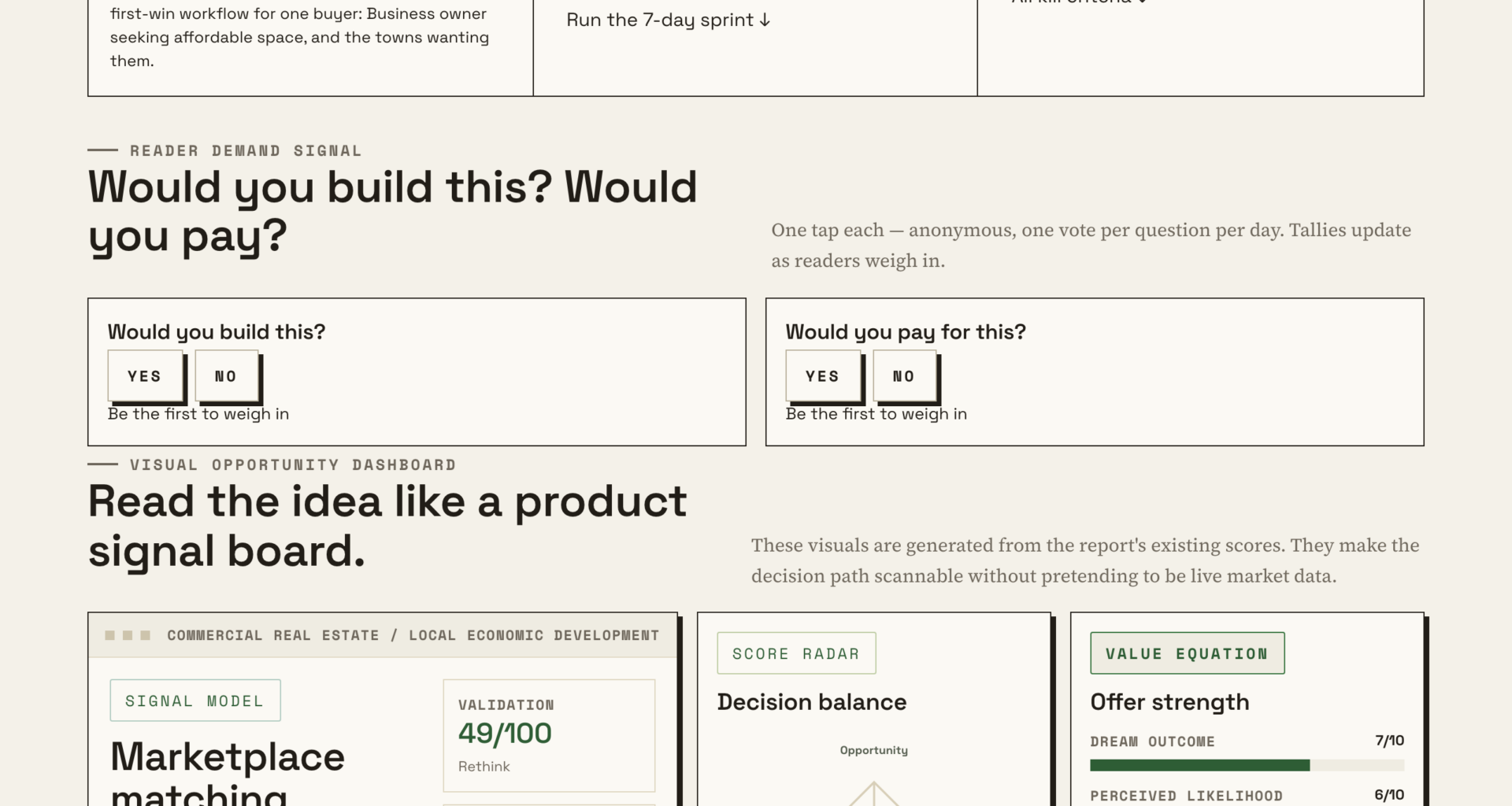
📊 Full opportunity report: Vacant Storefronts, Meet Businesses Looking For A Place To Grow on IdeaNavigator AI — validation score, market gap, and execution plan.

Get smart everyday buys delivered free — and shop member deals
- Fast, free delivery on millions of items
- Access to Prime Big Deal Days deals on October 6–7
- Prime Video, Amazon Music and more included
TL;DR
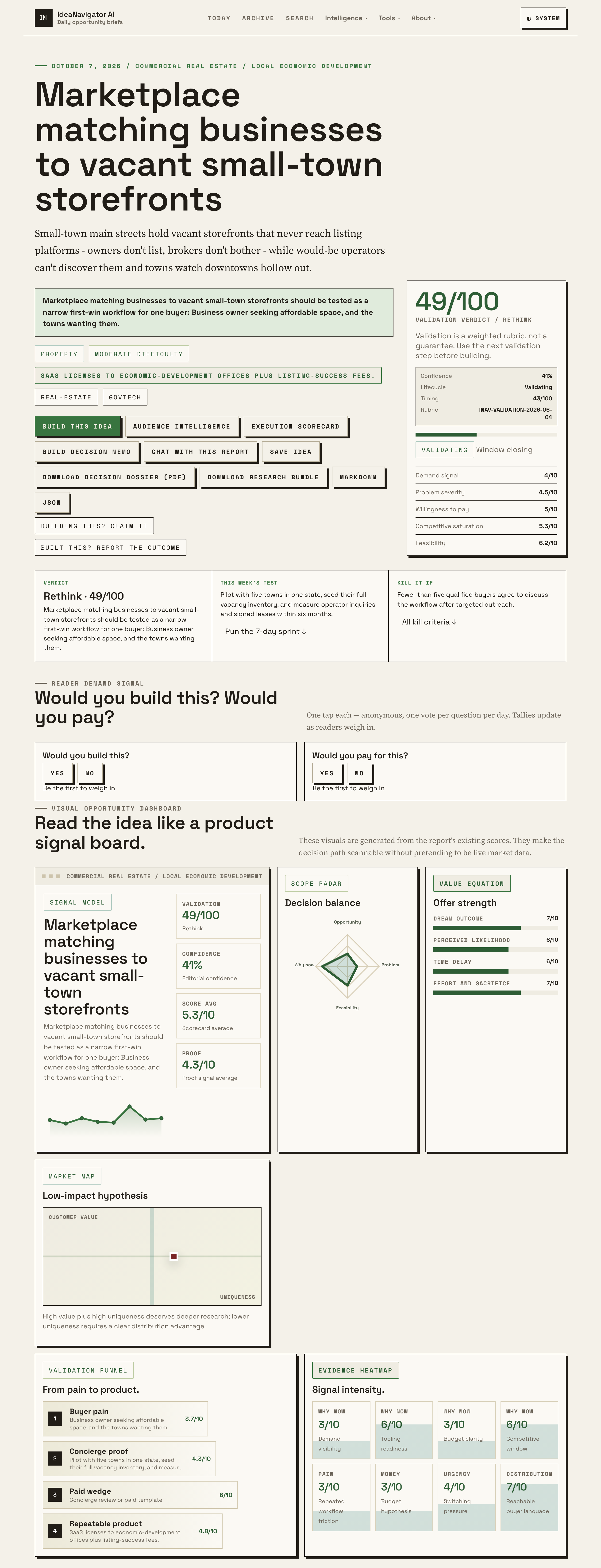
IdeaNavigator AI proposes a marketplace to connect businesses seeking affordable space with vacant storefronts in small towns. The proposal describes a concept, not a launched service; it suggests a five-town pilot measuring business inquiries and signed leases over six months.
IdeaNavigator AI has proposed a marketplace that would connect businesses seeking affordable locations with vacant storefronts in small towns, routing interested operators to local economic-development offices and any available grant programs. The proposal describes a concept and a suggested pilot, not a service already launched or results that have been achieved.
According to IdeaNavigator AI’s proposal, the marketplace would allow towns and property owners to list available storefronts with details such as photos, floor area, rent and incentive programs. Business operators could browse listings by town profile and foot-traffic data, then contact a local development office through the platform. The proposal says grant opportunities could be attached to those matches.
For an initial test, IdeaNavigator AI suggests working with five towns in one state and entering each town’s full inventory of vacant storefronts. The proposal says the pilot would track operator inquiries and signed leases over six months. Those measures are intended to show whether the service generates interest and whether any of that interest results in occupied spaces; the proposal reports no pilot, inquiry totals or lease outcomes.
The suggested business model combines software licenses for economic-development offices with fees tied to successful listings, according to IdeaNavigator AI. The proposal does not provide prices, revenue forecasts or evidence that towns or property owners have agreed to pay. Those details would need testing alongside whether the marketplace can keep its listings accurate and attract businesses that are ready to lease.
A Route From Listings to Leases
IdeaNavigator AI’s proposal identifies a two-sided discovery problem: some vacant storefronts may not appear on commercial listing platforms, while prospective operators may not know which towns or property owners have space available. If accurate inventory can be assembled and businesses can find it, a shared marketplace could make it easier for both sides to start a conversation.
For local development offices, the proposed connection to grant and incentive information could help officials direct operators toward existing support. For business owners, searchable details such as rent and size could help compare locations before committing time to inquiries. These are potential benefits described by the proposal, not demonstrated outcomes; it offers no evidence yet that the service would produce more leases or prevent downtown vacancies.
The distinction matters because interest is not the same as occupancy. A useful test would need to track not only clicks or inquiries but also whether businesses meet landlords, agree on terms and sign leases. IdeaNavigator AI’s suggested six-month measure includes inquiries and signed leases, but the proposal does not specify how to account for negotiations that continue beyond that period.
commercial storefront listing software
As an affiliate, we earn on qualifying purchases.
As an affiliate, we earn on qualifying purchases.
The Small-Town Matching Gap
IdeaNavigator AI’s proposal describes a specific gap in small-town commercial real estate: storefront owners may not list spaces online, and brokers may not prioritize properties that are difficult to market. The proposal says operators seeking a location can therefore have trouble finding available spaces, while towns may have limited ways to connect those operators with vacant properties.
IdeaNavigator AI cites renewed interest in small towns associated with remote-work migration and economic-development offices’ access to grants as reasons to explore the concept now. These are the proposal’s stated rationale, not independently quantified trends in the information provided. The proposal supplies no data on how many storefronts are vacant, how many businesses are searching, or how much grant funding is available.
The proposed product is narrower than a general commercial real-estate platform: its initial users would be business owners and towns, with local development offices involved in routing matches. IdeaNavigator AI’s proposed pilot would first gather a complete vacancy inventory across five towns in one state, then observe inquiries and leases for six months.
As an affiliate, we earn on qualifying purchases.
Pilot, Participation and Results
IdeaNavigator AI’s proposal identifies no launch or participating towns and does not say whether any property owners, local officials or business operators have committed to take part. It also gives no timeline for building the marketplace or beginning the suggested pilot.
Practical questions remain about who would verify rents, floor areas, availability and foot-traffic information, and how frequently listings would be updated. The proposal does not define what counts as a successful match, how listing-success fees would work, or whether grants would be available to every eligible operator. It also provides no evidence that the suggested revenue model has been tested.
The proposal reports no results showing that remote-work migration has increased demand in the towns that might participate, or that a marketplace would convert that demand into signed leases. The six-month pilot is a proposed way to gather evidence, not a forecast of what the platform will achieve.
As an affiliate, we earn on qualifying purchases.
Testing the Five-Town Plan
The next step outlined in IdeaNavigator AI’s proposal is a pilot across five towns in one state. That would require recruiting local development offices and property owners, compiling each town’s vacant storefront inventory, and publishing consistent information about space, rent and incentives.
Over the proposed six-month measurement period, the pilot would count operator inquiries and signed leases. Reporting on how many spaces were listed, how many inquiries led to conversations with owners and how many resulted in leases would help distinguish platform activity from actual occupancy. The proposal provides no launch date or timetable for selecting towns, so it is not clear when those results might become available.
As an affiliate, we earn on qualifying purchases.
Key Questions
Has the storefront marketplace launched?
No launch is reported. IdeaNavigator AI has proposed the concept and suggested a pilot, but no operating platform or participating towns are identified.
Who would use the marketplace?
According to IdeaNavigator AI’s proposal, the users would be business operators looking for space, storefront owners listing vacancies and towns or local economic-development offices helping connect the two.
What would listings include?
The proposal says listings would include photos, size, rent and incentive programs. Operators would also be able to browse by town profile and foot-traffic data.
How would the proposal be tested?
IdeaNavigator AI suggests a five-town pilot in one state, with each town’s vacant storefront inventory entered and operator inquiries and signed leases tracked over six months.
Are any lease results or revenue figures available?
No. IdeaNavigator AI’s proposal reports no pilot results, signed leases, pricing or revenue figures. It suggests software licenses and listing-success fees as possible revenue sources.
Source: IdeaNavigator AI
Fall Picks
fall essentials
As an affiliate, we earn on qualifying purchases.