

📊 Full opportunity report: Sensor Data As The Backbone Of AI-Driven Software Sovereignty on ThorstenMeyerAI.com — validation score, market gap, and execution plan.
TL;DR
European agencies are increasingly commissioning independent exploitation software for sensor data, shifting sovereignty from hardware to software. This development signals a new focus on control over AI-driven defense capabilities, with ongoing questions about regulation and implementation.
European institutions are now commissioning and deploying exploitation software that processes sensor data locally, marking a significant shift toward software-based sovereignty in defense technology. This move reflects a strategic effort to control critical AI-driven capabilities within European jurisdiction, reducing reliance on foreign software providers.
Recent contracts signed this spring confirm that European governments and agencies are prioritizing the development and procurement of exploitation software that operates independently of external jurisdictions. This software reads and analyzes sensor data from a growing array of sources, including radar constellations, wide-area cameras, and synthetic sensors.
The shift is driven by a broader geopolitical and technological trend: as sensor data becomes more abundant and sophisticated, the software that interprets this data is emerging as the new ground of sovereignty. Unlike hardware or satellite infrastructure, which European nations have begun to build and own directly, the exploitation layer remains largely unclaimed and contested.
Sources indicate that this focus on software sovereignty is motivated by concerns over security, control, and the desire to develop autonomous, AI-powered decision-making capabilities within Europe. The move is also supported by recent market shifts, with private firms and public agencies aligning on open, transparent development of exploitation stacks based on synthetic data and open standards.
Experts note that these developments are part of a broader trend where sensor proliferation outpaces the ability to effectively exploit data, creating a critical gap that software must fill. The contracts and ongoing projects aim to close this gap with localized, controllable AI solutions.
The ISR Files
From Sensor to Software Sovereignty
One thesis runs through this cluster: collection outran exploitation years ago, and for Europe the sovereignty question has migrated up the stack — from satellites and launch to the software that reads the sensor. These dispatches trace that arc: the physics, the market, the procurement shift, the regulation, and one product being built in public along the way.
The dispatches
Radar That Never Blinks: What SAR Actually Does
The physics minus the mathematics, and what all-weather persistent imaging means for companies, institutions, and governments. Europe is buying constellations now, not imagery.
READ →Wide-Area Motion Imagery: The City-Scale Camera
The WAMI deep-dive from the sensor arc — gigapixel persistence and the analyst crisis it created. Slot reserved; link follows re-upload from archive.
LINK FOLGTDelta: [Sensor-Arc Dispatch]
Slot reserved for the Delta piece from the prior production block; card copy to be restored with the archived article.
LINK FOLGTThe Living Digital Twin
How persistent sensing turns static 3D models into continuously-updated operational replicas — and why that changes ISR economics. Slot reserved; German edition also planned.
LINK FOLGTEurope Is Actually Shopping for Its Palantir Exit
Named contracts, named deadlines, named systems under test: the exploitation-software market moved from sentiment to procurement in ninety days.
READ →Building Corvus ISR, Day 1: Synthetic WAMI First
A WAMI exploitation stack starting from fully synthetic data — the reasoning, the two-edition custody strategy, and the honest bear case.
READ →Synthetic WAMI Scene — Live Detect & Track
Run it in your browser: procedural city, hundreds of movers, live tracker with honest degradation as density climbs. Every pixel synthetic.
LAUNCH DEMO →The August 1 Deadline: Classified Benchmarks
EO 14409 makes capability measurement a national-security instrument — behind a vault door. The European answer should be evaluation in public.
READ →Suggested reading path
The products behind the coverage
SAR/ISR exploitation platform — the software layer this cluster keeps arguing Europe needs to own.
vigilsar.comWAMI exploitation stack, built in public from synthetic data. Sovereign (air-gap) and Governed (EU-cloud) editions.
corvusisr.comPublic, replicable benchmark for defense-relevant AI tasks, ISR signature track — evaluation as public infrastructure.
vigilsar.comImplications of Software Sovereignty for European Defense
This shift toward local AI-driven exploitation software fundamentally alters the landscape of defense sovereignty. By controlling the software that interprets sensor data, European nations can better safeguard sensitive intelligence, reduce dependency on foreign technology providers, and enhance autonomous decision-making capabilities.
It also signals a move toward a more integrated and self-reliant defense ecosystem, where hardware and infrastructure are complemented by domestically developed AI software. This transition could influence global defense markets, prompting other regions to follow suit or challenge Europe’s emerging sovereignty model.
However, the development and regulation of such software raise questions about standards, interoperability, and security, which remain to be fully addressed as these initiatives mature.

Vape Detector by Forensics | for Schools, Home, Hotels, Business | Cell Phone Alarms WiFi | Laser Scattering Super Sensitive Sensor |
- App Alerts: Phone notifications via Smart app
- Advanced Sensor: Super sensitive laser scattering technology
- Versatile Use: Suitable for schools, homes, hotels, and more
As an affiliate, we earn on qualifying purchases.
As an affiliate, we earn on qualifying purchases.
Strategic Shift Toward Software Control in ISR
Over recent years, European countries have made strides in acquiring satellite and sensor infrastructure, including constellations from Germany, Poland, Portugal, and Greece. These efforts have established a foundation for collecting high-quality, all-weather sensor data.
Until now, the exploitation layer—software that reads, analyzes, and acts on sensor data—has been largely controlled by external vendors or international markets. Recent developments indicate a deliberate shift: European institutions are now contracting for locally developed exploitation software that operates within their jurisdiction.
This transition is part of a broader recognition that sensor proliferation alone does not guarantee strategic advantage; control over the interpretation and decision-making processes is equally critical. The recent contracts and projects underscore this new focus on software sovereignty, positioning Europe to develop autonomous, AI-powered defense capabilities.
“The software that reads the sensor data is becoming the new sovereign ground, and it remains substantially unclaimed.”
— an anonymous researcher
AI exploitation software for sensor data
As an affiliate, we earn on qualifying purchases.
As an affiliate, we earn on qualifying purchases.
Unresolved Questions About Regulation and Security
It is not yet clear how European regulatory frameworks will evolve to oversee and standardize these new exploitation software solutions. Questions remain about security protocols, interoperability standards, and how these systems will integrate with existing infrastructure.
Additionally, the pace of technological development and the potential for geopolitical tensions to influence software control policies are still unfolding, leaving some uncertainty about long-term stability and cooperation.
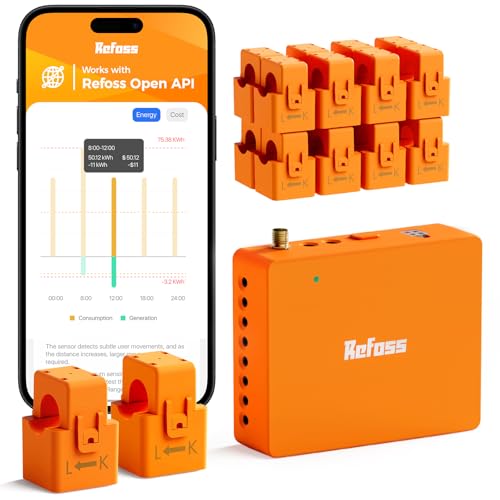
Refoss Smart Home Energy Monitor with 16 60A Circuit Sensor, Local Control
- Precise Circuit Monitoring: Monitors 18 circuits with ±1% accuracy
- Cost Savings: Reduces utility bills by 10-20%
- Local Data Privacy: Stores data locally without cloud dependency
As an affiliate, we earn on qualifying purchases.
As an affiliate, we earn on qualifying purchases.
Next Steps in Developing and Deploying Exploitation Software
European institutions are expected to continue contracting and deploying localized exploitation software, with upcoming projects focusing on standardization, security, and interoperability. Monitoring how these initiatives influence defense capabilities and international cooperation will be key.
Further developments may include regulatory frameworks, open standards for AI exploitation, and increased collaboration among European nations to solidify software sovereignty as a core component of their defense strategy.

Principles of Synthetic Aperture Radar Imaging (Signal and Image Processing of Earth Observations)
As an affiliate, we earn on qualifying purchases.
As an affiliate, we earn on qualifying purchases.
Key Questions
What is meant by ‘software sovereignty’ in this context?
It refers to European nations’ control over the AI-driven software that interprets sensor data, enabling autonomous decision-making and reducing reliance on foreign providers.
Why is the focus shifting from hardware to software?
Because the interpretation and analysis of sensor data—via AI software—are now seen as the critical layer of strategic control, surpassing the importance of hardware infrastructure alone.
What are the potential risks of developing local exploitation software?
Risks include security vulnerabilities, interoperability challenges, and regulatory hurdles that need to be addressed as these systems mature.
How might this development impact global defense markets?
It could encourage other regions to develop similar sovereignty-focused strategies, potentially leading to fragmented standards and increased competition in AI-driven defense technology.
When will these exploitation software systems be fully operational?
While contracts are being signed and pilot projects underway, full operational deployment across all targeted platforms may take several years, depending on development and regulatory progress.
Source: ThorstenMeyerAI.com