
TL;DR

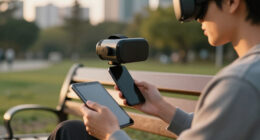
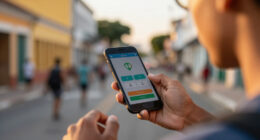
Pudu Robotics announced the integration of physical AI into everyday urban settings during the Davos Tech Summit. This development aims to enhance city life through robotics, marking a significant step in AI adoption.

Pudu Robotics has introduced physical artificial intelligence into daily urban environments as part of the Robot City initiative at the Davos Tech Summit, marking a significant step in integrating robotics into city life.During the summit, Pudu Robotics showcased its latest robotic solutions powered by physical AI, designed to operate in public spaces such as shopping centers, airports, and city streets. The company demonstrated robots capable of navigation, interaction with humans, and performing tasks like delivery and information assistance. These robots are intended to enhance urban service delivery and improve efficiency in crowded environments. The initiative aligns with broader efforts to embed AI and robotics into city infrastructure, aiming to create smarter, more responsive urban spaces. Pudu Robotics officials emphasized that this deployment is part of a strategic move to make AI-driven robots a common feature in daily city life, with plans for wider rollout in the coming months.
At a glance
reportWhen: announced during the Davos Tech Summit,…
The developmentPudu Robotics demonstrated its new physical AI-powered robots at the Davos Tech Summit as part of the Robot City initiative, highlighting their role in future urban environments.

Implications for Urban Living and City Services

This development signifies a major advancement in the adoption of physical AI in public spaces, potentially transforming city service models. By integrating robots capable of autonomous navigation and interaction, cities could see improvements in logistics, customer service, and public safety. For consumers, this could mean more efficient delivery services, better information access, and reduced human workload in routine tasks. For technology providers like Pudu Robotics, it opens new markets and accelerates the deployment of AI-enabled urban infrastructure. However, it also raises questions about regulation, safety, and public acceptance, which are yet to be fully addressed.
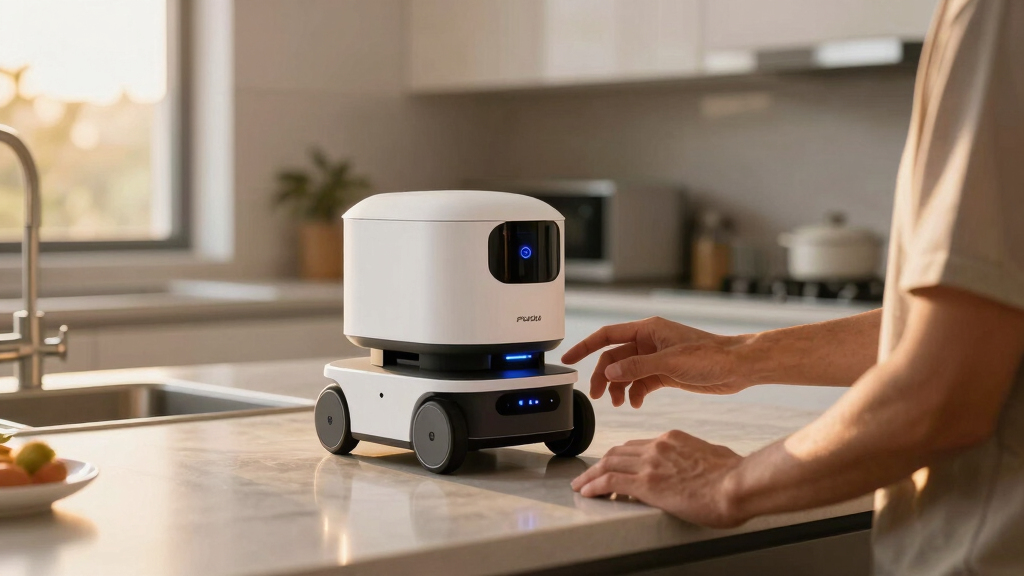
Food delivery Robots, characterized by Their Compact Design and Powerful Load Balancing, Support Remote Management and are Suitable for Small and Medium-Sized Restaurants and cafes.

Food delivery Robots, characterized by Their Compact Design and Powerful Load Balancing, Support Remote Management and are Suitable for Small and Medium-Sized Restaurants and cafes.

[Please Note] This product is available in multiple models and customization is supported. The price shown is not…

As an affiliate, we earn on qualifying purchases.

As an affiliate, we earn on qualifying purchases.

Background of Pudu Robotics and the Robot City Initiative

Pudu Robotics has been a leader in service robotics, with a focus on hospitality, delivery, and public service robots. The company has previously launched robots operating in malls, airports, and hospitals. The Robot City initiative at Davos aims to create a model of future urban environments where AI-powered robots perform routine tasks, reducing human labor and increasing efficiency. The summit has seen several tech firms showcase innovations related to smart cities and AI integration, with Pudu Robotics positioning itself at the forefront of this movement. The integration of physical AI—robots that can perceive, reason, and interact physically—marks a key milestone in this ongoing trend.

“Our physical AI-powered robots are designed to seamlessly blend into urban environments, providing practical solutions that improve everyday life.”

— Jane Liu, CEO of Pudu Robotics

AI Restaurant Robot Server with Autonomous Food Runner Robot, Smart Voice Interaction, Multi Purpose Delivery Tray System for Restaurant Cafe Hotel Dining Operations

AI Restaurant Robot Server with Autonomous Food Runner Robot, Smart Voice Interaction, Multi Purpose Delivery Tray System for Restaurant Cafe Hotel Dining Operations

Please note: This product offers a variety of customization styles and accessories. The prices listed are not final….

As an affiliate, we earn on qualifying purchases.

As an affiliate, we earn on qualifying purchases.

Unanswered Questions About Safety and Regulation

It is not yet clear how regulatory frameworks will adapt to widespread deployment of physical AI robots in public spaces, or how safety concerns will be addressed. Details about the long-term operational safety, data privacy, and public acceptance remain to be clarified as the rollout progresses.
Redroad Robot Vacuum 20,000 Pa Robot Vacuum Mop,120Day Self Emptying Vacuum Robot,Lidar Navigation,5G 2.4GWiFi APP Aspirateur Robot,Self-Charging Robot Vacuums for Pet,Floor,Carpet GrayR11

Redroad Robot Vacuum 20,000 Pa Robot Vacuum Mop,120Day Self Emptying Vacuum Robot,Lidar Navigation,5G 2.4GWiFi APP Aspirateur Robot,Self-Charging Robot Vacuums for Pet,Floor,Carpet GrayR11

【𝟮𝟬,𝟬𝟬𝟬𝗣𝗮 𝗦𝘂𝗽𝗲𝗿 𝗦𝘂𝗰𝘁𝗶𝗼𝗻 & 𝟯𝟮𝟬𝟬 𝗺𝗔𝗵 𝗛𝗶𝗴𝗵-𝗖𝗮𝗽𝗮𝗰𝗶𝘁𝘆 𝗕𝗮𝘁𝘁𝗲𝗿𝘆】- The R11 robot vacuums boasts a powerful suction of over…

As an affiliate, we earn on qualifying purchases.

As an affiliate, we earn on qualifying purchases.

Next Steps for Deployment and Monitoring

Pudu Robotics plans to expand its deployment of physical AI robots in select urban areas over the next few months, with ongoing monitoring of performance and public feedback. Regulatory discussions and safety protocols are expected to evolve alongside these deployments. The company also aims to demonstrate the scalability of its solutions at upcoming industry events and further integrate AI into city infrastructure.
Mastering Cursor AI: Learn, Build, and Innovate with the Next Generation AI Coding Assistant (AI, Robotic and Gadgets Reviews)

Mastering Cursor AI: Learn, Build, and Innovate with the Next Generation AI Coding Assistant (AI, Robotic and Gadgets Reviews)

As an affiliate, we earn on qualifying purchases.

As an affiliate, we earn on qualifying purchases.

Key Questions

What types of tasks will these robots perform in cities?

The robots are designed to handle tasks such as delivery, information assistance, and navigation in crowded public spaces like malls, airports, and streets.

How does physical AI differ from traditional AI in robotics?

Physical AI involves robots that can perceive, reason, and physically interact with their environment, enabling more autonomous and adaptable behavior in real-world settings.

Are there safety concerns with deploying robots in public spaces?

Safety concerns are acknowledged, and regulatory frameworks are still being developed to address issues such as collision avoidance, data privacy, and public acceptance.

When will these robots be widely available in cities?

Wider deployment is planned over the next several months, with pilot programs and phased rollouts in select urban areas.

What is the goal of the Robot City initiative at Davos?

The initiative aims to demonstrate how AI-powered robotics can enhance urban infrastructure, improve service delivery, and create smarter cities.

Source: primary

This content is for general information only and is not financial, tax or legal advice. Consult a qualified professional for decisions about your money.
You May Also Like

VigilSAR: The Object That Isn’t Transmitting

VigilSAR is a radar-based platform that identifies vessels not broadcasting transponder signals, enhancing maritime domain awareness in all weather conditions.

Exclusive | Dave Portnoy Has One Rule for Success: Hire Great People and ‘Let Them Run Wild’

Barstool Sports founder Dave Portnoy shares his key to success: hiring talented people and giving them freedom. The statement was made in an exclusive interview with WSJ.

The Machine Economy — Capital-Heavy, Human-Light, Trading With Itself

Analysis of the emerging machine economy where AI-driven firms operate with minimal human labor, reshaping markets and economic structures.

Mac vs GPU Tower for Local LLMs: The Heat-and-Noise Tradeoff

A detailed comparison of Mac Studio and GPU towers for local large language models, focusing on heat, noise, capacity, and performance tradeoffs.