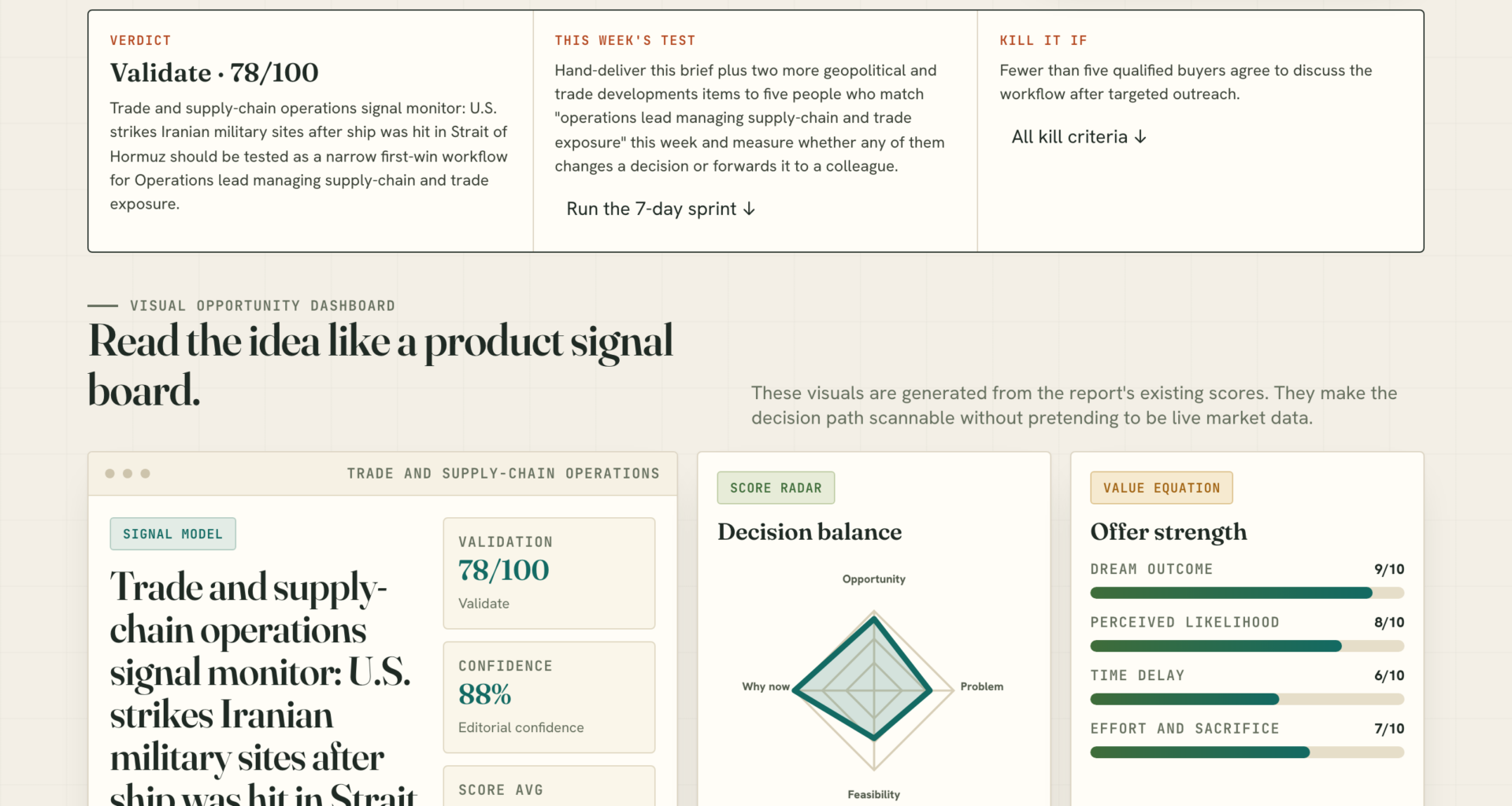

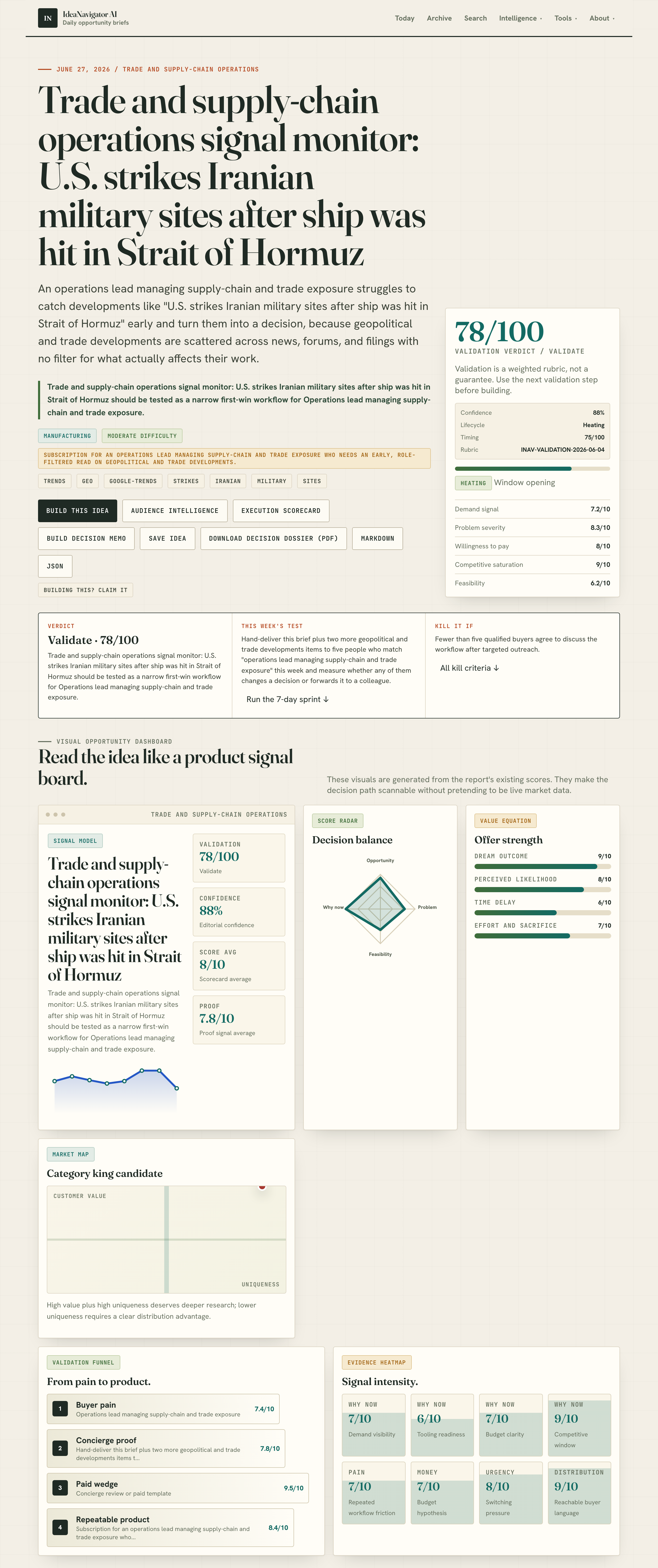
📊 Full opportunity report: Trade and supply-chain operations signal monitor: U.S. strikes Iranian military sites after ship was hit in Strait of Hormuz on IdeaNavigator AI — validation score, market gap, and execution plan.
TL;DR
The United States launched strikes against Iranian military sites after a commercial ship was hit in the Strait of Hormuz. This development signals increased military activity and regional escalation, impacting trade and supply chains.
The United States has launched military strikes against Iranian military sites in response to an attack on a commercial ship in the Strait of Hormuz, marking a significant escalation in regional tensions. This development is confirmed by U.S. officials and comes amid rising concerns over security threats to maritime trade routes, which directly impact global supply chains.
According to U.S. officials, the strikes targeted multiple Iranian military facilities believed to be involved in the attack on a commercial vessel earlier today in the Strait of Hormuz. The incident involved an unidentified assault on a cargo ship, with initial reports indicating damage but no confirmed casualties. The U.S. military stated that the strikes aimed to degrade Iran’s military capabilities in the region and deter further attacks. Iranian authorities have not yet issued an official response, and the broader regional response remains uncertain. The event has prompted heightened alert among shipping companies and supply-chain operators concerned about security in vital maritime corridors.Sources within the U.S. government emphasized that the strikes were conducted in self-defense and aimed at preventing further escalation. The incident follows a series of recent tensions in the region, including drone and missile exchanges and threats from Iran. The Strait of Hormuz remains a critical chokepoint for global oil and trade shipments, and any disruption could have widespread economic repercussions, especially in energy markets and supply chains.
Implications for Global Trade and Supply Chains
This escalation could lead to increased risks for maritime trade routes, especially in the Strait of Hormuz, which handles a significant portion of the world’s oil exports. Disruptions in shipping could cause delays, higher insurance premiums, and increased costs for companies relying on regional supply chains. Monitoring regional security developments is crucial, as highlighted by Trade and supply-chain operations signal monitor: Chicago, Illinois weather forecast: Tornado Watch issued for parts of area | Radar. The incident underscores the importance for trade and operations leaders to monitor geopolitical developments closely, as escalation could impact logistics, sourcing, and inventory management worldwide.
maritime security monitoring system
As an affiliate, we earn on qualifying purchases.
As an affiliate, we earn on qualifying purchases.
Recent Escalations in Iran-U.S. Tensions and Maritime Security
Over the past year, tensions between Iran and the United States have escalated, with multiple incidents involving maritime security, drone attacks, and sanctions enforcement. The Strait of Hormuz has been a flashpoint, with several ships targeted or detained by Iranian authorities. The U.S. has increased military presence in the region, citing the need to protect shipping lanes and regional stability. This latest strike follows a pattern of U.S. military responses to perceived threats, raising concerns about a broader conflict and its impact on global trade routes.
“The strikes targeted Iranian military facilities involved in recent hostile actions against commercial shipping in the Strait of Hormuz.”
— U.S. Defense Department spokesperson
As an affiliate, we earn on qualifying purchases.
Unconfirmed Details and Regional Reactions
It is not yet clear how Iran will respond militarily or diplomatically to the strikes. The full extent of damage to Iranian facilities and the potential for further escalation remain unknown. Additionally, the impact on shipping and global trade is still developing, with some analysts warning of possible disruptions but no definitive outcomes yet.
As an affiliate, we earn on qualifying purchases.
Next Steps in Regional Security and Trade Monitoring
Regional security agencies and shipping companies are expected to increase surveillance and security measures in the Strait of Hormuz. For insights on technology and security operations, see Technology operations signal monitor: I admire Fabrice Bellard. He is almost certainly a better overall programmer. Diplomatic efforts may intensify to de-escalate tensions, but further military actions or retaliations are possible. Trade and supply-chain operators should prepare for potential disruptions and monitor official updates closely in the coming days.
maritime supply chain tracking device
As an affiliate, we earn on qualifying purchases.
As an affiliate, we earn on qualifying purchases.
Key Questions
What triggered the U.S. strikes against Iran?
The strikes were in response to an attack on a commercial ship in the Strait of Hormuz, which U.S. officials attribute to Iran or its proxies.
Could this lead to a broader conflict?
The situation remains tense, and further military or diplomatic escalation could occur, raising the risk of wider conflict in the region.
How might this affect global trade?
Disruptions in the Strait of Hormuz could delay shipments, increase costs, and impact energy markets, affecting global supply chains.
What should supply-chain managers do now?
They should monitor regional security developments, assess potential risks to shipping routes, and prepare contingency plans for possible disruptions.
Has Iran responded officially?
No official statement has been issued by Iran regarding the strikes; their response remains uncertain.
Source: IdeaNavigator AI